





What Is Dating App Choice Overload?
Dating apps promise abundance, but abundance has a cost. Choice overload happens when too many profiles make selecting someone harder, not easier.
More options sound great in theory. In practice, they create hesitation, drain satisfaction, and turn browsing into a frustrating loop.
Psychologists call it the paradox of choice. The more options available, the worse decisions often feel.
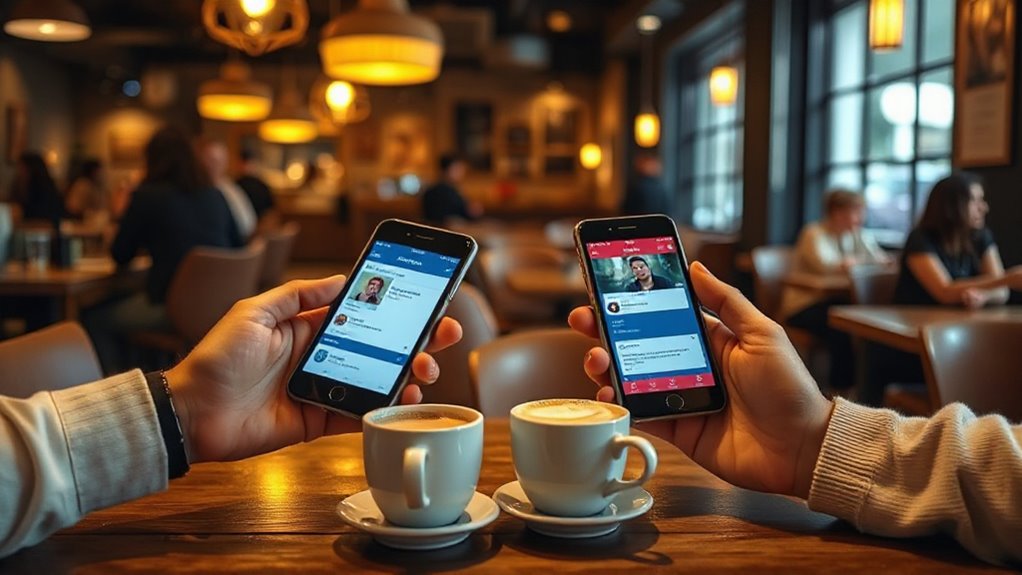
Dating apps amplify this perfectly. Swipe-based feeds feel endless, comparisons pile up fast, and the brain gets taxed sorting through profile after profile.
It is not a personal flaw. It is a predictable response to a system designed without limits. Apps are built around constant swiping and scrolling, making them deliberately addicting by design.
Research backs this up, with four in five adults reporting some degree of emotional fatigue or burnout from online dating. Users often overlook basic safety practices like meeting in public or keeping conversations on the app when they’re overwhelmed.
Why Dating App Choice Overload Makes You Reject More Matches
Choice overload does not just make choosing harder—it actively makes people reject more. Research by Pronk and Denissen found that acceptance rates dropped 27% from the first profile reviewed to the last.
That is not pickiness. That is fatigue wearing a mask.
That is not a high standard. That is an exhausted brain calling it quits.
The more profiles someone swipes through, the more rejection becomes the default response rather than a deliberate choice.
The brain stops asking “could this work?” and starts asking “what is wrong with this one?”
Bigger pools do not produce better outcomes. They produce faster dismissals, shallower judgments, and a trigger finger that eliminates perfectly reasonable matches without a second thought. Pronk and Denissen also found that satisfaction with photos decreased and that users experienced a declining sense of dating success as they moved through more options.
Those most at risk are maximizer-style daters who scan every available option and never settle, caught in a loop where abundance prevents commitment rather than enabling it. This pattern often increases rejection sensitivity, making people more likely to interpret interactions as negative.
How Dating App Overload Kills Your Satisfaction
Swiping through hundreds of profiles does not just make choosing harder—it makes the whole experience feel hollow. Research consistently shows that large option sets drag satisfaction down, not up.
Users evaluating massive profile pools report lower well-being, more negative emotions, and less enjoyment overall. One 2025 study tied perceived dating success directly to loneliness and life satisfaction. Matching with partners who share core values can buffer some of this dissatisfaction by creating deeper, more meaningful connections.
The more it feels like endless evaluation, the less it feels like actual connection. Add burnout—affecting roughly 14% of users—and the process starts feeling like unpaid labor.
Fewer swipes, sharper focus, and intentional breaks can actually make the experience worth having again. Before the internet, most people found partners through friends, work, or hobby groups, meaning partner availability was smaller and the pressure to evaluate endless strangers simply did not exist.
Choice overload hits hardest in dating because preferences are vague, comparison is hard, and the stakes are high—the exact three conditions research identifies as most likely to trigger it.
How Too Many Matches Fuel Fear and Self-Doubt
More matches should feel like winning. Except research says otherwise.
Higher numbers of potential partners have actually been linked to greater fear of being single, lower self-esteem, and less confidence overall.
More options, more doubt.
People exposed to larger pools of profiles consistently report feeling worse about their own dating prospects, not better.
More choices, worse outcomes. The bigger the pool, the smaller people feel inside it.
Quick, gut-level profile judgments make this worse, dropping perceived self-worth noticeably.
Rapid swiping trains the brain to evaluate fast and feel inadequate faster.
The app promises abundance.
What it quietly delivers, for many users, is a slow, steady erosion of confidence dressed up as opportunity.
When options exceeded fifty, participants reported increased expected difficulty, greater regret, and decreased satisfaction with their choices.
Among those most at risk, validation-seeking users show the lowest rates of secure attachment and the highest rates of low trait self-esteem compared to users driven by any other motive.
Many people underestimate how much others also want connection, which can deepen feelings of isolation despite many matches — a dynamic tied to social connection.
How to Break the Swipe Cycle and Actually Commit to Someone
Breaking the cycle starts with one uncomfortable admission: the app was never going to make the decision for them. That was always their job. Three moves actually work:
- Limit active conversations to a handful of matches and pause discovery once something promising starts.
- Move fast from messaging to a real date—phone call, video chat, in person—within days, not weeks.
- Set a clear standard upfront: after a few dates, either commit or move on.
More profiles isn’t more potential. It’s more work pretending options are progress. Research shows that choice overload is most likely when options are complex, preferences are uncertain, and the goal is to minimize effort rather than compare carefully—exactly the conditions most dating apps create. According to matchmaker Tammy Shaklee, quality beats quantity, and limiting matches to a small, intentional set gives each connection a real chance at compatibility. Recent studies show that one in five couples under 30 now meet online, highlighting how online dating has reshaped modern relationships.