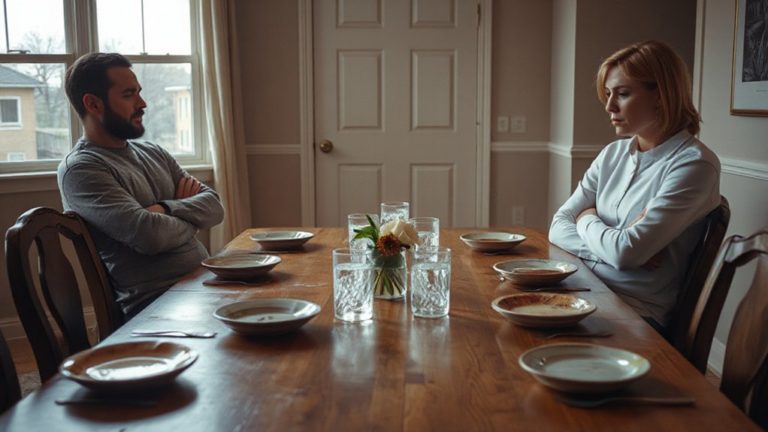




The Real Reason Most Date Nights Fall Flat
Date night has a reputation problem. It sounds good on paper—carved-out time, just the two of you—but most couples walk away feeling vaguely disappointed and not sure why.
Here’s the real issue: the evening stops being a connection and starts being a production.
Reservations, babysitters, the right outfit, the right conversation.
Suddenly it’s a performance with a budget.
Throw in lingering phones, recycled restaurants, and unspoken pressure to fix everything in three hours, and the whole thing collapses under its own weight.
Date night doesn’t fail because couples stop trying.
It fails because they’re trying wrong. Small, frequent moments of genuine attentiveness do more to build connection than any single dedicated evening ever could. Research shows that new shared experiences flood the brain’s reward system with dopamine, the same chemistry present in early romantic love, making the quality of dates matter as much as the intention behind them. Building emotional safety through authentic vulnerability over time is what makes those moments deepen intimacy.
At-Home Date Night Ideas That Build Genuine Emotional Closeness
When the goal is actual closeness—not just a nicer version of sitting in the same room—at-home date nights have a real advantage: no distractions to hide behind, no waiter interrupting every ten minutes, no performance for other people.
At-home date nights strip away the distractions, the interruptions, the performance—leaving only the two of you.
Cook something new together.
Do a blind taste test.
Try partner yoga or give each other a real massage.
Pull out old photos and actually talk about them.
Play a conversation card game.
These aren’t revolutionary ideas.
But done with intention, they create cooperation, vulnerability, and shared focus—the actual ingredients of connection.
The couch isn’t the problem.
Checking out is.
Healthy at-home dates work best when they include shared attention, emotional openness, and positive experiences together.
Fifteen to sixty minutes of intentional time together, done about twice a month, can do more for a relationship than a full weekend getaway. Research shows couples who combine intentional activities with consistent behavioral change are far more likely to rebuild and strengthen trust over time.
Conversation Starters That Make You See Each Other Differently
How well does anyone actually know the person they share a bed with?
Probably less than they think.
Researchers and relationship advisors push identity-focused questions hard for a reason—childhood memories, first influences, and early family dynamics reveal attachment patterns that current-preference small talk never touches.
Ask what shaped them.
Ask who they were at ten.
Questions about core values, deal breakers, and what they’d do with complete financial freedom expose priorities fast.
Skip the weather.
Ask something that requires actual thought.
The couples who feel genuinely known didn’t stumble into that—they asked better questions. Asking a partner when love was realized can surface a memory they’ve never thought to share out loud. Research shows that self-disclosure increases closeness between partners, which is why trading logistics for deeper conversation can shift how connected two people actually feel. Couples can also use prompts about passion projects and shared experiences to build rapport and reveal personality.
New Date Night Experiences That Bring Back Early-Relationship Energy
Early-relationship energy didn’t disappear—it just got buried under routine.
The fix isn’t a grand gesture.
It’s novelty, pressure, and a little uncertainty.
Escape rooms work because solving puzzles under stress is basically a compatibility test in real time.
Blind taste tests—hot sauces, chocolates, whatever—add low-stakes competition and laughs.
Thrift-store challenges, where each person buys a cheap gift for the other, create genuine surprise.
Even recreating a first date pulls couples back to an earlier version of themselves.
New experiences don’t manufacture feelings.
They just clear enough space for the old ones to resurface.
Geocaching turns a simple outing into a real-life treasure hunt using GPS coordinates to find hidden containers together.
Research suggests couples who are otherwise functioning well still report a fading spark, meaning the loss of early-relationship energy isn’t a sign something is broken—it’s simply common. Strong social ties improve well-being and can help sustain that connection over time.
Future-Focused Date Night Ideas That Give You Both Something to Look Forward To
Novelty fixes the past—but couples also need something pulling them forward. Future-focused dates do exactly that.
Novelty heals what was—but every strong relationship also needs something worth moving toward.
Plan a vacation together at home—maps out, options open.
Build a bucket list.
Tour a wedding venue even if the date is years away.
These aren’t fantasies.
They’re shared projects that create real anticipation.
Make a time capsule with photos, letters, and predictions, then pick a date to open it.
Suddenly there’s a countdown.
That matters.
Couples who have something to look forward to stay more engaged with each other.
Give the relationship a horizon worth moving toward.
A shared bucket list can be organized into categories like family experiences, travel, and house and financial goals, giving both partners a structured way to dream and track progress together.
In marriage, you’re either moving forward or backward—there is no pause, only play or stop. No pause button means every future-focused date you plan is a direct vote against the drift that quietly pulls couples apart.
Try scheduling dates that build toward measurable goals to reinforce commitment and shared values, which supports long-term relationship readiness for emotional health.