


Why Awkward Dates Happen in the First Place
Awkward dates rarely come out of nowhere. Most trace back to a handful of predictable problems.
Meeting a stranger means limited shared history, so conversation has fewer natural anchors. Self-awareness can help you notice when you’re projecting or overcompensating in those gaps.
When you have no shared history, conversation has nothing solid to grab onto.
Add some nerves, and ordinary pauses start feeling like emergencies.
Both people are quietly evaluating each other, which kills spontaneity fast.
Throw in rapid-fire questions, a high-pressure venue, or mismatched expectations about tone and pace, and the whole thing starts feeling like a job interview nobody wanted.
The good news? Most of these problems are fixable.
Understanding why awkwardness happens is the first step toward actually doing something about it. When people meet face-to-face for the first time, nervousness creates tension that simply would not exist in a more familiar setting.
Patterns built during online conversation rarely carry over smoothly, meaning online talks rarely transfer to in-person dynamics the way both people expect them to.
How to Read the Room and Know When It’s Time to Leave
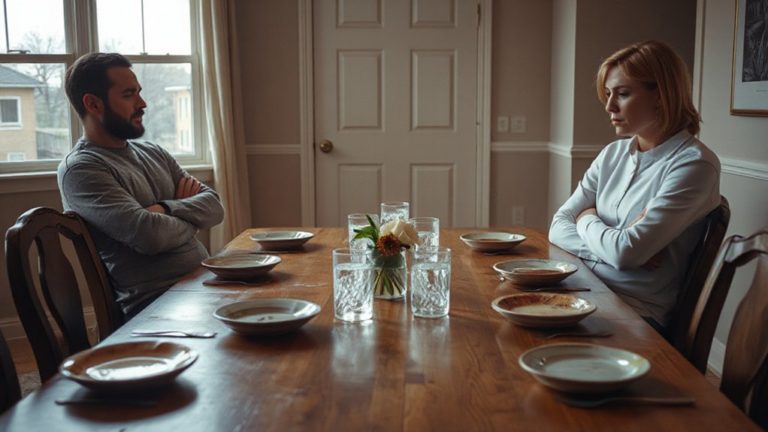
Most people know when a date is going sideways—they just refuse to admit it.
Short answers, phone-checking, zero follow-up questions—those aren’t accidents. They’re signals.
When her energy drops, her posture closes off, and she stops building on anything said, the conversation is already winding down.
Silence isn’t awkward; it’s information.
One-sided exchanges mean one person already mentally left.
Stop pushing harder.
Read the room instead.
Notice what’s happening, adjust the tone, and if nothing improves, wrap it up cleanly.
Knowing when to exit isn’t defeat.
It’s self-awareness—and honestly, it’s the most attractive thing a man can do. Situational awareness means comparing each moment to the baseline—noticing what changed after a comment, a topic shift, or a long pause.
Pay attention to who has gone quiet, because who isn’t speaking often reveals more about the state of the conversation than anything being said out loud.
If you notice consistent mirroring behavior, it’s a reliable sign the other person is engaged, so respond accordingly.
How to End an Awkward Date Without Making It Worse
Ending a bad date badly is its own kind of disaster. So don’t do it. Keep the exit short, honest, and clean.
A simple “thanks for meeting up” does more work than a five-minute apology tour.
No long explanations.
No fake promises about doing it again.
Just a calm, direct acknowledgment that it happened, and a quiet goodbye.
If things felt off or uncomfortable, leave faster, explain less.
Safety beats politeness every time.
Good manners still matter though—stay composed, thank them for the time, and walk away with dignity intact.
Hers and his. Avoiding a fake “let’s do this again” that goes nowhere is one of the most respectful things you can do.
Before any of this, having a clearly defined exit plan ready before the date even starts gives you the freedom to leave on your own terms. Also remember that rejection often reflects timing and compatibility, not personal worth.
Exactly What to Say When You’re Ready to Go
The words matter more than most people think. A vague mumble sends mixed signals. A clean line ends things fast.
Try: *”Thanks for meeting up, but it’s getting late—I’m going to head out.”* Simple. No drama.
Thanks for meeting up, but it’s getting late—I’m going to head out. Simple. No drama.
Or go even shorter: *”I’m ready to call it a night.”* It helps to be mindful of emotional boundaries so you don’t unintentionally lead someone on.
If there’s no chemistry, say so kindly. *”I was hoping for more of a connection”* beats stringing someone along.
And if she’s rude or pushy? *”That’s not okay. I’m going now.”* Done.
Stand up when delivering any of these. Movement backs up the words.
Keep the farewell brief. Overexplaining just reopens the door. For video dates, a sudden cut internet connection gives you an instant exit with technology taking the blame.
Planning ahead also helps—choosing drinks over dinner means you only need to get through 15-minute drinks rather than a drawn-out meal if things aren’t clicking.
What to Do After an Awkward Date Ends
Once he’s out the door and the date is officially over, the real work starts—not the dramatic kind, but the quiet, honest kind.
Replaying every cringe moment for three days straight helps nobody.
Give it 10–15 minutes of honest reflection, then drop it.
- Separate one awkward moment from the whole night
- Decide if a casual follow-up text is worth sending
- Apologize only if something genuinely went wrong
Was it nerves, bad timing, or a real mismatch?
That answer matters.
Write it down, talk to a trusted friend, and move forward. If things ended on a sour note, a direct in-person apology at the next opportunity does more to repair the impression than avoidance ever could—and puts the decision in her hands. Every date, including the rough ones, is a learning experience that sharpens how a man shows up next time. Sending a brief message within 24 hours can also signal interest without pressure, especially if you reference something specific from the date showing attentiveness.
Awkward dates build better daters.
Simple as that.