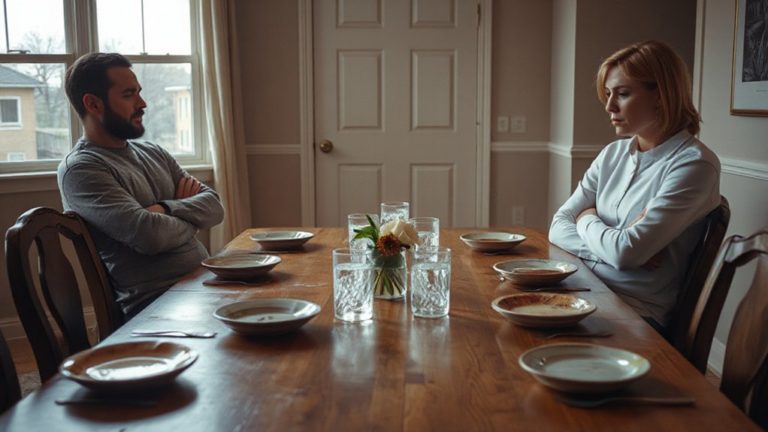




The Biggest Reasons People Are Delaying Having Kids
The reasons people delay having kids aren’t mysterious—they’re loud, obvious, and almost embarrassingly practical.
Money tops the list. In one U.S. study, 60% of people cited not having enough money, and 51% wanted a higher salary first.
After that, career stability, housing costs, and finding the right partner all pile on.
People aren’t being dramatic. They’re doing math.
Child care is expensive. Rent is brutal. Jobs feel shaky. Relationships take time to build.
Most adults delay parenthood until life feels structurally ready—financially, professionally, romantically.
The anxiety isn’t irrational. It’s a direct response to genuinely difficult circumstances. Across OECD countries, the mean age at first birth has risen by roughly one year every decade since the 1970s.
Beyond personal finances, many prospective parents cite climate change, political polarization, and the threat of war as ethical reasons to delay, questioning whether it is morally responsible to bring a child into an uncertain world.
Meeting a supportive partner through trusted social networks and prioritizing emotional readiness are additional factors shaping decisions about when to start a family.
How Anxiety About the Future Makes Parenthood Feel Impossible to Plan
Money and stability explain a lot of why people wait to have kids.
But anxiety adds another layer that’s harder to name.
Future anxiety isn’t just worry—it’s the specific fear that having a child means committing to an outcome nobody can guarantee.
Future anxiety isn’t worry. It’s the fear of committing to an outcome nobody can promise you.
And that uncertainty makes planning feel pointless.
How do you time something when the future looks unpredictable?
Research confirms this loop is real: uncertainty breeds hesitation, hesitation becomes delay, delay becomes habit.
The fix isn’t finding certainty—that’s not coming.
It’s learning to act despite incomplete information, because that’s actually all parenthood has ever required. The average age of Polish women having their first child rose from 23.7 in 1995 to 30.1 by 2023, a sharp illustration of how deeply this hesitation has reshaped generational timelines.
Unlike stress, anxiety can persist after stressors pass, meaning the fear driving delayed parenthood doesn’t simply resolve once financial or life circumstances improve. Therapy and building emotional readiness can help people move forward despite lingering uncertainty.
The Financial Pressures That Push Starting a Family Further Away
For all the emotional weight that comes with deciding to have kids, most people eventually land on the same blunt question: can we actually afford this?
Turns out, 28% say finances are the top reason they’re waiting.
Childcare alone is crushing—75% of parents call it their biggest financial burden, outranking housing, healthcare, and education combined.
Student loans make it worse.
Every $1,000 in debt drops the annual likelihood of becoming a parent by 1.2%.
Economic instability cuts conception rates nearly in half for some groups.
The math isn’t scary.
It’s paralyzing.
Research across seven countries finds that income requirements for parenthood have grown significantly stronger over the past two decades, suggesting the financial bar to starting a family keeps rising.
Among those hoping to start or expand their family, only 1 in 4 were currently trying.
Online tools and algorithms have changed how people plan major life decisions, with demographic trends showing shifts in family formation alongside digital adoption.
How the Pandemic Changed the Way People Think About Having Kids
When COVID hit, it didn’t just upend daily life—it made a lot of people quietly rethink whether they wanted kids at all, or at least whether they wanted them anytime soon.
Early in the pandemic, roughly one-third of U.S. women said they wanted fewer children or wanted to wait longer.
By summer 2021, that number dropped to 15%—but the damage was done.
Uncertainty and anxiety had already rewired how people felt about starting families.
Even among those actively trying to conceive, one in three changed course.
A global health crisis has a way of clarifying priorities fast. Hispanic and Black women were disproportionately more likely to want to delay or reduce childbearing, reflecting how the pandemic deepened existing inequities.
In Turkey, nearly half of married women reported postponing pregnancy plans, with the death of a loved one from COVID-19 being a significant deciding factor.
This shift mirrors how rejection sensitivity and uncertainty can lead people to postpone major life decisions like parenthood.
Career Goals, Health Fears, and Social Shifts That Delay Parenthood
Beyond the pandemic’s disruptions, a quieter reckoning has been unfolding—one driven by career ambition, health anxiety, and a world that feels increasingly hard to bring a child into.
Forty-four percent of young adults want career stability first. Nearly half cite money. And 38% are genuinely spooked by the state of the world. Research shows that marriage success peaks between ages 25-34, influencing some to wait until perceived stability aligns with that window.
Health fears add another layer—reproductive anxiety actually pushes some women toward earlier timelines, not later. Meanwhile, 26% factor in environmental concerns.
These aren’t excuses. They’re real, overlapping pressures colliding at once.
The decision to delay isn’t laziness. It’s people doing math on a moving train. Societal norms shift in response to broader social transformations, meaning the pressure individuals feel today is not personal failure but the weight of an era rewriting its own expectations.
Research among women in Lagos, Nigeria found that those with ambitious career goals frequently delayed childbearing specifically to avoid career interruptions from parenthood.