


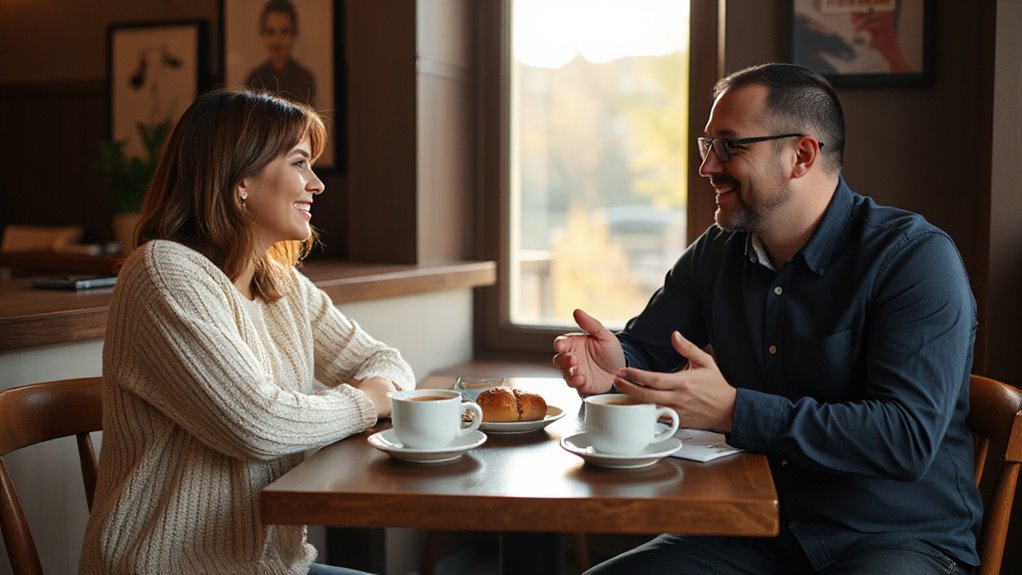





The shy guy sits across the room, glances over twice, then suddenly finds his phone fascinating when she looks back. This dance happens everywhere—bars, coffee shops, parties—and most women handle it completely wrong. They think bold moves work. They don’t.
Here’s what’s actually happening in his head: panic. Research shows shy men initiate conversations far less often, not because they’re uninterested, but because they’re drowning in self-presentation anxiety. When attraction enters the picture, their responses become stilted, flustered, or nonexistent. That phone isn’t more interesting than you—it’s a life raft. Using effective conversation starters can help spark a natural connection without overwhelming him.
Bold approaches backfire because they amplify everything he’s already stressed about. Shy individuals experience higher negative emotions before and during social interactions. Walking up and being aggressively flirty? You’ve just cranked his anxiety to eleven. He’ll likely give short, awkward responses or freeze entirely.
Instead, create low-pressure opportunities. Shy people gain positive mood benefits from brief social interactions, just like everyone else. Start small. Ask about something neutral—the book he’s reading, the event you’re both attending. Keep it light and give him easy exits.
This isn’t about playing games; it’s about recognizing that his brain works differently in social situations. Pay attention to his attachment style. Shyness correlates with insecure attachment patterns, meaning he might misread your signals or expect rejection. Be clear but gentle. If he seems interested but doesn’t escalate, don’t assume disinterest. Shy men frequently fail to act on positive signals, even obvious ones.
The biggest mistake? Assuming he’s not worth the effort. Shy individuals often have lower relationship self-efficacy—they doubt their ability to navigate romantic situations successfully. This doesn’t mean they’re bad partners; it means they need different approaches. Consider that environmental factors like work stress or major life changes might be amplifying his natural shyness levels.
Give him time to warm up. Shy men tend to be less talkative initially and disclose personal information more slowly. This isn’t emotional unavailability—it’s caution. Once comfortable, many become deeply engaged partners. Remember that shyness often develops over time rather than being an unchangeable personality trait, which means with the right approach, he can grow more comfortable.
The key isn’t changing your personality to accommodate his; it’s understanding that connection happens differently for different people. Sometimes the best move isn’t bold at all.