

Why Love Letters Worked Before Dating Apps
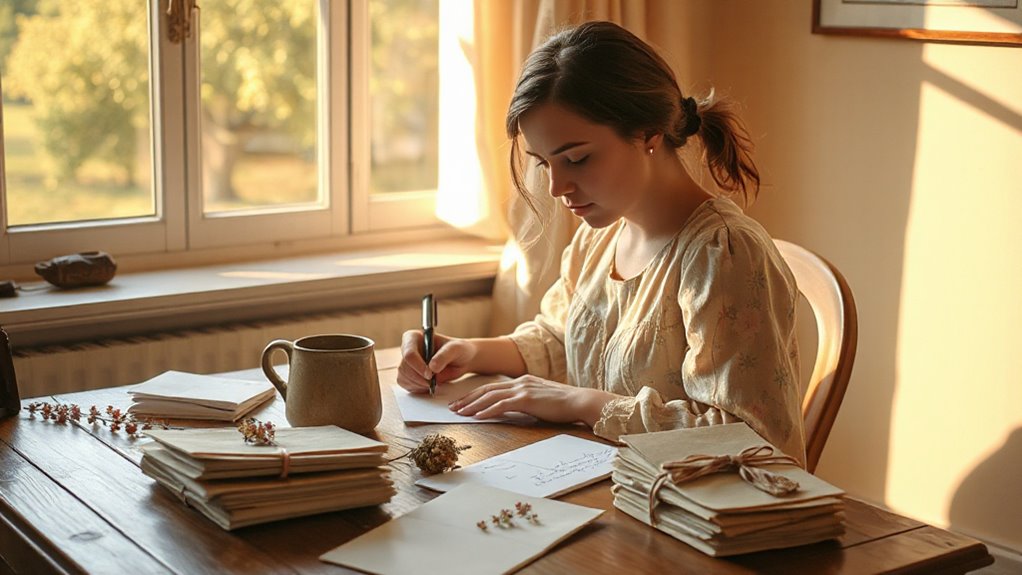
Before dating apps handed everyone a catalog of options, love letters actually made people work for it. Letters arrived twice weekly, building anticipation that no push notification can replicate. Phone calls were metered, so words cost real money. That pressure forced people to think before speaking. Writing a letter meant sitting down, choosing every word carefully, and committing pen to paper. No deleting. No autocorrect. Just deliberate effort. And that effort meant something. When someone wrote you a letter, you knew they actually tried. Swipe culture didn’t invent romance. It just made it embarrassingly easy to avoid earning it. In India, metered calls and limited messaging pushed couples to rely on tangible gifts and handwritten cards instead, turning physical gestures into the primary language of affection. Unlike a text that disappears into a scroll, a letter could be held, reread, and tucked away, giving it a physical permanence that made every word feel like a lasting promise. This intentionality often produced deeper emotional bonds through focused attention.
The Psychology Behind Why Handwritten Letters Feel More Intimate
There’s actual science behind why a handwritten letter hits differently than a text message.
Self-disclosure through writing builds genuine closeness—research confirms it.
Sharing something real on paper doesn’t just feel intimate—studies show it actually creates it.
When someone reads vulnerability on paper, they respond faster and connect deeper.
Handwriting also activates different brain regions than typing, making words feel more sincere.
Add the slow, meditative pace that forces real thought, and suddenly every sentence carries weight.
No backspacing awkward phrases. No deleting regrets.
The imperfections—smudges, crossed-out words, uneven ink—actually help. They signal authenticity.
A text can be dashed off in seconds. A letter cannot. That difference registers, whether consciously or not.
Unlike a deleted text, a handwritten letter becomes a physical keepsake that can be held, reread, and cherished long after the ink has dried.
Sara Algoe’s research on relationship science confirms that self-disclosure in letters can actually inspire recipients to reach out sooner or arrange face-to-face visits.
Emotional safety through intentional vulnerability is often what allows those letters to deepen a relationship.
Love Letters That Left a Mark on History
History doesn’t care about your texts. But it kept Henry VIII’s letters to Anne Boleyn, Napoleon’s fire-soaked notes to Joséphine, and Nixon’s surprisingly sappy plans for Sunday drives with Pat.
These weren’t polished documents. They were raw, sometimes embarrassing, deeply human.
Frida Kahlo promised Diego Rivera eternal unity after his fresco wrapped up. Zelda Fitzgerald captured a whole Jazz Age romance in ink.
Every single one of these letters revealed something their writers couldn’t fake. Vulnerability. Real longing. The kind of thing a double-tap never communicates.
History preserved what mattered. Makes you wonder what you’re actually leaving behind. Johnny Cash wrote to June Carter Cash in 1994 reflecting on their enduring partnership and mutual influence on each other’s lives.
Even the ancient world left its mark. A cuneiform tablet dating to around 2000 BC preserved a love letter from a priestess to King Shu-Sin, opening with bridegroom, dear to my heart — proof that terms of endearment have barely changed in four thousand years. A preserved letter like this also shows how familiarity deepens bonds across time.
Love Letters vs. Texts: What Modern Romance Is Missing
What Henry VIII and Napoleon understood, most people today have completely forgotten.
A text takes three seconds. A love letter takes intention. That difference is everything.
Modern romance runs on convenience—swipes, quick replies, heart emojis. Nobody’s sitting down to write three pages anymore. And relationships are shallower for it. Self-love encourages the kind of intentionality that deepens connections and attracts healthier partnerships.
Handwritten letters carried visible effort: ink smudges, crooked lines, actual handwriting. You couldn’t unsend them. You couldn’t screenshot them into irrelevance. They lasted decades in shoeboxes.
Texts disappear into notification history. So does the emotional weight behind them. Commitment dropped. Marriage rates dropped. Coincidence? Probably not entirely.
A 2021 CBS News poll found that 37% of Americans hadn’t written or received a personal letter in more than five years, and over 20% of adults under 45 had never written one at all.
Writers like Oscar Wilde, Frida Kahlo, and Virginia Woolf produced letters so visceral and consuming they still read as masterworks of human longing—proof that the power of writing cannot be replicated by any modern form.
Why Couples Still Write Letters on Their Wedding Day
Despite the chaos of flowers, photographers, and nervous in-laws, couples keep choosing to slow everything down with a handwritten letter. Why? Because weddings move fast, and feelings get lost in the blur. A letter cuts through that. They also use letters to create a quieter, more intentional moment compared to typical pre-wedding first date nerves, helping partners focus on each other before the day speeds away. It creates a quiet moment before everything starts, letting partners say what they actually mean without fumbling through nerves at the altar. Those letters don’t disappear after the reception, either. They become keepsakes, pulled out on anniversaries, passed down eventually. No speech recording needed. Just ink, paper, and honesty. Turns out, some things still work better when you write them down. Letter readings are especially common during wedding preparation, giving each partner a private moment to absorb the words before the ceremony begins. For couples who want to include a spoken element without the pressure of live delivery, a trusted friend or family member can read the letter aloud, preserving the personal connection without spotlight.
The Rituals That Made Writing Love Letters Feel Intentional
Keeping a letter isn’t an accident. People chose acid-free stationery so the paper would survive decades. They wrote emotions in sequence—anger, sadness, fear, regret, love—spending equal time on each feeling instead of fixating on one. They tucked tea bags inside. They added playlists. Small, deliberate touches that said: *this mattered enough to think about.*
Some couples locked letters in boxes, only opening them on anniversaries. Others wrote responses, imagining what they’d want to hear back. Handwriting did something typing couldn’t—it committed. No deleting. No editing. Just the truth, pressed into paper, permanent and slightly terrifying. That’s the point. Letters written to a partner became portals back in time, discovered years later during anniversaries, moments of doubt, or quiet nights when the couple needed to remember where they began. Some even included a bottle of wine, sealed alongside the letters and saved for the moment the box was finally opened together.
How to Bring Love Letters Back Into Your Relationship
For couples who want to reconnect—or just stop talking past each other—love letters are one of the most underused tools sitting right in front of them.
Skip the text. Handwrite it. Be specific about why this person matters, not just that they do.
Reference real moments. Acknowledge what went wrong without drowning in guilt.
Then propose something concrete—dinner, a conversation, counseling—because a letter alone won’t fix anything.
Time it right, too. Dropping one during a blow-up helps nobody.
Done well, a letter doesn’t just communicate feelings. It proves someone actually stopped long enough to have them. Some who wrote such letters even contacted local real estate agents and sent resumes to nearby employers to demonstrate their willingness to change.
If the first letter goes unanswered, sending another letter monthly for an extended period has been known to eventually plant the seed of repair that one letter alone could not.
Sometimes rebuilding trust takes visible consistent actions over time to convince a wounded partner that things can change.