


Why Parasocial Relationships Feel So Psychologically Real
At the core of parasocial relationships is a simple but unsettling truth: the brain does not care whether a connection is real or manufactured.
Repeated exposure to a media figure triggers the brain’s recognition systems.
Familiar faces, voices, and humor get processed like actual people in someone’s life.
The more frequent the exposure, the stronger the felt intimacy grows.
Neuroscience confirms that familiarity alone reshapes thoughts, feelings, and behaviors.
The brain literally treats a regularly watched persona like a known friend.
No handshake required.
No conversation exchanged.
Just consistent screen time, quietly convincing the mind that something real exists.
These relationships can satisfy genuine psychological needs, including belonging, identification, and social connection, even without any reciprocal interaction from the media figure.
The brain’s response to familiarity can also influence emotional stability and how people form attachments with media figures.
The concept was first formally identified in 1956 by Donald Horton and Richard Wohl, who described it as an illusion of face-to-face relationship with a media figure.
What Separates Parasocial Bonds From Real Relationships
There is one word that separates a real relationship from a parasocial one: reciprocity.
In real relationships, both people invest emotionally.
Both people communicate.
Both people show up.
Parasocial bonds run strictly one direction—from the viewer outward, into a void.
The celebrity, the YouTuber, the fictional character? They don’t know the viewer exists.
No shared experiences.
No direct contact.
No mutual support.
The brain processes these figures as real, which explains why the feelings seem valid. Emotional dependency can form quickly when the viewer’s reward system is repeatedly activated by one-sided interaction.
But feelings aren’t facts.
A connection requires two participants.
Without reciprocity, there’s no relationship—just a very convincing illusion.
The concept was first introduced in 1956 by Donald Horton and R. Richard Wohl in their foundational work on intimacy at a distance.
Unlike parasocial bonds, real relationships persist into daily life because they are built on mutual ongoing exchange.
The Emotional Needs Parasocial Relationships Actually Fulfill
Parasocial relationships fill real emotional gaps—and that’s not as pathetic as it sounds.
Research shows these one-sided bonds actually outperform weak two-sided relationships in meeting emotional needs.
One-sided bonds can outperform weak mutual relationships when it comes to actually meeting emotional needs.
Think about that.
A favorite podcast host can calm someone down faster than a lukewarm acquaintance who barely texts back.
Studies confirm parasocial ties provide belonging, emotional relief, and even identity scaffolding—helping people figure out their values by watching someone they admire.
During the pandemic, these connections buffered loneliness and rejection.
They’re not replacements for deep relationships.
But dismissing them entirely? That ignores what the evidence keeps saying out loud. YouTube parasocial relationships have even been shown to reduce prejudice toward mental health issues.
The research behind these findings is published under Creative Commons Attribution 4.0, meaning the science is openly accessible for anyone to examine and build upon.
These one-sided bonds also often mirror real social functions like emotional support, companionship, and social learning, reinforcing why they can be so impactful.
When Parasocial Bonds Cross Into Harmful Territory
Most parasocial relationships stay harmless—even genuinely useful, as the research keeps showing. But some cross a line.
The warning signs are pretty clear once you know what to look for.
Skipping real plans to track a celebrity’s feed.
Feeling personally betrayed when they change their image.
Spending money or reshaping your values around someone who doesn’t know you exist.
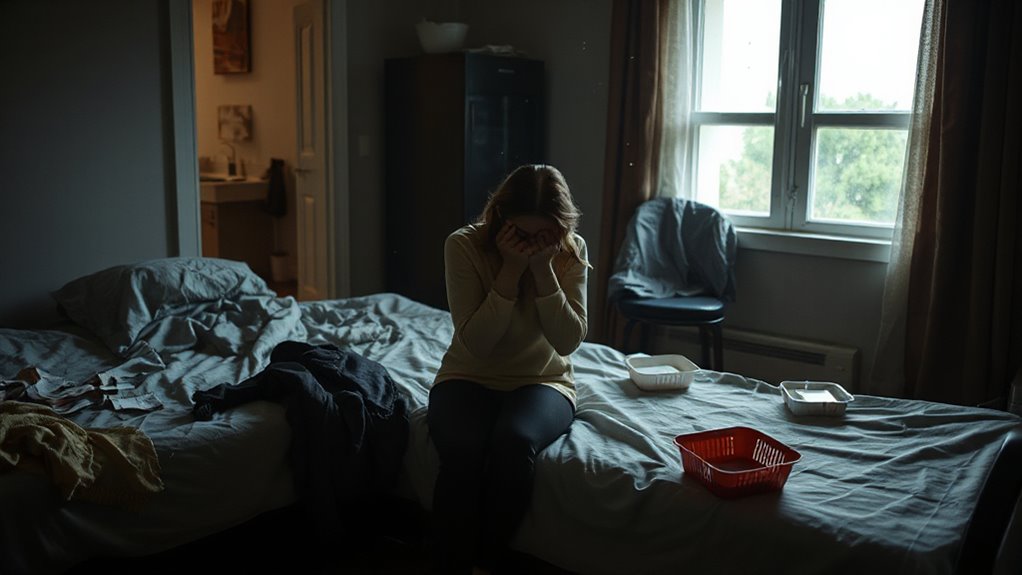
When imagined connection starts feeling more satisfying than actual people in your life, that’s not a quirk—that’s a problem.
Reality gets distorted.
Loneliness deepens.
Isolation grows.
The celebrity stays unbothered.
Only one person in this “relationship” is actually paying a price. Emotional dependency on a one-sided bond can quietly replace the real intimacy, accountability, and shared vulnerability that deeper relationships actually provide.
Difficulty focusing on work, school, and other relationships because of a public figure is one of the clearest signs that a parasocial fixation has moved beyond harmless admiration into something that actively disrupts everyday life. You should also protect your wellbeing by keeping personal boundaries and guarding personal information online.
Signs Your Parasocial Relationships Have Replaced Real Ones
The line between harmless fan behavior and something more serious isn’t always obvious—until it is.
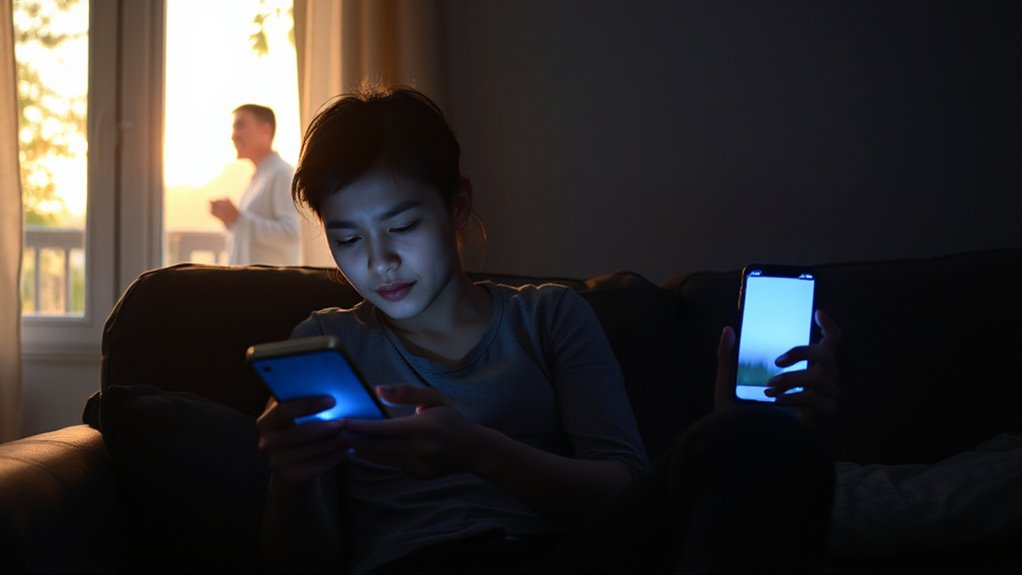
Skipping plans with real people to catch a streamer’s live content? Red flag.
Checking a celebrity’s feed instead of answering a friend’s text? Bigger red flag.
When a parasocial bond starts eating the time, energy, and emotional space that actual relationships need, something’s wrong.
Real friendships require effort, vulnerability, and showing up.
A parasocial figure never demands any of that—which is exactly why they feel safer.
Easier isn’t better.
If a media persona feels more essential than the people in your actual life, that’s not fandom.
That’s replacement. Parasocial connections cannot provide mutual awareness, which means no matter how familiar that bond feels, the other person will never actually know you exist.
Research suggests that real relationships suffer when emotional energy quietly shifts toward parasocial bonds, leaving actual connections with less patience, presence, and investment than they need.
If you find yourself consistently choosing parasocial interactions over in-person plans, it’s often because those bonds offer instant gratification with lower effort and risk.