



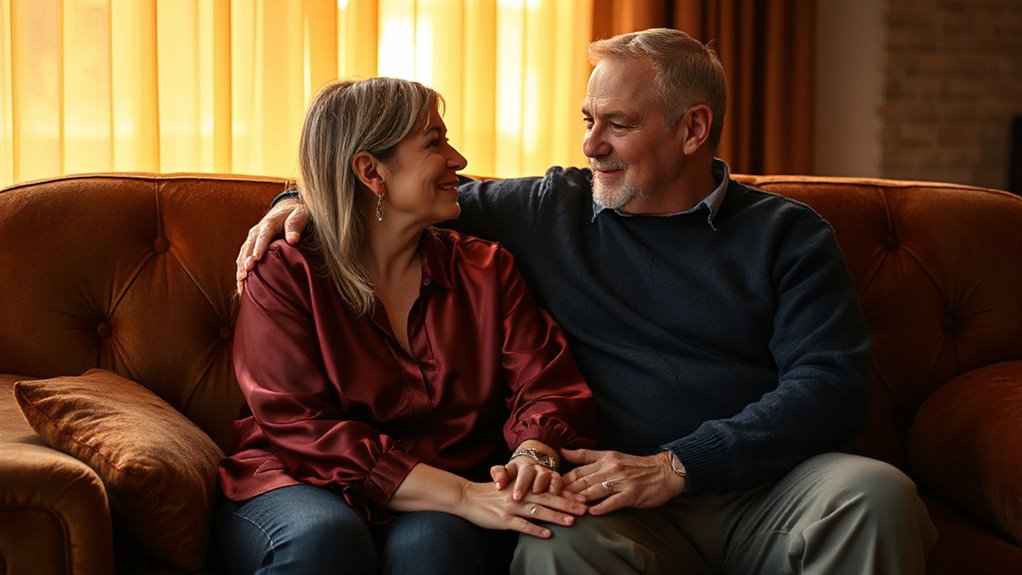
The assumption that sexual desire and activity naturally disappear after 50 is not just wrong—it’s damaging. Research reveals that 61.8% of women aged 50 and older reported being sexually active in the previous six months. Among those with romantic partners, the numbers remain strong at 61.2%, including 59% of women over 60. So much for the myth that passion expires with youth.
Research shatters the damaging myth: 61.8% of women over 50 remain sexually active—passion doesn’t expire with youth.
Here’s what actually drives sexual activity after 50: having a partner matters more than anything else. Partnered women show eight times higher odds of being sexually active compared to their single counterparts. The cruel reality? Many lose partners through death, divorce, or separation—the primary reason sexual activity stops, not age itself.
Among sexually active couples, frequency varies widely. Some maintain once or twice weekly encounters, others settle into monthly patterns. Yes, frequency typically declines with age—half of couples aged 65-75 stay active, dropping to less than a quarter after 75. But here’s the kicker: marital satisfaction trumps age as a predictor of sexual frequency. Happy couples have more sex, period.
Physical changes are real but not insurmountable. Women face vaginal changes, decreased lubrication, and sometimes painful penetration. Men deal with erectile dysfunction. Both sexes experience reduced libido, weight gain, and sleep disruptions. Pelvic floor dysfunction and incontinence can crush body confidence. These aren’t minor inconveniences—they require honest conversations and often medical intervention.
Yet 62% of women aged 50-80 report satisfaction with their sexual lives. What separates the satisfied from the struggling? Relationship satisfaction, communication with partners, and positive attitudes toward age-related changes. Accepting that bodies change while maintaining intimacy through adaptation makes the difference. Long-term relationships can sustain frequent sexual activity, with some couples finding that planning and adaptation help them maintain meaningful intimacy despite physical changes. Women often discover that emotional closeness becomes increasingly important, allowing them to maintain satisfaction even as physical sensations may diminish.
Remarkably, chronological age and menopause don’t directly impact sexual satisfaction when women have romantic partnerships. The formula isn’t complicated: maintain relationships, communicate openly, address physical issues head-on, and adjust expectations without abandoning desire. About 13% of sexually active women even maintain relationships outside cohabitation, proving creativity beats convention.
Sexual health after 50 requires intention, not resignation. Bodies change, but passion adapts when given proper attention and care.