




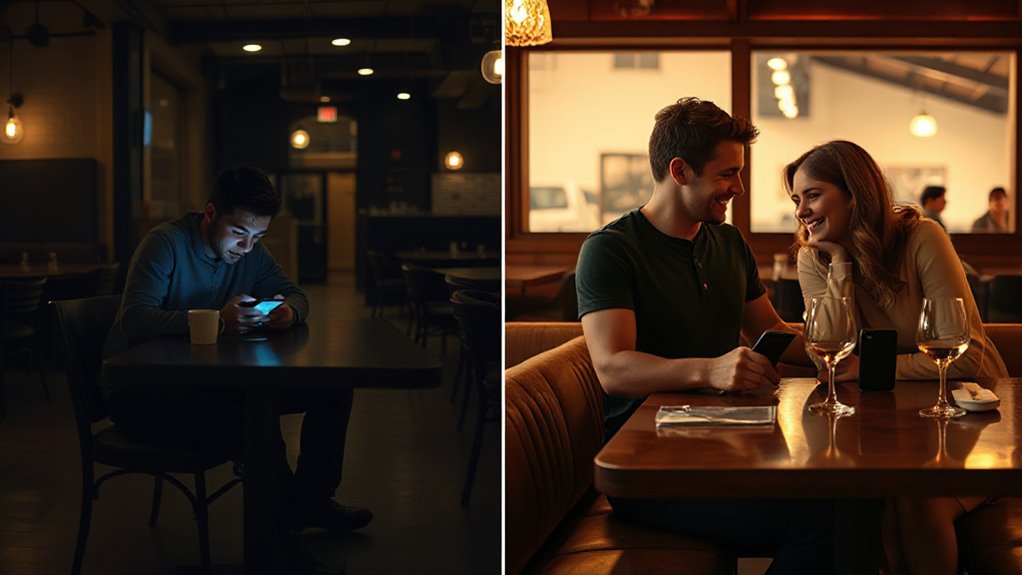
How did swiping through photos on a phone screen become one of the most common ways people find love? The answer reveals a troubling shift in how we approach genuine connection, despite what dating app executives want you to believe. For many, this shift overlooks the value of intellectual depth and meaningful conversation that truly build lasting bonds.
Here’s the uncomfortable truth: nearly half of Tinder users aren’t even looking for dates. They’re scrolling for entertainment, distraction, or emotional regulation. That’s like going to a restaurant just to read the menu.
Nearly half of dating app users are just scrolling for entertainment, not actually seeking real connections or dates.
Meanwhile, dating apps have created a marketplace mentality around romance, where people become commodities to be quickly evaluated and discarded.
The psychology behind app usage exposes deeper problems. Users with avoidant attachment styles and depressive moods report lower satisfaction with these platforms. Those who use apps for escapism rather than genuine connection experience worse outcomes. It’s a recipe for disappointment wrapped in the illusion of endless choice.
The numbers paint a stark picture. Around 39.5% of study participants used dating apps, with higher rates of risky sexual behavior reported. Men typically feel insecure about receiving too few messages, while women feel overwhelmed by message volume. This creates a frustrating dynamic where nobody feels satisfied.
Yet here’s what’s surprising: relationships that do form through apps show similar satisfaction, commitment, and passion compared to face-to-face relationships. One in ten partnered adults met their current partner online, rising to one in five for adults under thirty. Recent research involving 233 college students found no significant differences in relationship quality between those who met through dating apps versus in-person encounters.
The apps themselves aren’t relationship poison—it’s how people use them. Showing consistent reliability and thoughtful communication can make all the difference in turning initial app interactions into meaningful connections.
The path forward requires intentionality. Successful app users focus on genuine social or romantic connections rather than validation or entertainment. They treat potential matches as real people, not avatars.
They understand that meaningful relationships require vulnerability and time—two things that swipe-based interfaces actively discourage. Research reveals that shorter conversations before meeting correlate with higher sexual risk behaviors, while longer conversations may reduce impulsivity.
Smart executives in the dating industry are already pivoting toward features that encourage deeper engagement over surface-level attraction. They recognize that sustainable business models depend on users actually finding lasting connections, not endless scrolling.
The choice is yours: continue treating dating like a game, or use these tools with the seriousness that genuine romance deserves.