



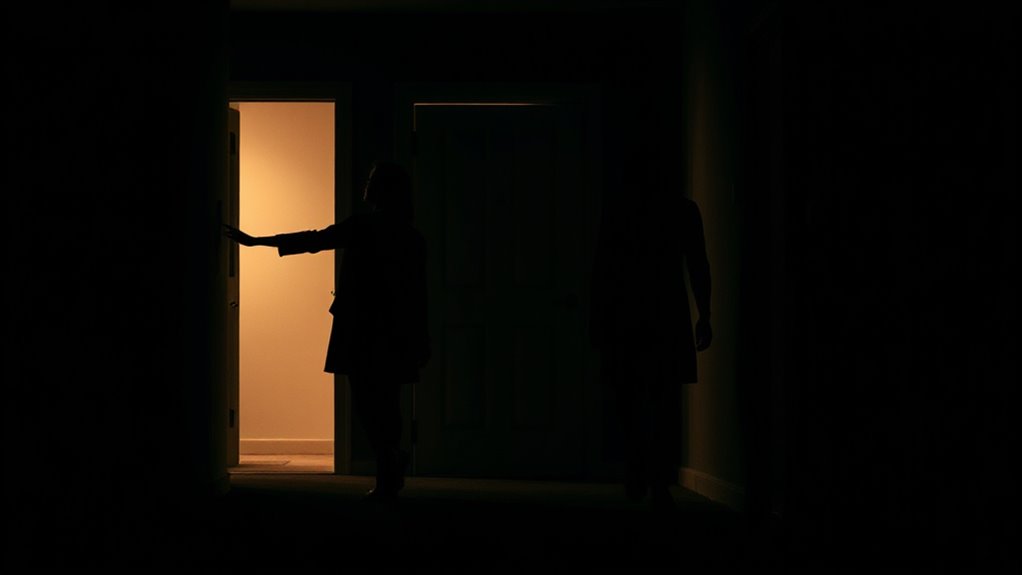
Why do some couples seem addicted to the chaos of constantly breaking up and making up? The answer lies in a psychological trap called push-pull dynamics, where partners get hooked on the emotional rollercoaster of unstable love.
Some couples become psychologically addicted to the emotional highs and lows of their unstable, chaotic relationship patterns.
This pattern typically involves two attachment styles locked in a destructive dance. The anxious partner craves closeness and responds to distance by pulling harder—calling constantly, demanding reassurance, or creating drama to get attention. Meanwhile, the avoidant partner retreats when things get too intimate, using criticism, emotional withdrawal, or actual disappearing acts to create space. It’s like watching someone chase a cat that only wants attention when it’s being ignored. Understanding these dynamics can help in creating natural opportunities to foster healthier relationships.
The cycle follows a predictable pattern. First comes the connection phase, where both partners feel amazing and synchronized. Then something triggers the avoidant partner to withdraw, launching the pursuit phase where the anxious partner desperately tries to reconnect.
Eventually, temporary resolution brings them back together, but the cycle inevitably restarts.
What makes this so addictive? The emotional highs and lows actually mimic passion. For many people, especially those with childhood trauma or neglect, fighting feels safer than peace. They unconsciously recreate familiar patterns of hurt because chaos feels like home. The constant uncertainty releases the same brain chemicals as gambling or drug use.
Past betrayal, abandonment, or neglect amplifies these fears. Low self-worth drives one partner to seek validation through pursuit while the other uses distance as control. Some people with personality disorders perpetuate this pattern unconsciously, while others—like pickup artists—weaponize it deliberately to create artificial attachment.
The behavioral examples are telling. Push behaviors include compliments, touching, and intense eye contact. Pull involves teasing, ignoring, and negative body language. Over-pushing triggers partner pullback, escalating the drama. These patterns often stem from caregiver responses during childhood that shape how we approach emotional bonds in adulthood.
Breaking this cycle requires brutal self-awareness and genuine effort. Partners must recognize if they’re actually getting pleasure from the misery and conflict. The process demands vulnerability, personal growth, and exploring the underlying issues driving these patterns. Finding the perfect balance between giving attention and creating healthy space requires careful attention to each partner’s responses rather than following predetermined scripts. Consistent follow-up and maintaining connections can support breaking unhealthy patterns.
Real change takes time, but it beats staying trapped in a cycle that destroys intimacy before it can truly develop.