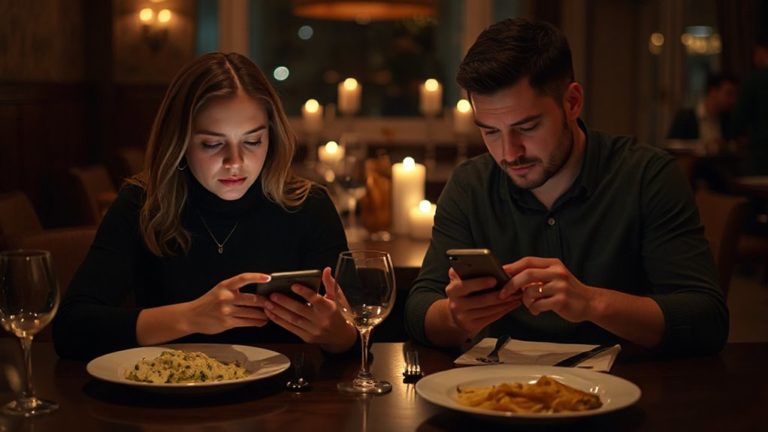


The scroll-and-stalk routine is killing modern romance. Social media promised connection but delivered surveillance, comparison, and a thousand tiny cuts to intimacy. Nearly a quarter of partnered adults now feel jealous or uncertain because of what their partner does online. Among younger couples aged 18-29, that number jumps to 34%. This isn’t paranoia—it’s the new normal.
Social media promised connection but delivered surveillance, turning intimacy into a spectator sport where jealousy is the new normal.
The numbers tell a brutal story. Seventy percent of under-30 users admit to checking up on ex-partners through social media. That digital stalking habit bleeds into current relationships, fueling what researchers call “electronic partner surveillance.” The result? Increased distrust, more fidelity violations, and relationships corroded from the inside out. When you’re constantly monitoring your partner’s likes and comments, you’re not building trust—you’re documenting its absence.
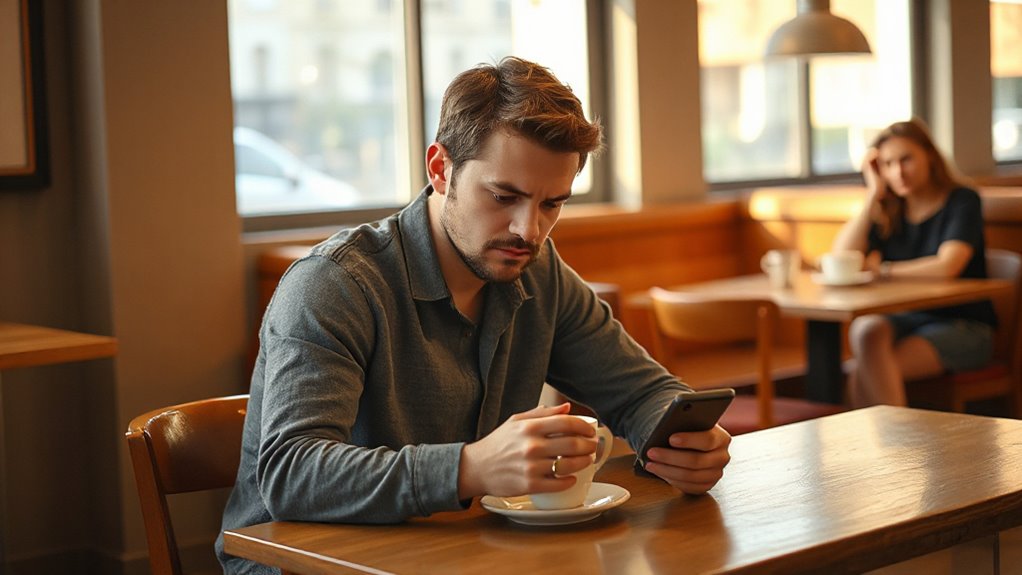
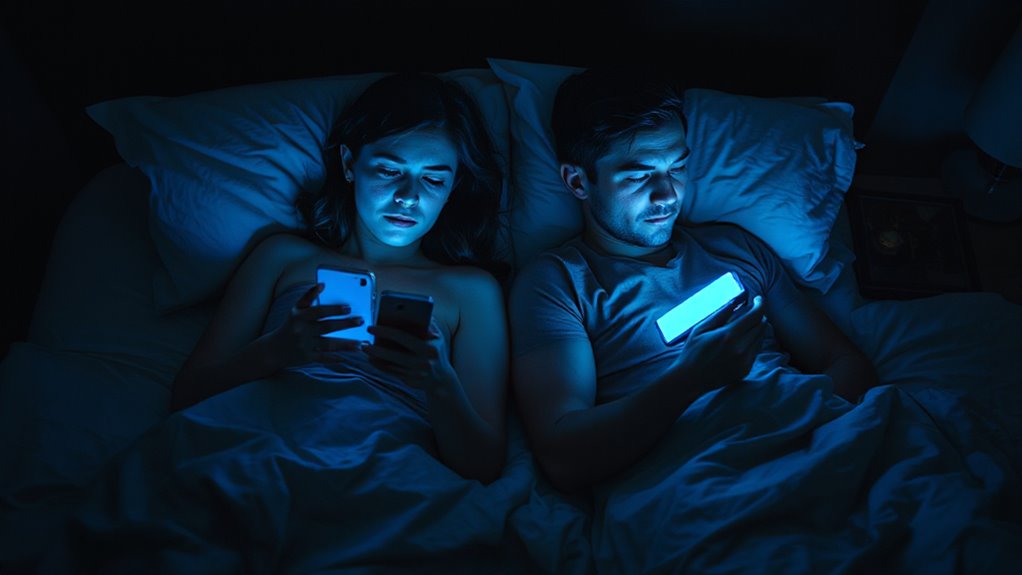
Women bear the brunt of this damage. Forty percent report feeling worse after seeing relationship posts online, compared to 28% of men. Meanwhile, 40% of all partnered adults resent how much time their partner spends staring at their phone. Instagram makes it worse: increased usage directly correlates with decreased satisfaction and more conflict. The intimacy killer isn’t always another person—sometimes it’s just the endless scroll. The instant-gratification culture breeds anxiety over delayed texts, turning normal communication pauses into relationship crises. Experts also warn that poor online privacy practices can magnify these issues by enabling electronic partner surveillance and unauthorized access to sensitive communications.
Social media doesn’t just damage relationships; it dismantles them. Forty-five percent of users have employed these platforms to end romantic partnerships. Online interactions create opportunities for neglect and reconnection with old flames, opening doors that might have stayed closed. The curated highlight reels make real partners look inadequate. Even Gen Z worries about the competition—15.43% fear AI companions could replace human relationships entirely. Online dating services were responsible for 1 in 6 marriages back in 2010, proof that digital platforms once genuinely fostered lasting connections.
Here’s the kicker: one-third of relationships now start online, and 74% of couples report positive internet impacts. Social media isn’t pure poison. But when 48% of young users broadcast their love lives publicly and 67% of couples share passwords, the line between connection and intrusion vanishes. The tool designed to bring people together is tearing them apart, one notification at a time. Real romance requires presence, not posts.