
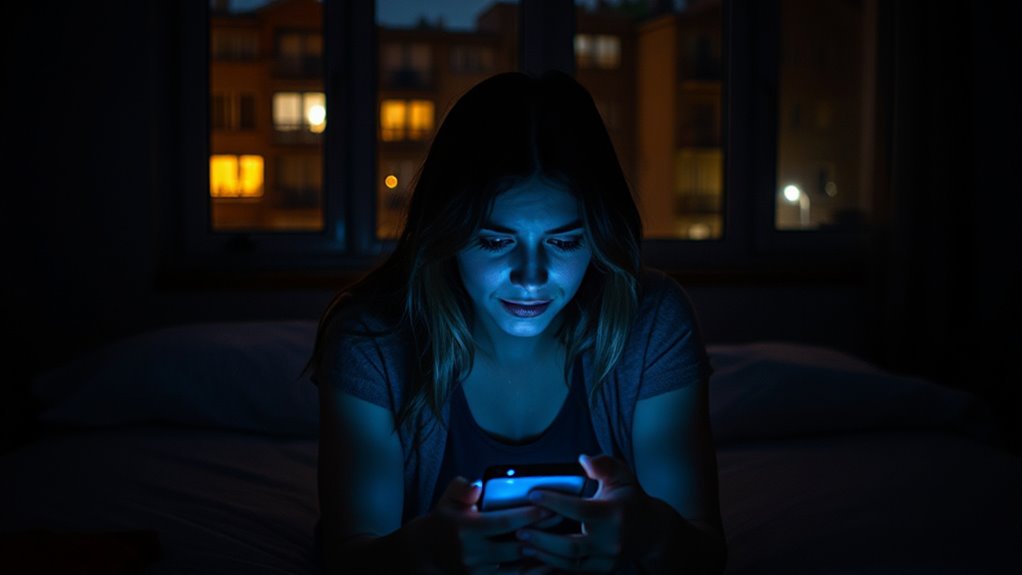


Smart women keep falling for the same trap, and it’s maddening to watch. They chase men who won’t text back, stay interested in guys who blow hot and cold, and somehow find stable partners boring. What gives?
The answer lies in how our brains are wired. Emotional unavailability creates mystery, making distant men appear intriguing as challenges to conquer. That lack of access heightens allure, positioning unavailable partners as prizes worth claiming. Women start viewing these men as enigmas, and uncertainty intensifies attraction in ways that predictable affection simply can’t match. This dynamic often involves subtle nonverbal cues that increase emotional charge and romantic tension.
Emotional unavailability triggers our brains to chase what feels scarce, turning distant partners into irresistible puzzles worth solving.
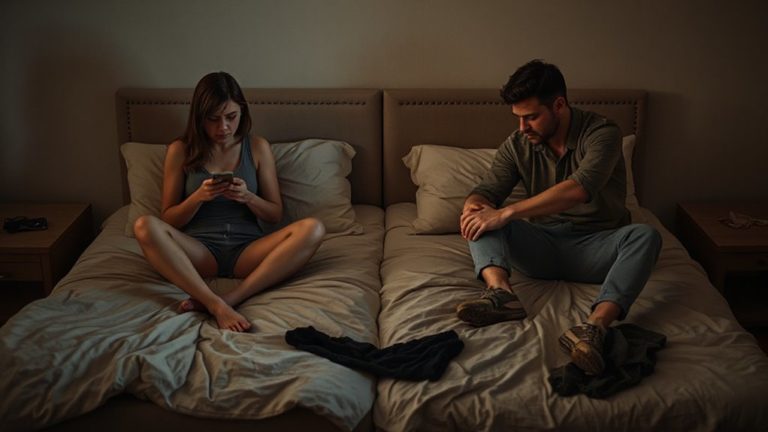
There’s also a power dynamic at play. Many women feel a subconscious need to prove their worth by overcoming emotional barriers. Earning attention from someone unavailable provides validation and significance. Independent women, perceived as non-needy, often intrigue men who fear vulnerability—creating a perfect storm of mutual emotional distance.
Sometimes unavailable partners feel safer. Pursuing someone emotionally distant provides a barrier to true closeness, which protects against full vulnerability and rejection risks. Fear drives these selections because maintaining safe emotional distance feels less terrifying than opening up completely.
Past patterns matter too. Childhood experiences with emotionally neglectful or unavailable caregivers create unconscious templates. Women often replicate these early dynamics, seeking to heal old wounds or normalize familiar pain. The brain prefers known emotional patterns, even negative ones, over unfamiliar stability. Women raised by narcissistic mothers may repeatedly seek partners who require them to earn love through constant effort and validation.
Here’s where it gets twisted: anxiety from unavailable men triggers intense excitement that gets mistaken for passion. This misattributed arousal creates spine-tingling thrills that feel more compelling than genuine connection. The cycle of hoping to transform an unavailable partner fuels ongoing intrigue. When decisions are based on others’ opinions rather than personal judgment, women chase external validation through unavailable partners who seem more valuable because they’re hard to get.
The cost is steep. These patterns erode self-esteem, create boundary issues, and lead to codependent dynamics where identity becomes tied to someone else’s emotions. Women end up investing more than they receive, amplifying feelings of inadequacy.
Breaking free requires recognizing these patterns and choosing differently. That means sitting with the discomfort of healthy availability instead of sabotaging good partners. It means building self-trust and questioning why uncertainty feels more attractive than stability.
Smart women deserve partners who show up consistently, not puzzles that need solving.