

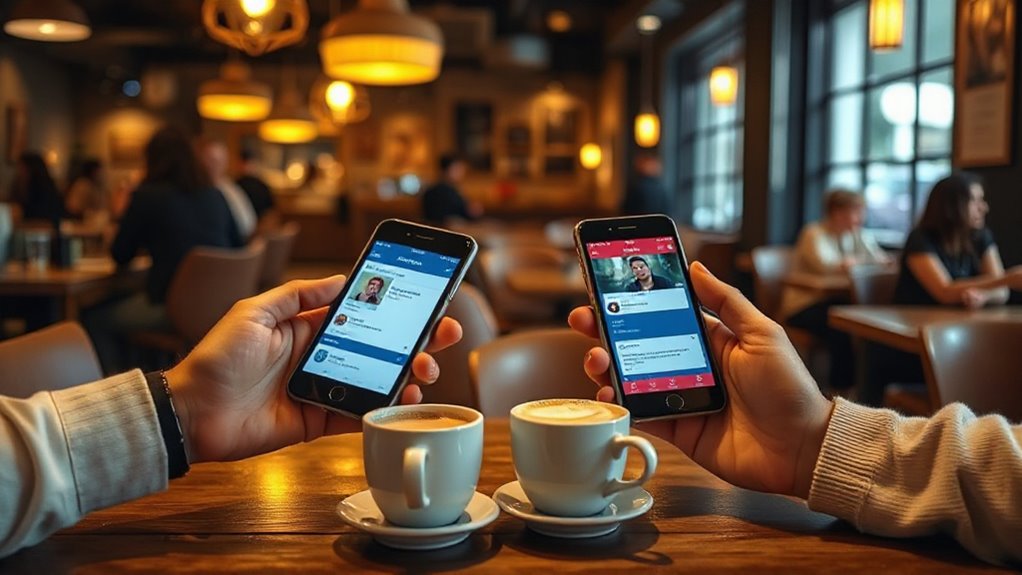







The online dating market in Europe is booming—valued at over $2.85 billion in 2024 and climbing fast—but most mainstream apps still treat plus-size singles like an afterthought. With more than 1,500 dating platforms crowded into the European market as of February 2024, you’d think someone would get body diversity right. The truth? Most don’t.
Over 1,500 European dating platforms exist, yet body diversity remains an afterthought in a $2.85 billion market.
Tinder dominates downloads across Europe and the U.S., but its algorithm and culture favor conventional beauty standards. Same goes for Bumble, Hinge, and Plenty of Fish—the big names pulling in revenue with paid features and premium subscriptions. They’re profitable, sure, but they’re not exactly safe spaces for anyone outside the narrow beauty window. Success stories on Tinder in the U.K. dropped nearly 5% from 2021 to 2022, and for plus-size users, the rejection rate feels even steeper.
Niche platforms are where the real progress lives. Apps targeting specific communities—like LGBTQ+ platforms Grindr and HER, or polyamorous-focused Feeld—prove that serving underserved groups isn’t just ethical, it’s profitable. Feeld turned a profit with 1.5 million active users. Archer, launched by Match Group, hit 1.5 million downloads in its debut year and drove 25% revenue growth. These aren’t charity projects. They’re business models that work because they respect their users.
So where are the dedicated plus-size platforms in Europe? A few exist, but they’re scattered and under-resourced compared to giants like Match Group or Bumble. Meanwhile, AI-driven matching algorithms—hyped as the future of dating—often reinforce biases baked into their training data. If the algorithm learns from swipe patterns that favor thin bodies, it’ll keep serving thin bodies.
Italy’s market is growing fastest at over 10% annually, driven by younger users hungry for digital-first connection. Germany leads in internet penetration at 94%. France, the U.K., and Spain remain dominant. But none of these countries have cracked the code on inclusive dating platforms at scale.
The demand is there. The technology exists. What’s missing is the will to build apps that treat plus-size singles like the paying customers they are—not niche curiosities, but full participants in a $6.38 billion market. Leo men often respond strongly to partners who offer genuine praise and visible loyalty, which can be an asset when building supportive dating communities.