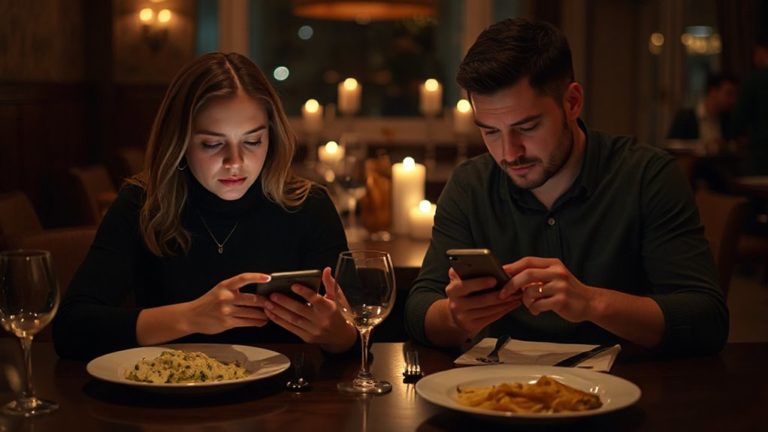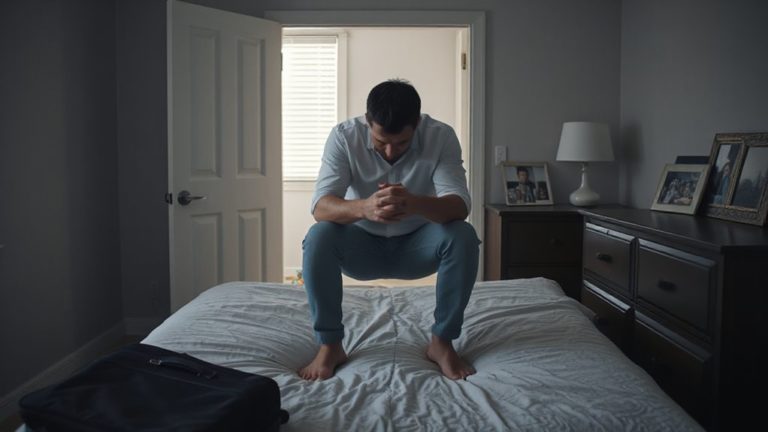


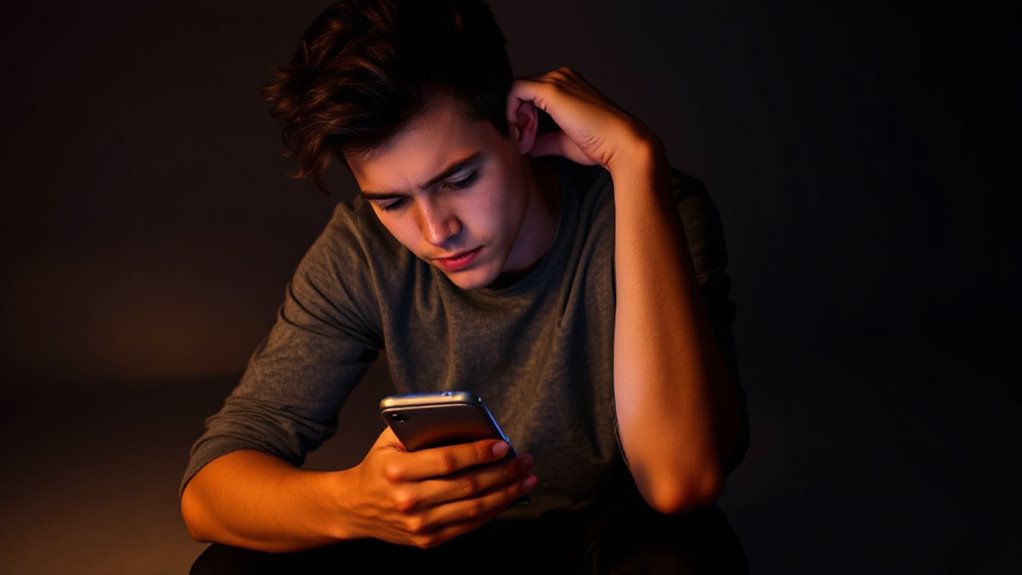
Most men on dating apps are getting crushed, and the numbers don’t lie. About 64% of men report feeling insecure about barely getting any messages. Meanwhile, only 25% feel overwhelmed by too many, compared to 54% of women. The match rates tell the same brutal story: men get markedly fewer matches, and when effort consistently yields minimal results, it messes with your head.
64% of men feel insecure about barely getting messages while 54% of women feel overwhelmed by too many.
The psychological damage is real. Men with low match success report feeling insignificant and unworthy. Self-confidence tanks. Loneliness and diminished self-worth show up in study after study. One-sided communication patterns drain you emotionally, and anxiety and depression rates are higher among guys using these platforms. It’s not melodrama—it’s documented. Rejection should be viewed as information, not condemnation, indicating incompatibility at that time.
Every interaction brings background stress. Crafting opening messages becomes an exhausting performance where one wrong word might kill your shot. You’re competing against what feels like an endless lineup of other guys, and comparison generates constant pressure. Recovery from rejection takes longer for men, and resilience to repeated failure runs lower. The grind wears you down.
Cultural norms make it worse because men aren’t supposed to talk about this stuff. Express vulnerability about dating app struggles and you risk getting labeled “too emotional.” So guys suppress their feelings, which further tanks confidence and mental health. Gender expectations prevent men from seeking support, and social isolation makes it impossible to process the negative experiences properly. When 45% want more empathy after rejection, the current system clearly falls short for most users.
The effort-to-result ratio feels rigged. Men report putting in disproportionate work relative to responses received. The imbalance in numbers, effort, and expectations creates a system that many conclude isn’t worth the trouble. When low outcomes happen across millions of users, it suggests environmental failure, not individual shortcomings. The average male Tinder user gets about 1 match per 130-140 swipes, making the system feel nearly impossible to navigate successfully.
Repeated negative experiences stack up and erode confidence over time. Guys try self-improvement, change their profiles, adjust their approach, but often see minimal success. Self-blame kicks in. Some men informally describe “Tinder PTSD”—actual dread from returning to apps after bad experiences. Eventually, many just check out of the dating market entirely, convinced the whole structure is fundamentally broken.