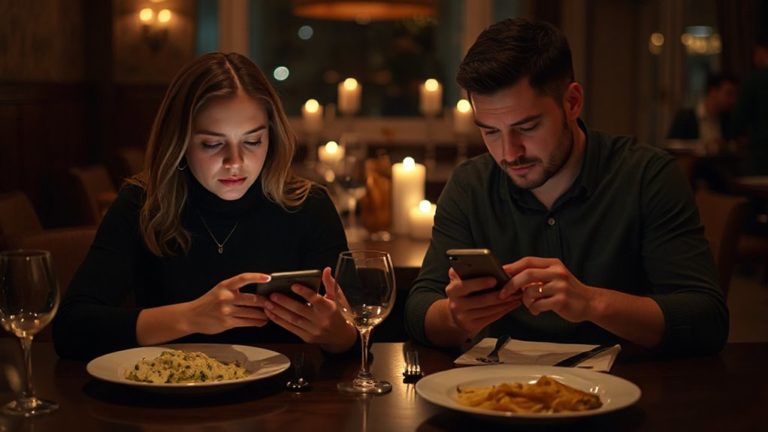




Quality beats quantity when texting someone you’re interested in. Focus on personalized messages with positive language rather than bombarding them with texts throughout the day. Respond promptly to show you’re accessible, but avoid serious conversations that could create misunderstandings. Women prefer discussing feelings while men lean toward lighter topics like sports. Long-distance connections need more frequent texting, but nearby relationships benefit more from voice calls. Master these fundamentals to reveal deeper attraction strategies.
Why does that text sit there for three hours without a response, making someone’s stomach twist like they’re waiting for test results? Because texting has become the primary battleground where attraction lives or dies, and most people are fighting with broken weapons.
Texting has become the primary battleground where attraction lives or dies, and most people are fighting with broken weapons.
The frequency game isn’t what it seems. Bombarding someone with messages doesn’t build connection—it builds irritation. Research shows that young people already send over 100 texts daily, so standing out requires strategy, not volume. Heavy texters prefer texting over calls, but preference doesn’t equal effectiveness. Smart texters focus on quality over quantity, switching topics to maintain engagement instead of recycling the same boring conversations. Personalized openers referencing specific details can boost interest early on.
Women and men play different texting games entirely. Women prefer texting and use it to discuss relationships and feelings, while men gravitate toward sports and politics. Understanding this split matters because it reveals what actually sparks interest. Women text about 35% of their total mobile time, making it their primary communication channel. Men still prefer talking 45% of the time, which means forcing lengthy text conversations might backfire.
Distance changes everything. For long-distance relationships, frequent texting directly correlates with satisfaction. For nearby couples, it barely moves the needle—voice calls matter more. This means adjusting texting frequency based on physical proximity, not emotional desire. Video calls, surprisingly, don’t substantially impact satisfaction regardless of distance. Long-distance couples actually engage in more frequent communication across all digital channels because remote communication becomes essential for maintaining their relationship continuity.
Timing kills more potential connections than bad pickup lines. When someone checks their phone every hour to reduce anxiety about missing out, delayed responses create genuine stress. Responsive texting predicts how accessible and engaged someone appears, which directly affects attraction levels. Using positive language in messages can also enhance the connection.
The content trap catches everyone. Texting for assurance, affection, and emotional expression builds satisfaction, but conflict texting destroys it. Misunderstandings escalate quickly without tone and facial expressions. Smart communicators avoid serious discussions via text entirely. Women often use text messaging as an extension of nurturing behaviors, which explains their preference for emotional and supportive conversations.
Anxiety management through texting works, but moderation prevents dependency. Frequent texting can alleviate relationship insecurity while reducing face-to-face conflict by providing alternative communication channels. However, balance remains essential—texting should enhance connection, not replace genuine interaction. Strategic incorporation of voice calls and varied communication modes creates stronger bonds than relying solely on text messages.
Frequently Asked Questions
How Long Should I Wait Before Responding to Avoid Seeming Desperate?
Someone should wait 15-30 minutes during early dating stages to show calculated interest without appearing overeager. This sweet spot avoids seeming desperate while maintaining engagement.
After establishing connection, they can match their partner’s response timing—if someone texts back quickly, responding similarly shows interest. Consistency matters more than specific delays.
Taking hours or days when previously responsive signals disinterest, regardless of intentions.
What Should I Do if They Leave Me on Read?
Don’t spiral into overthinking mode. People get busy, deal with personal stuff, or simply forget to respond—it’s rarely personal.
Give them space for 24-48 hours, then send one casual follow-up if needed.
Focus on other activities instead of obsessively checking your phone.
If they consistently leave you hanging without explanation, that’s valuable information about their interest level and communication style.
Is It Okay to Double Text if They Don’t Respond?
Yes, but timing matters. Wait about four hours before sending that second text—data shows this actually improves response rates.
One follow-up is fine; three makes someone look desperate.
If they ignore the double text too, that’s the signal to back off.
Don’t mask it with jokes or memes either.
Sometimes people genuinely miss messages, but repeated silence speaks volumes.
How Do I Know if Someone Is Genuinely Interested Through Texts?
Look for consistent initiation—they text first, not just respond. Messages come quickly after conversations end and reference previous talks.
They ask open-ended questions, share personal thoughts, and make concrete plans they actually follow through on.
Quick response times during their free hours matter too.
If they’re sending longer texts with emojis, checking in thoughtfully, and prioritizing your conversations, they’re interested.
Should I Use Emojis When Texting Someone I’m Attracted To?
Yes, but use them strategically. Research shows emoji users are rated as more responsive and likable than text-only senders. Stick to friendly emojis rather than overly affectionate ones—kissing faces come across as too strong early on.
Men benefit more from using emojis when flirting, while women should use them moderately. Emojis clarify romantic intentions and boost perceived connection, but don’t overdo it.