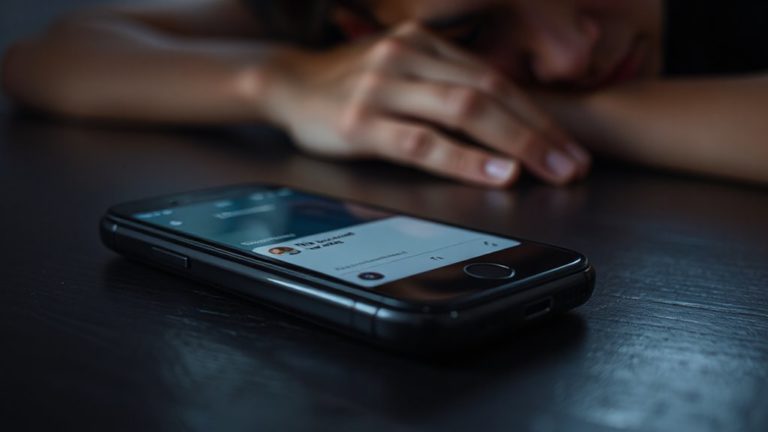



When someone’s partner struggles with anxiety, the instinct is often to fix, minimize, or simply hope it goes away on its own. This approach backfires spectacularly. Anxiety doesn’t respond to wishful thinking, and partners who don’t understand this basic truth often make everything worse. Texting patterns that show consistent response timing can help maintain connection even during anxious moments.
People with generalized anxiety disorder are twice as likely to experience relationship problems like frequent arguments. They’re three times more likely to avoid intimacy entirely. The numbers don’t lie—anxiety tears relationships apart when partners don’t know how to respond effectively.
Anxiety destroys relationships when partners respond with criticism instead of understanding—the statistics prove it.
Here’s what makes this particularly challenging: stressed women typically provide more support to anxious partners than stressed men do. When stress hits, men tend to make negative comments instead of offering help. This gender difference creates a vicious cycle where the person who needs support most gets criticism instead.
The good news? Research shows that enhanced support from significant others directly correlates with increased positive affect. When partners receive proper support, their anxiety levels drop through reduced perceived stress. Depression symptoms decrease too. But this only works when the support is actually supportive.
Most people get this wrong. They think support means solving problems or offering reassurance that everything will be fine. Real support means learning about anxiety disorders first. It means encouraging professional treatment instead of trying to be the therapist. It means setting realistic, step-by-step goals and measuring progress individually rather than expecting overnight transformation.
Seventy-four percent of adults turn to their spouse or partner for emotional support, but wanting support and knowing how to give it are completely different skills. Partners need to understand that their own mental health matters too. Supporting someone through anxiety recovery is exhausting work that stresses the supporter. Using varied communication modes, such as incorporating voice calls, can strengthen the bond during this process.
The most effective approach combines practical action with emotional intelligence. Stop trying to fix the anxiety and start supporting the person. Encourage healthy behaviors without criticism. Recognize that positive partner interactions actually lower stress hormones and reduce mental health symptoms through reciprocal support dynamics. Understanding that perceived support has greater impact on mental health outcomes than received support helps partners focus on how their efforts are actually experienced. Couples who acknowledge how stress affects their interactions can actually grow closer through this recognition.
This isn’t about becoming a co-therapist. It’s about becoming a better partner who understands that love sometimes means stepping back while stepping up simultaneously.