


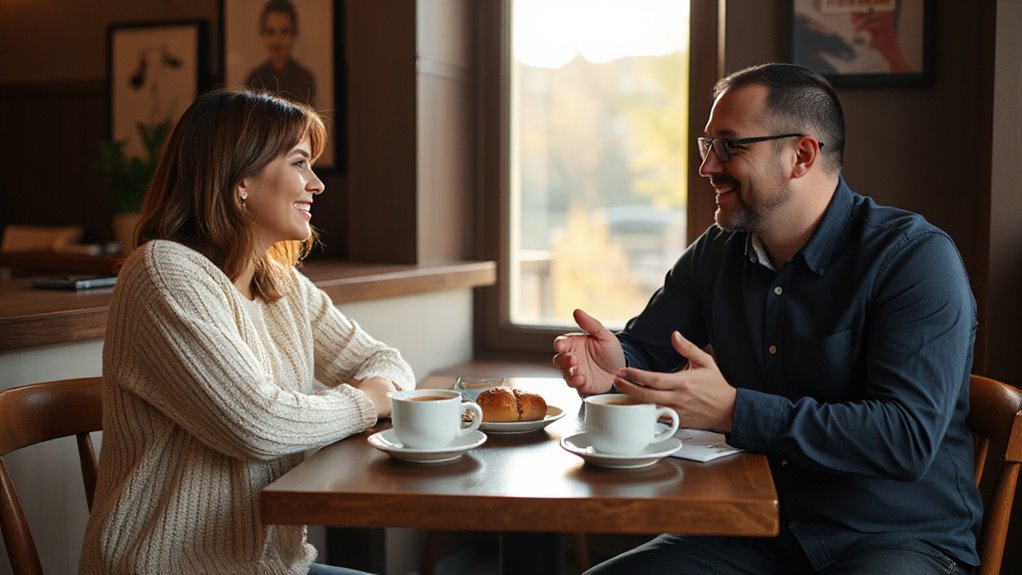






When a man actually pays attention to a woman—not the passive, half-listening kind where he’s mentally running through his fantasy football lineup—something shifts in the relationship. Real attention creates psychological safety. It signals that her thoughts matter, her feelings register, and she’s not just background noise in his life.
Real attention creates psychological safety—it signals her thoughts matter and she’s not just background noise in his life.
Active listening is the foundation. This means eye contact, nodding at appropriate moments, and asking follow-up questions that prove he absorbed what she said. Research shows men rely heavily on romantic partners for meaningful social connection, often more than women do. When he listens genuinely, he’s not just being polite—he’s investing in the primary relationship that shapes his mental health and overall life satisfaction.
Tone matters more than words for many men, but the reverse holds weight too. How he speaks to her—absent resentment, delivered with respect—determines whether she feels valued or dismissed. Regular discussions about emotions help both partners express needs, but only if those conversations happen without defensiveness or contempt creeping in.
Physical presence counts. Putting the phone face-down during dinner. Turning toward her when she speaks instead of half-facing the television. These small choices demonstrate priority. Committed men naturally develop what researchers call attentional bias—they literally notice attractive alternatives less as their focus narrows toward their partner. But this doesn’t happen by accident. It requires intentional effort to secure couple-oriented experiences and maintain that selective focus. Studies using dot-probe tasks have shown that men in exclusive relationships display automatic inattention to attractive alternative partners during early-stage visual processing.
Vulnerability accelerates connection. When he shares something difficult or uncertain, it opens reciprocal space for her to do the same. Men often express emotions through physical intimacy rather than words, but genuine closeness requires both channels. In early relationship stages, initiating contact demonstrates intentionality—men who reach out first signal genuine interest rather than waiting passively for connection to happen.
Appreciation expressed through actions reinforces contributions. Noticing what she does—cooking, organizing, planning—and acknowledging it verbally or reciprocally matters. It’s not about grand gestures or performative romance. It’s about sustained attention to the person he chose, maintained through negotiation of individual needs and shared expectations. Sharing positive experiences and routines also builds fondness through the mere exposure effect, strengthening long-term bonds.
That balance between autonomy and couplehood strengthens the partnership’s foundation, making it resilient enough to weather inevitable challenges.