


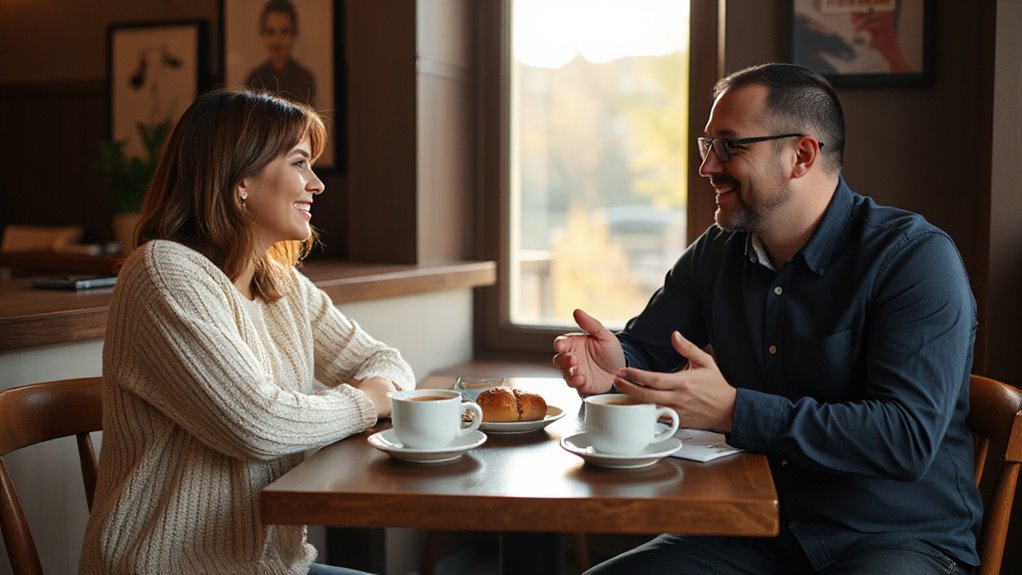






Why Men Struggle to Open up Emotionally With Romantic Partners
Too often, men find themselves caught in a strange contradiction: they’ll spill their guts to their closest friends over beers but clam up completely when their partner asks how they’re feeling. This isn’t mere stubbornness. Years of “be a man” messaging create what Dr. Ronald Levant calls normative male alexithymia—a genuine inability to identify and articulate emotions.
Add avoidant attachment patterns learned in childhood, where vulnerability got dismissed or punished, and the nervous system literally pushes intimacy away. Professional environments reward stoicism and control, traits that sabotage relationships. The result? Emotional shutdown disguised as strength. Research shows that avoidant attachment significantly contributes to trust and intimacy problems in many relationships.
What Makes Sharing Feelings With a Partner Feel Riskier Than With Friends?
The arithmetic of vulnerability changes drastically when the person across from you shares your bed.
Vulnerability with a romantic partner carries exponentially higher stakes than with friends—your nervous system recognizes this arithmetic instantly.
With friends, rejection stings but doesn’t threaten your daily existence.
With a partner, the stakes skyrocket—her silence after you open up can feel like ice walls closing in.
Your nervous system knows this. It remembers past dismissals, predicts social pain, and activates fight-or-flight: pounding heart, tight chest, sweaty palms.
Anxious attachment makes you hypervigilant about abandonment.
Avoidant patterns scream that needing someone violates your self-sufficiency rules.
Either way, your brain tags emotional honesty with a partner as legitimately dangerous. Studies show that combining strategies like active listening and emotional regulation improves outcomes by 39% when external support is used.
The Real Difference Between Disappointing a Friend and Losing a Partner
Beyond the emotional turbulence, partner loss detonates practical realities that friend disappointment never touches. Splitting assets, dividing holidays, coordinating custody—friendships end without lawyers. Society acknowledges breakups with sympathy and time off; friend loss gets zero bereavement leave.
Yet friendships carry their own brutal edge: grief without witnesses, pain dismissed as trivial. No one sends casseroles when your best friend ghosts. The paradox? Partner loss rearranges your entire infrastructure. Friend loss quietly confirms the fear that you’re fundamentally unlovable—and nobody even notices you’re bleeding. Both hurt. Different wounds, different scars. Early intervention and open communication can often prevent this gradual erosion of connection, a common pathway to partners growing apart noted in studies of communication breakdown.
Why “Just Talk to Me” Backfires: Communication Style Mismatches Explained
Asking someone to “just talk to me” assumes both people speak the same emotional language—they don’t.
One person wants immediate issue resolution with brief, direct points. The other needs 45 seconds of eye contact and chit-chat first to feel connected.
Mirroring techniques backfire when tone mismatches or interpretation replaces exact words, creating power plays instead of understanding.
I-statements fail spectacularly when followed by accusations: “I feel like you’re a slob” triggers defenses, not dialogue.
The real problem? Misreading your partner’s mode as malicious intent. Tag the mismatch without personalizing it.
Sometimes stopping talk for silent eye contact outperforms any structured technique.
Regularly acknowledging small efforts can shift the dynamic and create emotional safety by increasing positive interactions gratitude practice.
How Masculine Expectations Silence Men in Relationships
Why do men share relationship problems with drinking buddies but freeze up when their partner asks what’s wrong? Traditional masculinity demands stoicism. Vulnerability equals weakness. Emotions stay bottled because real men don’t crack under pressure.
This cultural straitjacket forces men to maintain a public facade of self-sufficiency while privately drowning. When masculinity feels threatened—say, feedback suggesting femininity—men self-isolate to restore their manhood.
The irony? Withdrawal makes things worse, signaling relationship trouble without regaining masculine status. Men confess to male friends, then dismiss conversations with women as meaningless “blabber” to preserve their image. The shame cycle continues, blocking genuine connection. Research shows that improving emotional resilience and communication skills can directly improve relationship outcomes and reduce loneliness by strengthening psychological well-being and emotional resilience.
Three Practical Ways to Start Emotional Conversations Without Defensiveness
Knowing the problem doesn’t fix it—men need actual tools to break the silence without blowing up the conversation before it starts.
First, lead with care, not complaints. Opening with “I care about you, and that’s why I need to talk” builds connection before dropping the hard stuff.
Start with empathy before diving into tough topics—care first, concerns second, connection always.
Second, swap “you” accusations for “I” observations—”I see the dishes aren’t done” beats “You never clean up.”
Third, actually listen. Summarize what she said before launching your rebuttal.
Slow down, use a calm tone, and ask what she needs instead of assuming.
Specific requests work better than vague frustration.
Connection beats winning every time.
Therapy and consistent transparency can dramatically help rebuild trust, especially when both partners fully commit to the process and demonstrate sustained behavioral change over months consistent behavioral changes.
When to Seek Outside Support: Male Therapists, Friends, and Perspective
Sometimes the conversations at home aren’t enough, and that’s not failure—it’s reality.
Men who confess easily to friends but freeze around women often benefit from outside perspective. A male therapist can offer space to explore masculinity, fatherhood, or work stress without triggering old wounds. Friends matter too—supportive groups normalize asking for help.
Recognize the signs: constant irritability, withdrawal, persistent overwhelm.
Two-thirds of therapy clients are women because masculine norms label vulnerability as weakness. Challenge that.
Early intervention prevents small cracks from becoming canyons. Seeking support isn’t soft. It’s strategic. A dating coach can act as a personal trainer for romance, offering strategies and practical tools to build confidence and communication skills.