



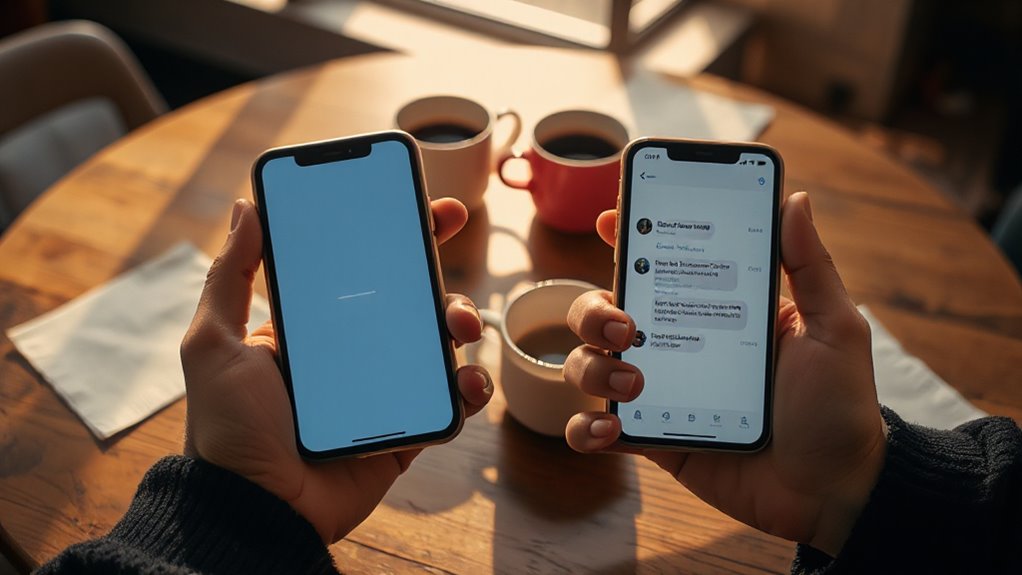
Why do perfectly good dates crash and burn in the hours after they end? Often, it’s because someone overthinks the follow-up text. That simple “thank you” message becomes a minefield of second-guessing and strategic calculations.
Here’s the truth: timing matters more than you think. Research shows that responding the same night demonstrates genuine interest, while waiting several days signals disinterest or game-playing tactics. Your date isn’t sitting there with a stopwatch, but they are paying attention. Send that text when it feels natural, not when some dating guru’s formula tells you to. In fact, texting within 24 hours is generally seen as ideal to show interest effectively.
Your date isn’t timing you with a stopwatch, but they’re definitely paying attention to when you reach out.
The content matters too, but not how you’d expect. Authentic appreciation beats polished perfection every time. A genuine “I had a great time tonight” reads completely differently than a crafted message designed to impress. Your date can smell calculated behavior from a mile away. Personalized messages consistently outperform generic templates in relationship development.
Pay attention to what actually happened during your date. Did they lean in when you talked? Were they animated and engaged? Physical engagement and voice modulation during the date predict how enthusiastic your follow-up should be. High-interest signals justify more immediate and enthusiastic communication.
If they seemed distant or distracted, keep your message brief and conservative.
The romantic versus try-hard line comes down to balance. Excessive texting frequency triggers perceptions of desperation. One thoughtful message shows interest; five follow-ups scream neediness. Communication patterns established early set the trajectory for everything that follows, so get this right.
Distance changes the rules entirely. Long-distance relationships thrive on increased texting responsiveness, while geographically close relationships follow different patterns. Understanding how perceived responsiveness affects relationship outcomes helps you calibrate your follow-up approach. Know which category you’re in.
Gender expectations? They’re less predictable than you think. Communication preferences vary considerably by individual rather than gender alone. Age and educational background influence expectations more than outdated dating rules. Waiting several days before initiating contact can actually help maintain attraction and prevent appearing overly eager.
The bottom line: send the thank you text if you genuinely want to. Make it personal, keep it brief, and send it when it feels right. Authenticity wins over strategy every time, and your gut instinct about timing is probably better than any formula.