


Online dating works for roughly 30% of U.S. adults who use it, with one in ten couples meeting their partners this way. The upside? Convenience, expanded options, and higher marriage satisfaction rates for those who succeed. The downside? Romance scams cost users $1.14 billion annually, 65% quit within a month from decision fatigue, and over half of profiles contain lies about income or appearance. Success depends on persistence, realistic expectations, and smart safety practices that separate winners from casualties.
Why has swiping through strangers’ photos become as routine as checking the weather? Because 350 million people worldwide have decided that finding love through algorithms beats waiting for chance encounters at coffee shops. With 30% of U.S. adults now using dating apps, this isn’t some niche experiment anymore—it’s how modern romance works.
Swiping has replaced serendipity as 350 million people choose algorithmic matchmaking over coffee shop encounters.
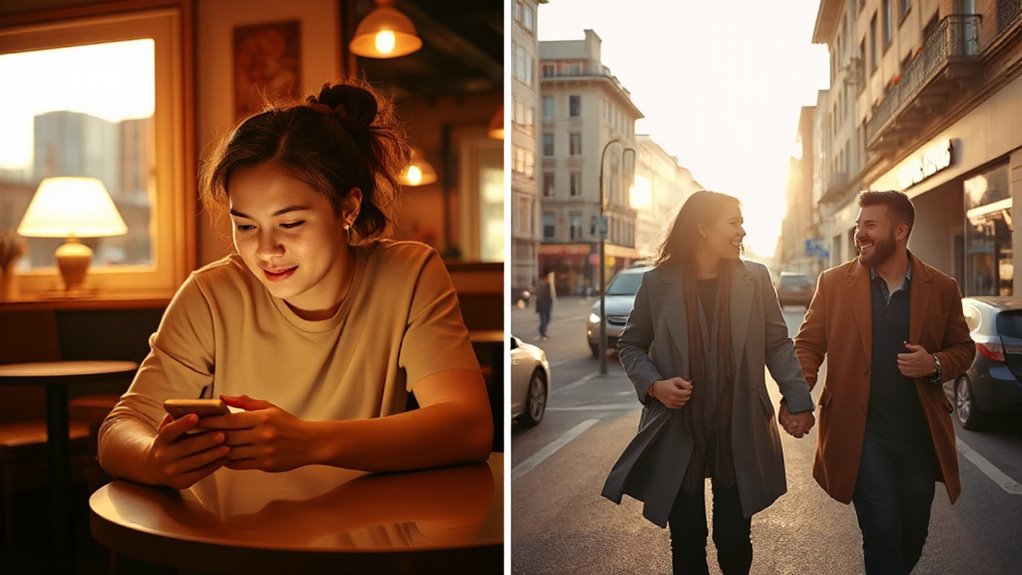
The numbers tell a compelling story. About one in ten partnered adults met their current partner online, and that jumps to one in five for people under 30. Even more striking: 27% of recently engaged couples met online, crushing the measly 16% who met through friends. Marriages that start online actually show higher satisfaction rates and lower divorce rates than traditional meetups. This shift has also prompted more people to seek advice on post-date communication to maintain these new relationships.
For LGB couples, the success rate climbs even higher, with one in four finding partners through dating platforms.
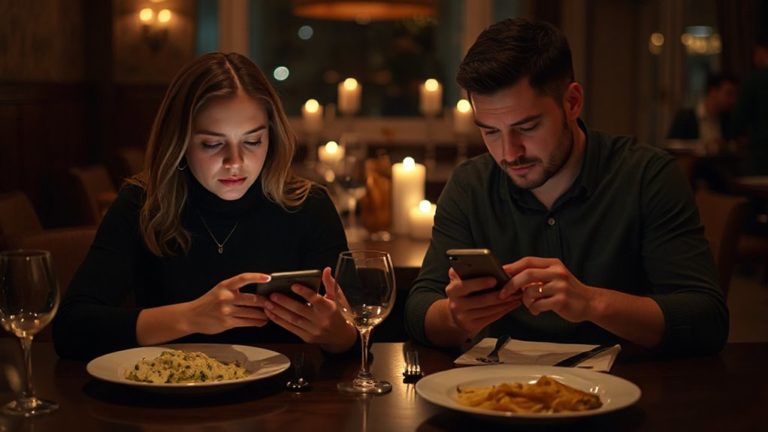
But here’s where reality bites back. A staggering 65% of online daters quit after just one month. Why? Because steering through nearly 1,500 dating sites creates serious decision fatigue, and standing out among Tinder’s 60 million active users feels impossible. The time investment is brutal—crafting profiles, filtering preferences, endless messaging.
Then there’s the dark side nobody talks about enough. Romance scams drained $1.14 billion from victims in 2023 alone. Women get bombarded with inappropriate messages and photos. The gender imbalance—67% male users—creates a feeding frenzy that makes genuine connections harder. Most alarming? Sixty-two percent of users are already in relationships or married, turning platforms into deception playgrounds. Making matters worse, over half of users lie on their profiles about everything from appearance to income.
Yet the industry keeps exploding. Revenue hit $6.18 billion globally in 2024, with projections reaching $21.9 billion soon. That growth reflects genuine demand, not just clever marketing. Apps have fundamentally transformed dating culture, making meeting online as normal as saying “We met at a coffee shop” was for previous generations.
Frequently Asked Questions
How Much Does Online Dating Typically Cost per Month?
Most dating apps charge between $20 and $60 monthly for premium features. The average user spends about $8 per month, though paying subscribers typically shell out $18-19 monthly.
Budget options like OkCupid start around $10, while elite apps like The League cost $99 weekly.
Match.com ranges from $3-20 depending on commitment length. Factor in extra costs for boosts and unlimited swipes.
What’s the Best Age to Start Using Dating Apps?
Most people should start using dating apps around 20-22 years old. That’s when they’ve got enough emotional maturity to handle rejection and aren’t completely broke.
The legal minimum is 18, but honestly, most teenagers aren’t ready for the emotional rollercoaster.
Wait until college or after—you’ll have better social skills, clearer expectations, and won’t take every ghosting personally.
How Long Should I Wait Before Meeting Someone in Person?
Wait at least a week before meeting someone from a dating app.
Most safety experts recommend several meaningful conversations first—three to five solid exchanges where someone can gauge intentions and spot red flags.
Pressure to meet immediately is actually a warning sign.
People who wait longer report feeling safer and more prepared.
Trust builds through consistent communication, not rushed meetups.
Should I Use Multiple Dating Platforms at the Same Time?
Yes, using multiple platforms makes sense—most successful daters do it. One in five users juggles five apps simultaneously because it widens your pool and increases matches.
But don’t go overboard. Managing too many profiles burns you out fast and eats time without better results. Pick two or three quality platforms that match your goals, keep profiles consistent, and focus on meaningful conversations over endless swiping.
How Do I Know if Someone’s Profile Is Fake or Real?
Someone should reverse-search profile photos to catch stolen images, then search their name with “dating scam” online.
Red flags include minimal personal details, refusing video calls, asking personal questions too quickly, or requesting money.
Recently created profiles with few photos scream fake.
Trust gut instincts—if they dodge meeting in person repeatedly, they’re probably catfishing.