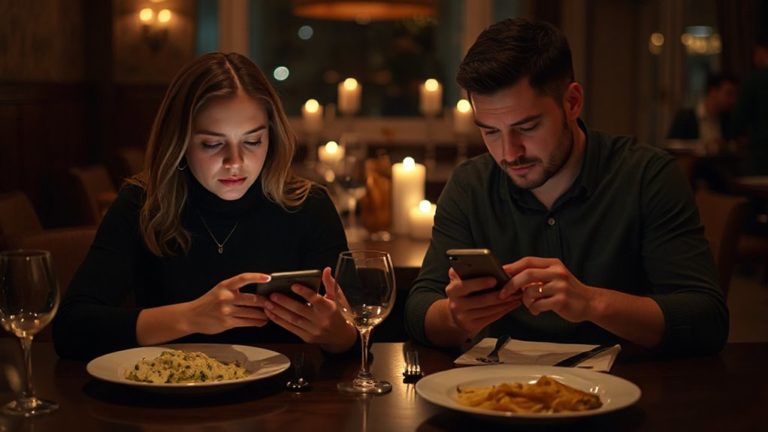
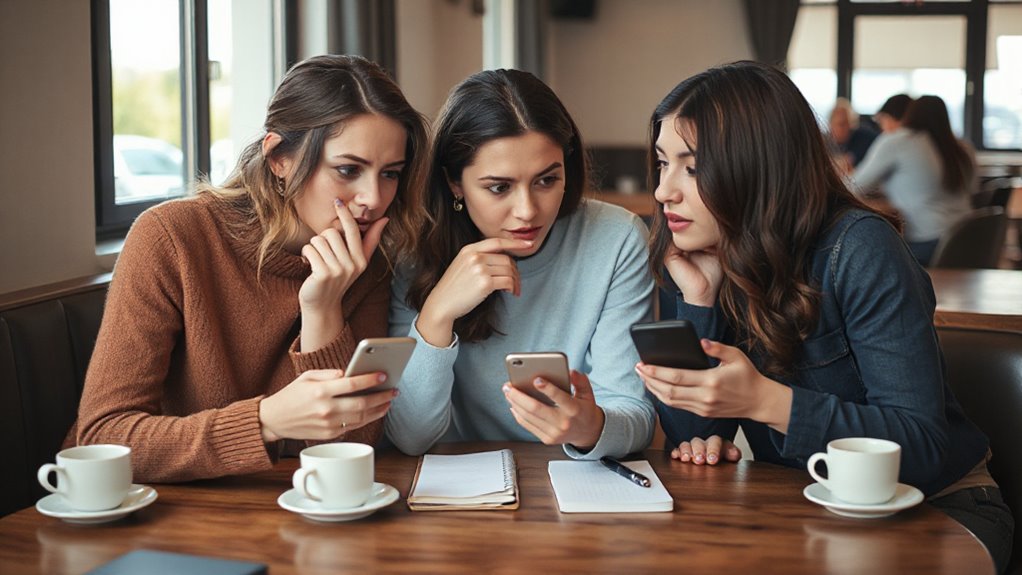


Creating a fake woman’s dating profile reveals uncomfortable truths about online romance that most users would rather ignore. Within hours of going live, the messages flooded in—a relentless stream that ranged from desperate to disturbing. This wasn’t just an experiment. It was a window into what women face every day on these platforms. Many experts recommend meeting in public and informing friends of plans to stay safe, so always take precautions like meeting in a crowded place and letting someone know where you’ll be public meeting tips.
Within hours of going live, the messages flooded in—a relentless stream that ranged from desperate to disturbing.
The numbers tell a brutal story. Nearly half of all online daters have experienced at least one unwanted behavior, and 38% have received sexually explicit messages or images they never asked for. Another 30% kept getting contacted after clearly saying no. Some got called offensive names. A smaller but troubling 6% were threatened with physical harm. The fake profile attracted all of it, proving these aren’t isolated incidents but standard operating procedure for too many users.
But the real terror wasn’t just harassment. It was the sophistication of the scams. Modern fraudsters have abandoned obvious red flags. They claim ordinary jobs now, not just military or medical professions. They say they’re divorced or widowed, adding emotional depth that feels authentic. They list master’s degrees and developed countries as home bases. Strategic imperfection has replaced cartoonish fakery, and it works.
The scale is staggering. Ten percent of all new dating profiles are fake, with male profiles 21% more likely to be fraudulent. Analysis of over 8 million profiles confirms what the experiment showed firsthand: more than half of U.S. online daters have encountered a suspected scammer. Meanwhile, 57% of users admit lying about something on their profiles, with married men accounting for 67% of those liars. Users listing their age as 64 had the highest fraud rate, highlighting how scammers target specific demographics.
Safety concerns run deep. Sixty-three percent worry about device infections from dating apps, and 61% fear stolen data. Yet people still share recklessly—10% post their full home address publicly, 15% include family photos, and 9% share intimate images where anyone can see them. Despite the risks, only 36% use strong passwords to protect their accounts from compromise.