


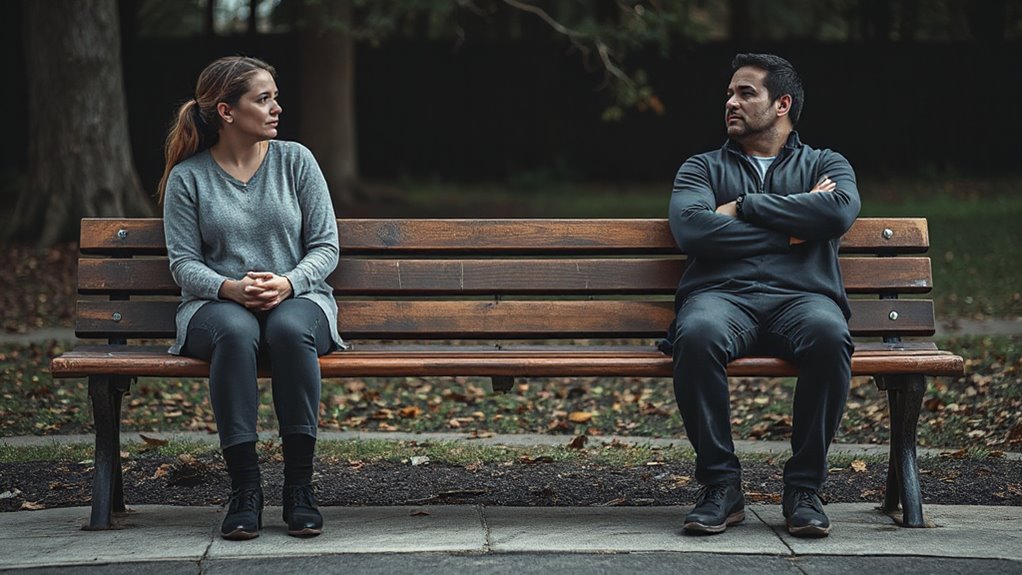

Rebuilding trust demands brutal honesty, not comfortable conversations. The betrayer must become an open book—sharing whereabouts, feelings, and actions without exception. Research shows 86% of successful couples maintain total transparency after betrayal. Both partners need extensive discussions about what happened, even when it’s messy and painful. Active monitoring isn’t punishment; it’s proof through actions, not words. Professional therapy accelerates recovery by providing essential communication tools and emotional processing techniques that transform damaged relationships.

Trust, once shattered, doesn’t magically reassemble itself like some relationship fairy tale. The hard truth? Rebuilding it requires deliberate action, uncomfortable conversations, and a willingness to face the mess head-on.
The foundation starts with complete transparency. Research shows that 86% of successful couples maintain total openness after betrayal, while those who try to sweep things under the rug fail spectacularly. The betrayer must become an open book—sharing whereabouts, feelings, and actions without being asked. No more secrets, no more “protecting” your partner from difficult truths.
Communication becomes non-negotiable. Couples who discuss the breach extensively have a 58% chance of regaining most trust, compared to just 32% for those who avoid the topic. Yes, these conversations hurt. They’re awkward, messy, and emotionally draining. But avoiding them guarantees failure. Both partners need to understand what happened and why, not just sweep it aside and hope for the best.
Active monitoring helps rebuild confidence over time. This means consistent check-ins, accountability measures, and proving trustworthiness through actions, not just words. The betrayer should expect scrutiny and welcome it as part of the repair process.
Genuine remorse matters more than elaborate apologies. Empty words mean nothing without behavioral changes that demonstrate real accountability. The person who broke trust must take full responsibility without making excuses or blaming circumstances.
Your relationship history markedly impacts recovery chances. Early experiences fundamentally shape how individuals approach trust development in romantic relationships, influencing their ability to rebuild after betrayal. Early betrayals in new relationships prove much harder to overcome than breaches that occur after trust has been well-established. People with past relationship trauma or anxious attachment styles face additional challenges in rebuilding trust.
Professional help often accelerates the process. Therapists provide tools for processing complex emotions and developing healthy communication patterns that many couples struggle to create alone. Working together in therapy helps couples overcome the walls of anger that prevent them from seeing each other positively again.
Creating structural safeguards prevents future breaches. This might include agreed-upon boundaries, regular relationship check-ins, or transparency protocols that both partners commit to maintaining.
Recovery takes time, and the timeline isn’t predictable. Some couples rebuild stronger foundations, while others discover the damage runs too deep. Either outcome beats living in limbo.
Frequently Asked Questions
How Long Does It Typically Take to Rebuild Trust After Betrayal?
Rebuilding trust after betrayal typically takes 2-5 years, though couples in therapy often recover within 2-3 years.
The timeline depends on several factors: how quickly the betrayer comes clean, whether both partners commit to the work, and the betrayed person’s emotional readiness.
Younger couples bounce back faster—about 75% recover within a year.
But here’s reality: only 31% of marriages actually survive infidelity long-term.
Should We Consider Couples Therapy During the Trust Rebuilding Process?
Absolutely. Couples therapy works—about 70% of couples see real improvement, and success rates hit 75% for trust issues specifically.
Professional guidance creates a safe space for honest conversations, teaches actual communication skills instead of the toxic patterns most people default to, and helps establish accountability.
Around 8-20 sessions typically do it.
Why struggle alone when expert help dramatically improves your odds?
Is It Possible to Rebuild Trust Without Knowing All the Details?
Yes, trust can rebuild without knowing every detail. Actions matter more than exhaustive confessions.
The betrayer needs to show genuine remorse, demonstrate consistent reliability, and stay emotionally honest about feelings and intentions.
Some people actually heal better with less graphic detail—it prevents re-traumatization.
What counts is ongoing transparency, answering questions as they come up, and proving trustworthiness through behavior over time.
What if My Partner Keeps Making the Same Trust-Breaking Mistakes Repeatedly?
Repeated trust-breaking reveals deeper issues that demand serious intervention. The betrayer needs professional help to understand why they keep sabotaging the relationship.
Meanwhile, the betrayed partner shouldn’t become a doormat—there’s a difference between forgiveness and enabling destructive patterns. Set clear consequences and stick to them.
Sometimes walking away sends the strongest message about accountability.
Can Trust Be Rebuilt if the Betrayal Involved Infidelity or Financial Deception?
Yes, but the odds aren’t great. About 60-75% of couples survive infidelity, though only 15-20% genuinely rebuild trust and intimacy long-term.
Financial betrayal follows similar patterns. Both require brutal transparency, consistent accountability, and professional help.
The betrayer must answer every uncomfortable question and prove reliability through actions, not words.
It takes years, not months. Most couples settle for surviving together rather than truly healing.