



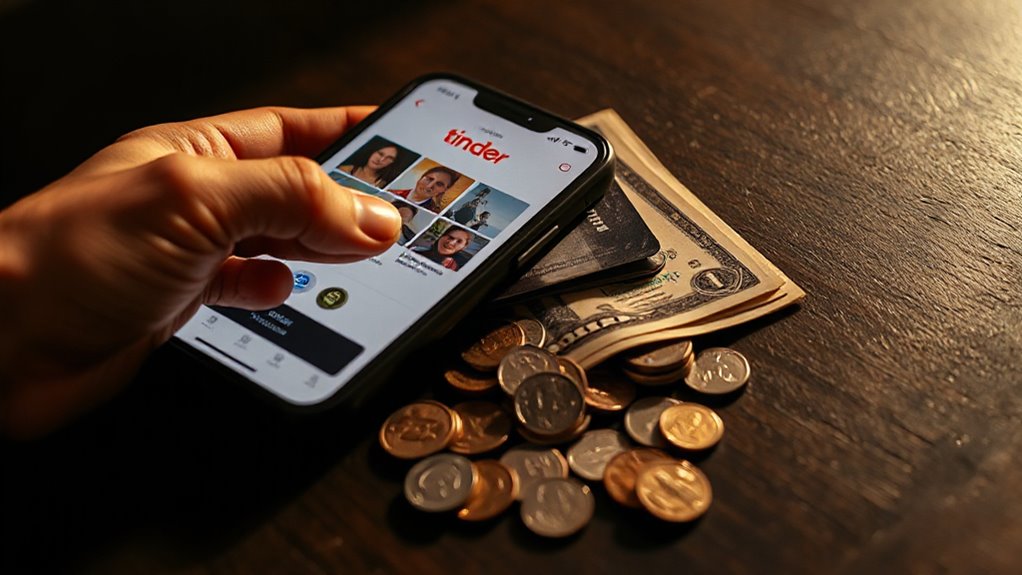
While millions of singles swipe through profiles hoping to find love, Tinder is quietly running one of the most sophisticated wallet-draining operations in the dating app world. The company pulled in $1.94 billion in 2024, and a close look at their pricing reveals exactly how they’re doing it—through carefully engineered traps that exploit age, gender, and desperation.
First, there’s age-based price discrimination that would make airlines jealous. Users under 30 pay $9.99 per month for basic premium access, while those 30 and older get hit with $19.99 or more for the exact same features. Tinder knows older users are willing to pay around $25 monthly, with some going as high as $50. The younger demographic centers around $10. Different prices, same product—pure profit optimization. One in five young adults are more likely to use dating apps, concentrating demand in younger cohorts.
Gender dynamics make it worse. Men show an 11.9% higher willingness to pay in the younger group, but that gap explodes to 47.9% among older users. Tinder deliberately targets personas like “Hookup Hank,” designing features that squeeze wallets through swipe limits on the free version that hit men harder. Premium tiers capture massive wallet share from high payers desperate for matches.
The subscription ladder itself is a masterclass in upselling. Tinder Plus runs $2.67 monthly on annual plans, Gold jumps to $8.33, and Platinum hits $10. But switch to monthly billing and Gold soars to $25-$30, while Platinum reaches $35-$40. That’s strategic friction—locking users into long commitments or punishing flexibility. Shorter subscriptions cost more per month compared with longer subscriptions.
Then come the microtransactions. Boosts, Super Likes, and Super Boosts range from $3.99 to $24.99 each, promising visibility that the algorithm deliberately restricts. Blurred likes tease potential matches but require upgrades to see who actually swiped right. Time-sensitive notifications create artificial urgency, pushing users toward paid features exactly when they’re most vulnerable.
Out of 60 million monthly active users, only 9.6 million actually pay. Yet Tinder’s revenue keeps climbing because they’ve perfected extracting maximum cash from those who do. The core problem is that Gold only reveals existing likes without generating any new interest, leaving most paying users disappointed. The search for connection has become a revenue stream, and singles are paying the price—literally.