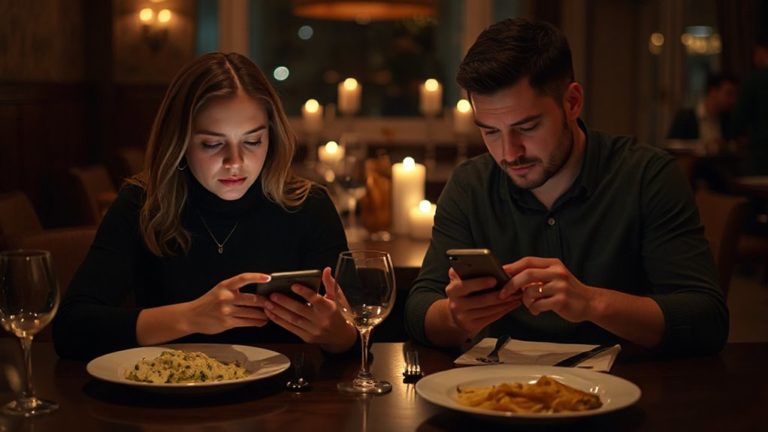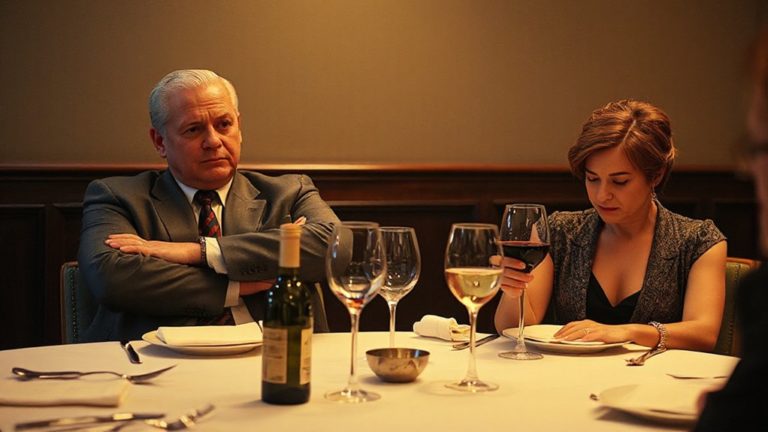


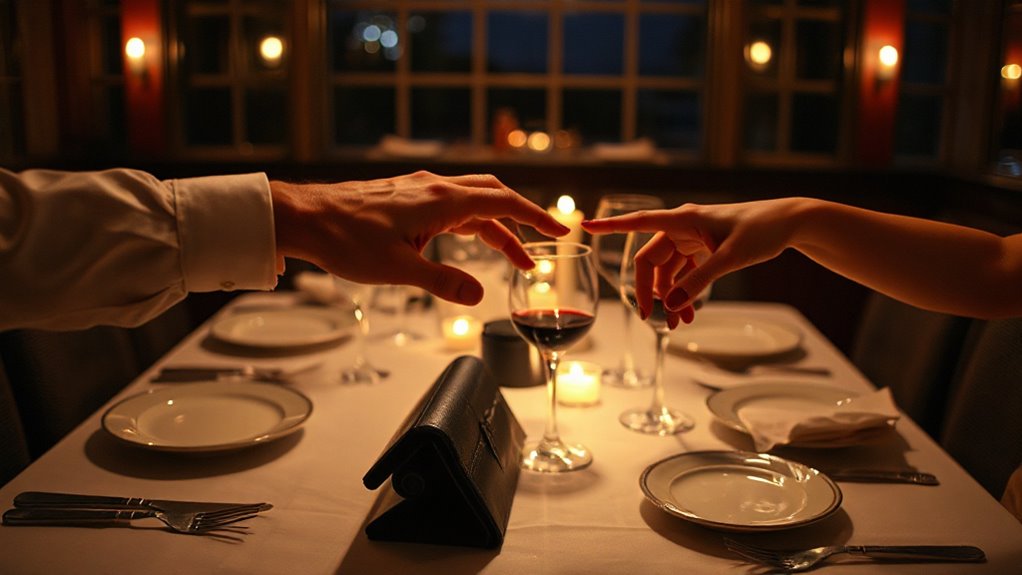
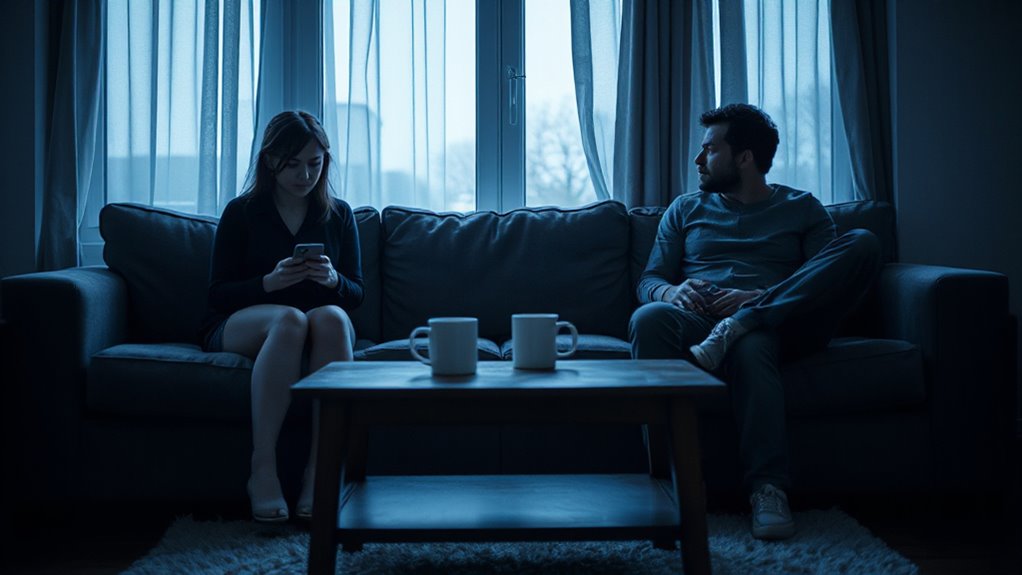
Feeling unappreciated in a relationship doesn’t just sting—it corrodes the whole foundation. When one partner’s efforts go unnoticed, emotional distance creeps in. That gap widens until people who once shared everything become polite roommates discussing grocery lists and whose turn it is to do the dishes.
Unacknowledged efforts create emotional distance, transforming intimate partners into polite strangers navigating household logistics instead of sharing lives.
Here’s what happens: Partners stop sharing their dreams, vulnerabilities, fears. Why bother opening up when it feels like shouting into a void? Emotional withdrawal becomes the default setting. One person pulls back from meaningful conversation, and suddenly the relationship runs on autopolite but hollow.
Meanwhile, resentment builds like sediment in a pipe. Every unrecognized gesture, every overlooked effort, adds another layer. The person who keeps trying without acknowledgment eventually stops trying altogether. What’s the point of making dinner, planning dates, or asking about someone’s day when it never registers? The frustration intensifies, and the whole dynamic spirals downward.
Communication breaks down in predictable ways. Conversations flatten out, sticking to logistics and surface-level updates. Deep emotional engagement vanishes. There’s no curiosity, no genuine interest in what the other person is experiencing. Just transactional exchanges about calendars and bills.
The danger zone? Feeling chronically unappreciated makes people vulnerable to outside validation. When someone else notices what a partner ignores, infidelity risk shoots up. Emotional neglect creates openings for connection elsewhere—not because people are inherently unfaithful, but because unmet needs don’t just disappear.
The data shows patterns, too. Women report feeling unappreciated more often than men. Married people and parents struggle with it more. Age doesn’t help—perceived gratitude tends to decline over time. Financial strain compounds the problem, as lower income relates to higher relationship instability. Research also shows that attachment styles help explain many trust and appreciation issues between partners.
But here’s the upside: this problem responds to intervention. Six-week online programs with structured coaching produce measurable improvements in how appreciated partners feel. Learning to communicate gratitude effectively changes the whole dynamic. Both people need to participate, though. One person can’t fix appreciation deficits alone.
The fix isn’t complicated. Notice what your partner does. Say it out loud. Acknowledge the routine kindness that keeps relationships running. Even special occasions like birthdays and anniversaries deserve genuine recognition. Appreciation requires conscious effort, but it’s the difference between connection and slow erosion.