When should someone bring flowers on a first date? Here’s the truth: most people actually prefer getting flowers on the second or third date, not the first. A recent UK survey of 1,000 adults found that only 2% were turned off by first-date flowers, but the majority wanted to wait a bit longer.
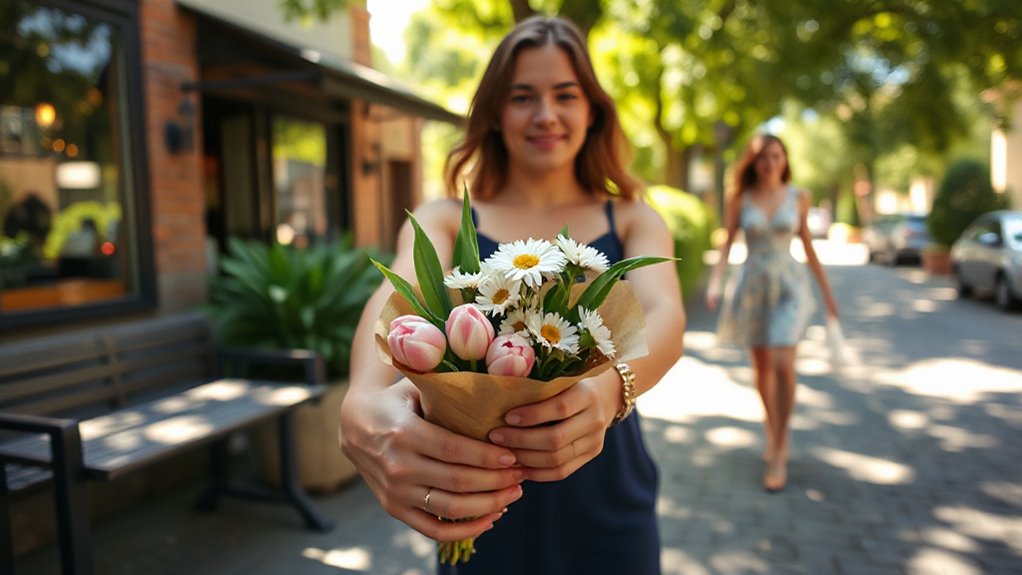
The timing matters because flowers send signals. Bringing roses on date one screams “I’m already deeply invested in you,” which can feel overwhelming. Instead, smart daters choose lighter options like tulips, daisies, or alstroemeria. These flowers symbolize happiness and new beginnings without the heavy romantic weight of red roses. Open communication and understanding boundaries can help ensure that gestures like giving flowers are well received and appreciated.
Color choice is essential too. Red means passion and love—probably too intense for someone you barely know. Pink shows admiration and appreciation, which feels more appropriate. White represents new beginnings, yellow conveys friendship and joy, and purple indicates enchantment. Pick based on the vibe you want to create.
The flower debate reveals something bigger about modern dating. Nearly 20% of Americans have never received flowers from a partner, and flowers often signal how much attention someone pays to romance. If you’re dating someone who never makes these gestures, it might indicate different romance levels or compatibility issues.
Here’s what’s interesting: 25% of people admit to dating multiple people simultaneously, with men doing this more than women (29% versus 20%). In this multi-dating landscape, flowers can actually help you stand out from the competition. For those looking to make an impression, bright sunflowers exemplify happiness and can uplift your date’s mood while showing genuine appreciation.
The bottom line? Flowers aren’t outdated, but timing and choice matter. Skip the dozen red roses on date one. Go for tulips or daisies in softer colors. Save the romantic heavy hitters like orchids, peonies, and red roses for when you’re actually in a relationship. For those looking for affordable options, there are plenty of flowers under £30 that make perfect first date gifts.
Don’t overthink it though. The rejection rate for first-date flowers is incredibly low. Most people appreciate the gesture, even if they’d prefer it slightly later. Just remember: flowers aren’t about grand romantic declarations early on—they’re about showing you pay attention to details and care enough to make an effort. Maintaining healthy communication can enhance how these romantic gestures contribute to building trust and connection.