


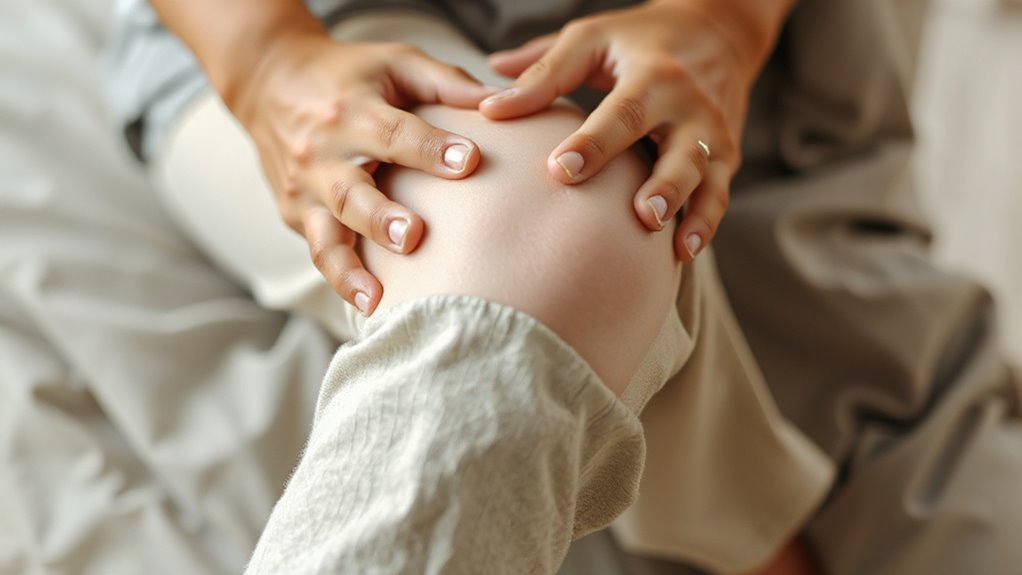
Why do knees seem to betray people when they need them most? The answer isn’t pretty, but it’s straightforward. Our bodies are actively working against us, and our knees take the worst beating.
Your knees aren’t just failing you—they’re actively conspiring against you when you need them most.
Osteoarthritis leads the charge in knee destruction. This “wear-and-tear” arthritis strips away cartilage that cushions joints, leaving bone grinding against bone. The numbers tell a brutal story: among elderly people with osteoarthritis, 47.2% of men and 70.2% of women experience knee pain. Women get hit harder, with odds ratios of 2.92 compared to men’s 2.44. Age doesn’t play favorites—it comes for everyone’s knees eventually. Maintaining regular medical checkups can help detect early joint issues before severe damage occurs.
Weight makes everything worse. Every extra pound you carry adds four pounds of pressure to your knees during walking or running. That’s not a typo. Obesity doesn’t just contribute to osteoarthritis development; it accelerates cartilage breakdown and cranks up pain intensity. Your knees weren’t designed to haul around excess baggage while you climb stairs or chase after grandchildren.
Injuries pile on more problems. Meniscus tears happen when you twist wrong, and that rubbery shock absorber between your thigh and shin bones gets shredded. ACL injuries target the ligaments holding everything together. Previous injuries practically guarantee future ones—your knees remember every insult.
Athletes aren’t safe either. Jumper’s knee plagues volleyball players and track stars who push their patellar tendons past breaking points. Alpine skiing, basketball pivots, and repetitive running stress knees beyond their limits. Construction workers and farmers face similar risks from job-related knee stress.
Here’s the kicker: weak muscles cause most knee injuries, but the weakness isn’t always local. Research shows central nervous system changes predict muscle weakness better than imaging results. Your brain’s pain processing affects muscles throughout your body, not just around damaged joints. Rising sedentary jobs compound the problem by weakening the quadriceps, hamstrings, and glutes that should support your knees. Open communication about physical limitations can improve management and recovery strategies.
Quadriceps weakness becomes a vicious cycle—weak muscles lead to more injuries, more pain, and greater disability. The impact spreads beyond pain to everyday activities, as studies reveal knee pain significantly impairs standing balance, walking speed, and basic movements like rising from a chair.
The truth hurts, but understanding why knees fail helps you fight back. Strengthen supporting muscles, maintain healthy weight, and respect your joints’ limits. Your knees might be plotting against you, but you don’t have to surrender without a fight.