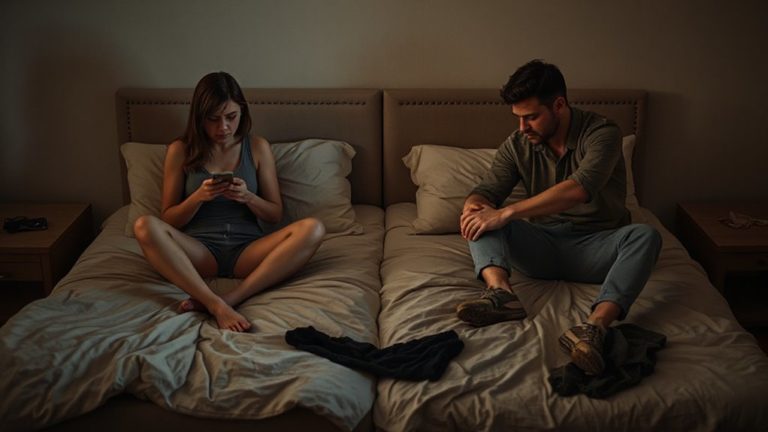
Modern dating has become a mental minefield, and the numbers don’t lie. Over two in five young Americans avoid dating entirely because of anxiety, with 16% experiencing full-blown panic attacks on first dates. When 34% of Americans cite romantic relationships as their primary mental health concern, it’s clear we’re not just being dramatic about the stress.
Dating anxiety isn’t just in your head—it’s a documented crisis affecting nearly half of young Americans today.
The problem starts before you even meet someone. Dating apps throttle matches to maximize revenue, not your happiness. Algorithms create artificial scarcity that leaves users frustrated and chasing validation like rats pressing a lever. The strongest satisfaction comes from seeking genuine romantic connections, yet the platforms are designed more like social media, keeping you scrolling for entertainment and ego hits rather than actually pairing you with compatible people. Global revenue for online dating reached $6.18 billion in 2024, underscoring the industry growth.
Then there’s the baggage. A staggering 77% of people report that past negative experiences influence their current relationships. The fallout is real: 35% no longer trust people, 30% suffered lasting self-esteem damage, and 18% quit dating altogether. Common culprits include cheating, gaslighting, and ghosting, which collectively create a generation hyper-vigilant for red flags and primed to overthink every text message.
Social media piles on. Women especially feel worse seeing others’ relationship posts, and 56% of singles admit to stalking ex-partners online. When you’re constantly comparing your messy beginning to everyone else’s highlight reel, overthinking becomes inevitable. Economic stress compounds everything. Financial uncertainty limits dating options and ramps up anxiety about outcomes because the stakes feel impossibly high.
Breaking free requires intentional effort. Slow dating practices reduce stress and boost well-being by removing the pressure cooker environment apps create. Honesty about mental health actually increases attractiveness for over half of daters, so being upfront beats pretending everything’s fine. Research shows that excessive swiping leads to adverse psychological effects, reinforcing anxiety rather than relieving it. Using dating apps to cope with negative emotions predicts lower satisfaction and may signal underlying mental health issues like depression or anxiety that deserve proper treatment. The key is recognizing that your anxiety isn’t weakness, it’s a rational response to genuinely challenging circumstances. Focus on what you can control: your pace, your boundaries, and your willingness to communicate openly. The rest is noise.