


What the Research Actually Says About Dating Apps and Mental Health
Despite what the dating-app industry would prefer people to believe, the research paints a pretty unflattering picture. A 2025 meta-analysis covering 23 studies found that dating-app users reported markedly higher depression, anxiety, loneliness, and psychological distress than non-users. Not slightly worse. Markedly worse. Global usage statistics show millions engage with these platforms daily, contributing to their widespread influence and potential effects on mental health 350 million.
A 2023 study sharpened that finding, showing recent users scored appreciably higher on depression than people who never used apps at all. Daily use and long-term use made things measurably worse.
Does swiping cause these problems, or do struggling people gravitate toward apps? Researchers admit the direction isn’t fully settled. Either way, the pattern is hard to ignore. Notably, the mental health toll appeared strongest in WEIRD nations, suggesting cultural context shapes how damaging the experience can be.
One quantitative study examining young adult dating app users found a significant positive correlation between app use and self-esteem, while burnout as a mental health variable yielded inconclusive results, prompting calls for further research.
Why Dating Apps Are Engineered to Spike Your Anxiety
Swiping feels harmless until it doesn’t. Dating apps aren’t accidentally stressful—they’re built that way.
Matches arrive unpredictably, which triggers stronger dopamine responses than consistent rewards would. That’s not a bug. That’s the slot machine model, applied to human connection.
Every notification creates a small spike. Every silence creates low-grade dread. The constant evaluation loop—photos, bios, response rates—keeps the brain on alert. Familiarity through repeated exposure can reduce initial wariness over time, but apps short-circuit that process by encouraging constant novelty.
Rejection comes fast and often. Ghosting is normalized. And because profiles are curated highlights, users instinctively compare themselves upward.
The platform doesn’t care about anyone’s mental health. It cares about engagement. Those aren’t the same thing. Chronic cortisol activation from the relentless cycle of checking, swiping, and managing conversations quietly raises baseline anxiety and disrupts sleep over time.
Longer time spent on apps has been directly linked to fatigue, exhaustion, and emotional drain—consequences that compound quietly until the app itself begins to feel like a source of suffering rather than connection. Longer app use feeds a cycle that makes it harder to disengage precisely when disengaging matters most.
Decision Fatigue: When Dating App Matches Overwhelm Your Choices
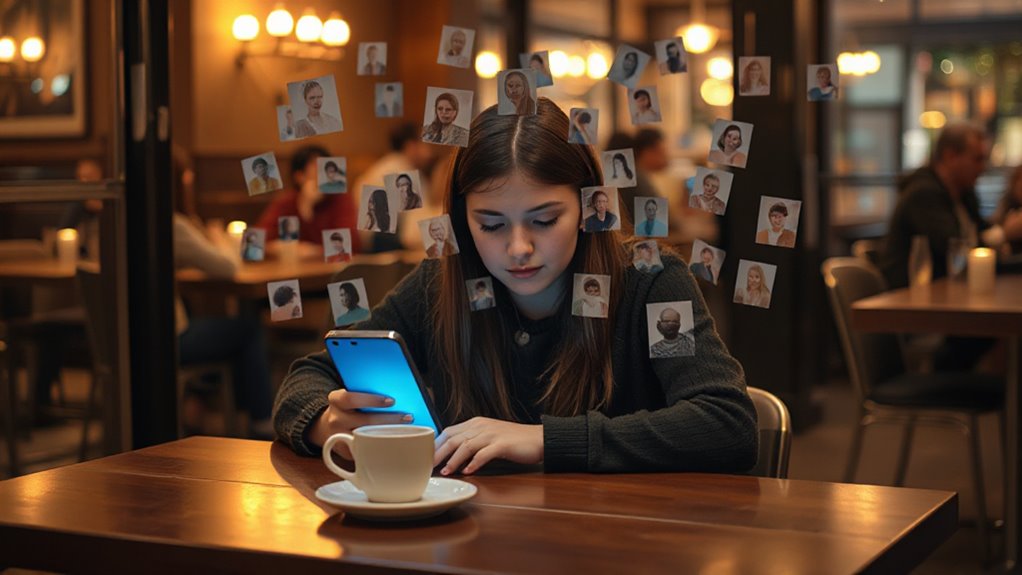
The anxiety doesn’t stop at waiting for matches. Once they arrive, a new problem kicks in: decision fatigue. Swiping requires constant micro-decisions, and those pile up fast. The brain depletes its judgment reserves, then defaults to either mindless swiping or total inaction. Neither helps.
Worse, most people are already mentally drained from work and daily life before they even open the app. Add a flood of profiles, and thoughtful evaluation becomes nearly impossible. The quality of the profiles hasn’t changed—the user’s capacity to assess them has. That’s the trap. More options, less ability to actually choose.
Research confirms the cost of this cycle. Decision fatigue reduces willingness to engage meaningfully with matches, pushing users toward generic openers, ghosting, or simply logging off without acting at all. Setting time limits per session — such as 20 minutes in the morning and 20 minutes in the evening — can help preserve mental energy and restore more intentional decision-making. Matching communication style, like using positive language, can also improve early engagement and reduce anxiety.
How Dating Apps Slowly Erode Your Capacity for Real Intimacy
Beyond the anxiety of waiting and the paralysis of too many choices, something quieter is happening beneath the surface—dating apps are gradually rewiring how users connect with other people.
Swiping trains the brain to evaluate fast, disengage faster, and treat people like content. Matches blur together. Conversations fizzle. The cycle restarts. Over time, empathy dulls, vulnerability feels inefficient, and real intimacy starts seeming too slow to bother with. Apps reward novelty, not depth. Ghosting becomes casual. Authenticity gets replaced by performance. Users stop seeing potential partners as full human beings and start seeing them as the next option to scroll past. This pattern mirrors how flirtatious behavior focuses attention unevenly and can erode consistent, empathetic engagement.
Neuroimaging research published in 2022 in Frontiers in Human Neuroscience confirmed that repeated app use measurably alters ventral striatum activity, the brain region central to reward processing and emotional motivation. App algorithms are designed to prioritize engagement over compatibility, surfacing fresh and popular profiles rather than those most likely to produce genuine emotional connection.
The Self-Esteem Trap Inside Dating Apps
Dating apps have a quiet talent for making people feel bad about themselves. The whole setup compresses identity into a few photos and a short bio, then invites strangers to judge.
A 2016 study found Tinder users had lower self-esteem and worse body image than non-users. Shocking? Not really. When every left swipe feels like a verdict on your face, the math gets brutal fast.
Rejection arrives constantly, with zero explanation. Ghosting becomes routine. Men report confidence taking harder hits the more frequently they use these apps. Women get trapped in narrow beauty loops. Both lose, just differently.
The damage often begins even before a profile goes live, as app guidance around photo selection and bio writing sends users into cycles of second-guessing their own appearance and identity.
In the most extreme cases, women have reportedly turned to botox and laxatives, while men spiral into looksmaxxing and the manosphere. Playful in-person cues like prolonged eye contact and mirroring that might signal genuine interest are largely absent in swipe interactions, deepening feelings of uncertainty.