
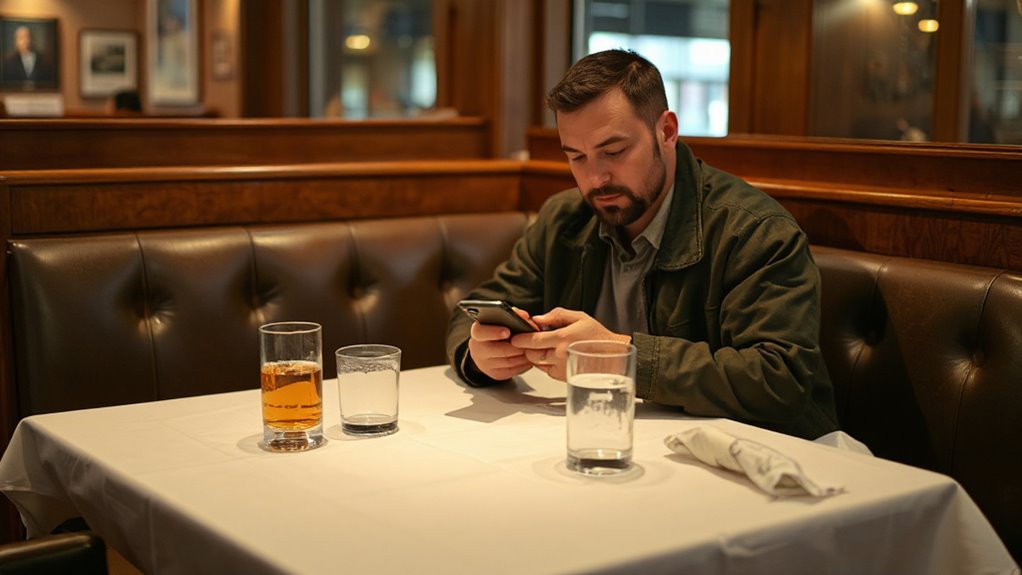



Why Late Starters Aren’t Actually Behind in Dating
Someone who started dating later than most peers is not broken, behind, or missing some critical developmental window. Dating timelines shift based on school, work, family, culture, health, and geography. There is no universal “correct” age.
Many people begin dating after major life changes—relocation, career stability, personal recovery. That is not falling behind. That is different sequencing.
Romantic development varies widely, and sources consistently confirm that late starters can still build meaningful, lasting relationships. The real problem is not the timeline. It is believing the timeline defines the outcome. It does not. Research even suggests that dating too soon can lead to lower self-esteem, meaning a later start may carry genuine advantages rather than disadvantages. A strong foundation of self-love and boundaries often helps late starters attract healthier, more satisfying relationships.
The Hidden Advantages of Starting Later
Starting later does not just mean arriving without baggage—it often means arriving with better tools. While others were stumbling through their twenties learning what they even wanted, late starters were quietly building something useful.
Starting later does not mean starting behind—it often means starting smarter, with tools others are still trying to find.
- Better self-regulation — More life experience means fewer impulsive choices and stronger boundaries. This often reflects a healthier self-regulation that comes from having worked through earlier relationship patterns.
- Clearer identity — Time alone builds confidence that does not depend on someone else’s approval.
- Sharper filters — Late starters spot red flags faster and tolerate less nonsense.
That is not a disadvantage. That is an edge most early starters never develop. Research even shows that starting later can produce measurably better outcomes, with studies linking delayed starts to improved performance, stronger attendance, and lower rates of depression and substance abuse. The same principle applies at a national scale, where the RAND Corporation projects that delaying school start times to 8:30 a.m. could add $83 billion to the U.S. economy.
The Real Gaps Late Starters Need to Close
Those advantages are real, and they matter.
But let’s be honest—gaps exist too. Late starters often lack social calibration, meaning they misread signals, overcommunicate, or freeze when things get ambiguous. Emotional regulation is another weak spot. Rejection stings harder when there’s less experience absorbing it. Add lifestyle friction—poor scheduling, low energy, no bandwidth for someone else—and dates quietly fall apart. Then there’s the standards problem: confusing desperation for openness. None of these gaps are permanent. They’re learnable. But pretending they don’t exist? That’s what keeps people stuck, theorizing instead of actually practicing.
Starting aggressively at 50 with catch-up contributions can still accumulate substantial retirement assets, proving that a late start never has to mean a weak finish.
The same logic applies to any skill-building domain: launching many small, low-commitment projects builds real momentum faster than waiting to attempt one perfect, high-stakes move. Awareness of early warning signs in relationships helps late starters practice healthier dating habits.
Build Real Dating Confidence as a Late Starter
Confidence isn’t a personality type someone either has or doesn’t—it’s a skill, and skills get built through reps.
Late starters aren’t behind because they’re broken. They’re behind because they haven’t practiced yet. Fix that.
Here’s how to start building real confidence now:
- Take small actions repeatedly. Comfort grows through exposure, not waiting.
- Drop the outside validation habit. Make decisions, trust them, move on.
- Treat dates as practice, not auditions. Setbacks are data, not verdicts.
Worth isn’t determined by relationship status. That belief is the foundation everything else gets built on. Lack of experience is a neutral circumstance, not an identity—it says nothing about where things go from here.
Rejection activates pain responses in the brain similar to physical pain, so feelings of sadness and disappointment after a date doesn’t go well are completely normal and worth acknowledging before moving forward. Rejection should be treated as information about compatibility, not a verdict on personal worth.
How to Date Intentionally as a Late Starter
Dating without a plan is just hoping. Late starters especially can’t afford to wing it. Before anything else, get clear on the goal—casual, long-term, something else entirely. Then set nonnegotiables early: values, kids, location, lifestyle. Ask direct questions fast. Don’t wait three months to discover a dealbreaker. Watch whether words match behavior. If they don’t, leave. Simple.
Also, stop waiting for lightning-bolt attraction. Interest can build slowly. That’s fine. After each date, reflect honestly—what worked, what didn’t, what pattern keeps showing up. Adjust accordingly. Dating is information gathering. Treat it that way, and results actually improve.
Choose one or two avenues to meet people and stick with them—whether that’s a dating app, a local class, or friend introductions—so your efforts stay focused rather than scattered. Limiting your channels keeps energy directed and prevents the overwhelm that stops most late starters before they even begin. Make sure to regularly acknowledge small wins and positive interactions to maintain momentum and relationship satisfaction.