


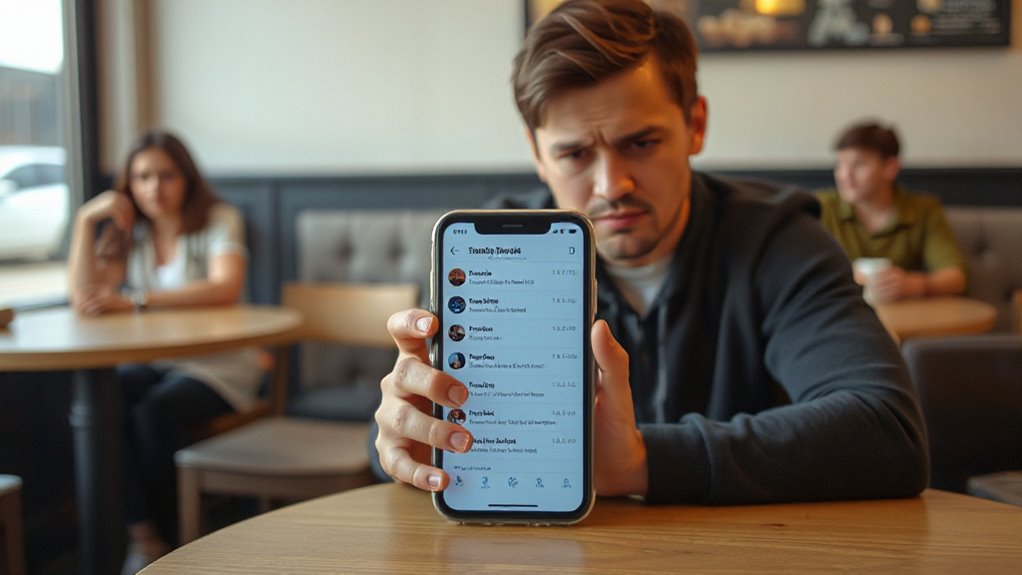

Why First-Date Nerves Can Suppress Real Attraction
Maneuvering a first date while drowning in nerves is harder than most people admit. Fear of judgment hits first, masking genuine interest before the appetizers arrive. Add performance pressure—thanks to every rom-com ever made—and suddenly people are rehearsing sentences instead of actually connecting.
The nervous system reads relational uncertainty as a threat, triggering fight-or-flight responses that have nothing to do with compatibility. Heart racing, palms sweating, thoughts looping. Sound familiar? That’s biology, not chemistry. Anxiety pushes people to write off decent matches over minor awkwardness. Real attraction often gets buried under nerves before it ever gets a fair chance.
Approximately 70 percent of people report experiencing some level of first-date nervousness, which means the overwhelming majority are sitting across the table feeling the exact same internal chaos. Recognizing that nerves stem from fear of being judged rather than a lack of genuine interest can be the first step toward giving attraction the room it needs to surface naturally. Observing body language cues can also reveal interest that words or nerves might obscure.
What “No Spark” After a First Date Actually Means
So nerves can bury real attraction before a first date even gets going—that much is clear.
But what about that flat feeling afterward? The “no spark” verdict gets thrown around like it’s gospel. It isn’t. Sometimes attraction builds slowly, over two or three dates, once trust actually exists. First-date stress distorts impressions badly. Shared values also matter far more long-term than instant chemistry. Periodic distance in relationships often appears early and can be linked to communication breakdowns, which means initial impressions aren’t the whole story.
And here’s something worth sitting with: that electric spark often signals charisma masking narcissism, not compatibility. No spark sometimes means no red flags. That’s not a failure. That might actually be progress. People with an avoidant attachment style may feel little for others or be slow to warm, meaning the absence of an immediate spark could simply reflect how their emotional system operates rather than a sign of incompatibility. Research also suggests that attraction patterns are often shaped by past relationship experiences, meaning who feels exciting may say more about old wounds than genuine compatibility.
Are You Overthinking the Date, or Reading It Right?
The post-date spiral starts fast. One minute the date felt fine, the next there’s a full investigation into why they said “had fun” instead of “had a great time.” That’s not reading signals—that’s manufacturing problems.
Real red flags are obvious: major mood shifts, visible discomfort, zero engagement. Subtle stuff, like response time or word choice, rarely means anything. Watch for early avoidance patterns that can signal deeper issues over time.
The bigger issue is losing sight of personal feelings and chasing validation instead. Did *they* seem interesting? Were *they* worth a second date? Flip the lens. Overthinking transfers all power outward, and that’s where the real spiral begins. A single impressive date can trigger the halo effect, causing unearned qualities to be attributed to someone based on little real evidence.
Different expectations or a missing spark between two people reflect natural incompatibilities, not personal failures or evidence that something went wrong on the date.
What Radio Silence After a Great First Date Usually Means
Considering how good the date felt, radio silence hits differently—and it usually means one of a few things.
Maybe they’re emotionally unavailable—fresh off a breakup, mid-crisis, not actually ready. Maybe the chemistry simply didn’t land on their end, even if it did on yours. Or they’re just avoiding the awkward rejection conversation entirely—ghosting is embarrassingly common now. Remember that rejection is often about timing and compatibility, not a judgment on you, so treat silence as information rather than condemnation and use it to adjust your approach to dating and connection (timing and compatibility).
None of it means the date was a failure. Stop replaying every moment looking for clues. Suggest a specific second date, keep it tied to something they mentioned, then move on. Silence isn’t always personal. Sometimes it’s just their mess, not yours.
One great date is a starting point—not a promise of consistent effort or repeat behavior.
MegaDating—seeing multiple people at once—keeps your headspace out of fixation mode and puts the focus back on finding an actual match instead of chasing one person’s silence.
When Low Spark Deserves a Second Date (and When It Doesn’t)
Low spark after a first date doesn’t automatically mean dead end. Nerves kill chemistry fast, and one awkward night proves nothing. Give it another shot unless something genuinely disqualifying happened. Self-awareness and self-love can help you distinguish nerves from real incompatibility.
A low spark on a first date means nothing. Nerves wreck chemistry. One awkward night proves nothing.
Skip the second date if any of these showed up:
- Rude, dismissive, or flat-out mean behavior
- A habit that’s a hard no—like heavy smoking
- Zero physical or intellectual attraction whatsoever
- A gut feeling of genuine disgust, not just nerves
But if it was just… fine? Go again. Attraction can grow with comfort and trust. Try switching to an activity-based date like bowling instead of the usual dinner and drinks to see a completely different side of someone. Two dates without a spark, though—move on. Simple.
In fact, 43% of people who had a negative initial impression of someone still wanted to go on another date, suggesting that a lukewarm first meeting is far more common than most realize.