





Why Modern Dating Drains You Emotionally Before It Even Starts
Modern dating has quietly engineered a system that exhausts people before they ever meet anyone worth keeping. Endless profiles make connection feel disposable. Ghosting, breadcrumbing, and hollow conversations pile up slowly, then all at once. Each micro-rejection nudges your nervous system a little closer to shutdown. Eventually, cynicism stops feeling like a bad attitude and starts feeling like survival. That’s not a character flaw—that’s emotional math.
When repeated effort produces nothing meaningful, the brain learns to stop trying. Sound familiar? The real damage isn’t heartbreak. It’s the slow erosion of your willingness to be vulnerable at all.
Dating apps have made meeting people easier while simultaneously making every interaction feel transactional and disposable, quietly undermining the conditions that genuine connection actually requires. The perception that someone better is always a swipe away fuels chronic dissatisfaction, training people to abandon promising connections before they ever have a chance to deepen. Recent data shows that one in ten couples now meet through online dating, illustrating how widespread these platform-driven dynamics have become.
How Dating Apps Turned FOMO Into a Relationship Trap
Somewhere between the tenth swipe and the hundredth notification, dating apps stopped being tools and became traps. The design is deliberate. Algorithms reward novelty, not connection. Every match counter, every profile view alert, quietly whispers that something better is one swipe away. That whisper becomes a roar.
Users grow compulsive—checking phones mid-date, monitoring matches’ social media, performing instead of connecting. The result? Shallow relationships, exhausted people, and a FOMO loop that feeding only tightens. Commitment feels risky when the app keeps suggesting alternatives. Dating becomes a competitive sport nobody wins. The trap works because users keep walking back in. Research confirms that FOMO drives stalking, with users increasingly monitoring others’ profiles and activity to alleviate the anxiety of missing out on romantic connections.
The psychological pull runs deeper than habit. FOMO taps into evolutionary needs to belong, exploiting the most primitive human insecurities to make genuine commitment feel not just risky but irrational in an environment engineered to suggest that belonging is always one better option away. People also misread signals more often in this context, since nonverbal flirting cues can be mistaken for casual politeness when attention is divided.
What Dating FOMO Does to Your Mental Health and Sleep
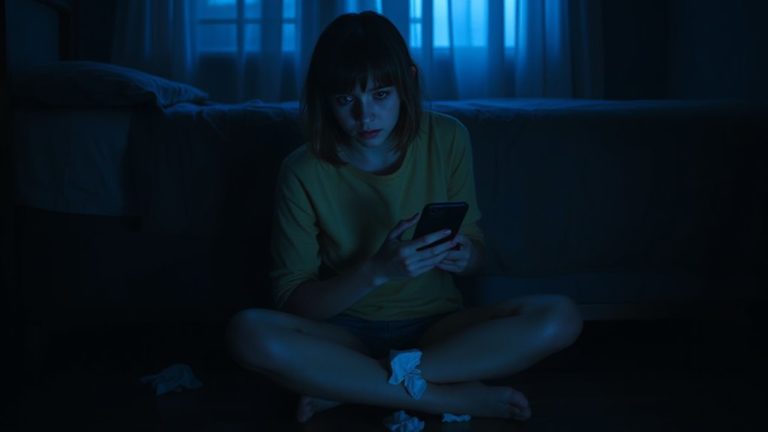
Swiping endlessly at midnight is not a hobby—it’s a symptom. Dating FOMO rewires your brain into a constant anxiety loop. You check the app, compare yourself to everyone else’s highlight reel, and feel worse every time. Self-esteem drops. Mood sours. Sleep disappears. Studies confirm it directly: FOMO-driven dating raises anxiety, tanks self-worth, and trashes sleep quality. Stress hormones stay elevated while you’re lying awake wondering why he hasn’t texted. Texting habits and response dynamics can amplify that stress when messages go unanswered or responses are inconsistent, especially during early-stage interactions that reward calculated interest.
Sound familiar? Eventually, emotional exhaustion sets in. The endless cycle of comparison and compulsive checking doesn’t just hurt your feelings—it quietly wrecks your health, one sleepless night at a time. Research shows that over 80% of single students reported using dating apps, making compulsive checking a near-universal experience rather than a personal failing. At its core, dating FOMO stems from loss aversion, where the fear of missing a meaningful connection feels more powerful than the potential reward of simply staying present.
Red Flags You Miss When Dating FOMO Takes Over
Chasing connection at warp speed makes people blind. Dating FOMO scrambles judgment fast. Suddenly, love bombing feels romantic instead of alarming. Excessive gifts, intense declarations, and rushed commitment timelines? That’s not passion—that’s a pattern. Red flags hide easily behind flattery and urgency. Controlling behavior gets mistaken for care. Jealousy reads as devotion. Boundary violations get rationalized away because slowing down feels like losing. Guilt-tripping, silent treatment, dismissive communication—none of it registers clearly when someone’s desperate to lock something down. FOMO doesn’t just distort decisions. It actively strips away the critical thinking needed to spot dangerous people early. When intuition feels calm and steady while anxiety spirals, learning to tell the difference becomes one of the most protective tools a person can develop. Trust erosion happens quietly when FOMO-driven comparisons and insecurity replace the steady, discerning attention a relationship actually requires to stay healthy. Beware of early-stage tactics like excessive affection that create rapid emotional dependence and mask controlling behavior.
How to Stop Dating FOMO From Sabotaging Your Relationships
Dating FOMO rarely announces itself. It just quietly convinces someone that the next option is better, the next swipe more promising, the next date more “right.” Stopping it starts with honesty. Is this person actually wrong, or does uncertainty just feel uncomfortable?
Setting firm app limits helps. Deactivating after a serious match sends the brain a clear signal. Cutting back on curated couple content reduces the pressure to perform milestones on someone else’s timeline. Limiting app use also interrupts the brain’s craving for predictability, which can otherwise drive repeated, unhelpful choices.
Learning to sit with ambiguity—without bolting—builds real relationship capacity. Commitment isn’t settling. It’s choosing clarity over endless, exhausting what-ifs.
When the urge to keep searching feels overwhelming, writing down everything valued about a current partner can reframe unconscious self-sabotaging patterns for what they truly are: fear, not instinct. Those who grew up in dysfunctional family environments may find this urge especially intense, as the absence of healthy relationship examples makes it harder to recognize when something good is actually worth keeping.