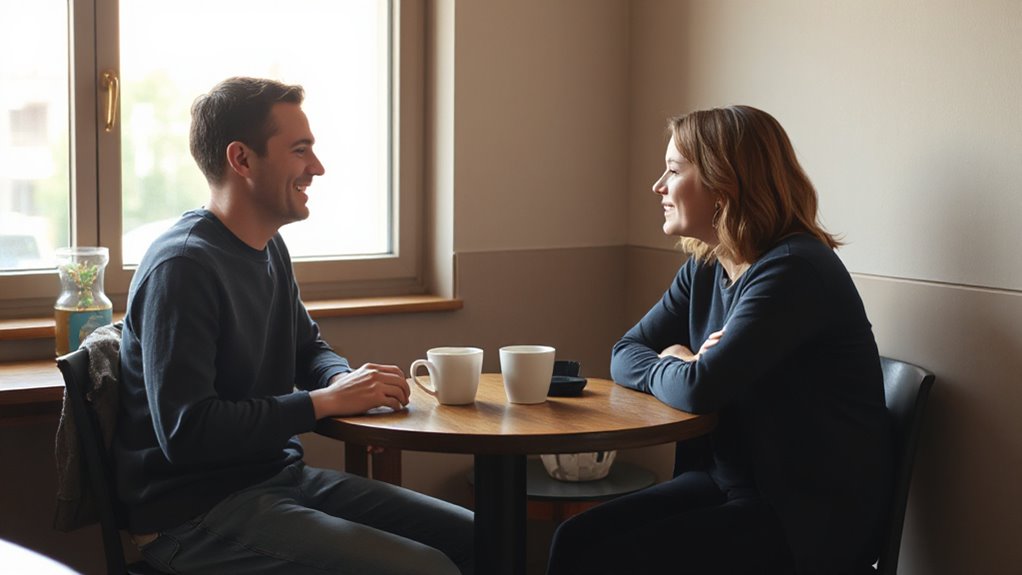




What Women Actually Think About Dating Inexperience
Most men obsess over their dating gap like it’s a criminal record, convinced that admitting ten years without a relationship will send women running for the exits.
Here’s the reality: women care about attitude, not résumé. Inexperience doesn’t repel them—insecurity does. The guy who owns his gap without shame? Interesting. The guy who treats it like a terminal diagnosis? Red flag.
Women read discomfort instantly, even when nothing’s said aloud. They’re screening for character, not credentials.
A decade away from dating isn’t the problem. Acting like it makes you defective is. Confidence mixed with willingness to learn beats fake expertise every time.
Cultivating self-love and boundaries helps you show up calm, attractive, and emotionally resilient — which is what most people are actually looking for.
Why Hiding a 10-Year Dating Gap Backfires
Hiding a ten-year dating gap doesn’t protect anyone—it just sets a timer on when the whole thing explodes. Once she finds out later, the issue isn’t the gap anymore—it’s the lie. Trust craters. Studies show 67% of partners bail after discovering hidden inexperience, and breakup odds jump to 42% post-commitment reveals. The betrayal stings worse than any awkward history ever could.
Why secrecy backfires hard:
- Discovery feels like manipulation, not protection
- Hidden gaps mask life-stage mismatches, spiking conflict 28%
- Social judgment doubles when secrets surface unexpectedly
- You forfeit empathy-building conversations that strengthen bonds
- Concealment kills 55% of successful transparency-based relationships
Therapy and full accountability improve outcomes, with consistent behavioral changes shown to be more effective than promises.
How to Reframe Your Dating Gap as Personal Growth
Instead of apologizing for a ten-year dating gap, a person can flip the script and own it as a decade of getting their life together. During that time, their prefrontal cortex fully matured—meaning better decision-making now. They likely invested in therapy, career stability, or self-development while others cycled through messy breakups. That’s not failure; it’s wisdom.
Frame it as independence that built emotional maturity and adaptability. Mention specific growth: learned to communicate, figured out core values, became someone worth dating. Dating gaps aren’t red flags when they’re proof someone prioritized becoming whole before dragging baggage into someone else’s life.
Therapy and self-work also often reveal attachment patterns that previously drove relationship repetition, helping prevent old cycles from restarting.
When Should You Tell Her About Your Relationship History?
Bringing up a ten-year dating gap on date one is like opening with a PowerPoint presentation about your medical history. Nobody asked, and nobody’s ready. The key is waiting for her to actually inquire about your past before unloading the timeline.
When to share your relationship history:
- Only when she directly asks about previous relationships
- After several dates when rapport is already established
- When the conversation naturally turns to past experiences
- If she’s sharing her own history first
- Never as an icebreaker or early-date small talk
Let silence work for you. If she doesn’t ask, it doesn’t matter yet. Consider that behavioral patterns like consistent friendliness versus targeted flirtation can help you read whether she’s genuinely curious or just being polite.
What to Say When You Bring Up Your Dating Past
When the conversation finally arrives at past relationships, framing matters more than facts. Lead with what was learned, not what went wrong. Say something like, “After my last relationship ended, I realized I needed time to figure out who I was outside of dating.” Keep it positive and forward-focused.
Share growth, not grievances. Model vulnerability by going first—it sets the tone. Then ask about her experiences, focusing on how they shaped her. Give her space to think. Silence isn’t awkward; it’s processing. Honest framing builds trust faster than perfect history. Consider mentioning that many people benefit from waiting a few months before dating again to ensure they’re emotionally ready.
How to Read Her Reaction and Know You’re Safe
The moment after disclosure is where the truth lives—not in what she says, but in what her body does without permission.
Words lie politely. Bodies betray the truth in the split second before the mind catches up.
Watch for these signals that she’s actually okay with it:
- Her posture stays open—arms uncrossed, leaning in rather than pulling back
- Eye contact holds steady without that awkward dart-away thing people do when uncomfortable
- She asks follow-up questions instead of changing subjects lightning-fast
- Her tone doesn’t shift from warm to weirdly formal or distant
- She shares something vulnerable back, matching your honesty with her own
Defensiveness, topic-dodging, or sudden coldness? That’s your answer. Curiosity and continued warmth? You’re good. Also, if sharing leads to requests for money or personal financial details, treat that as a clear red flag and disengage (avoid giving money).