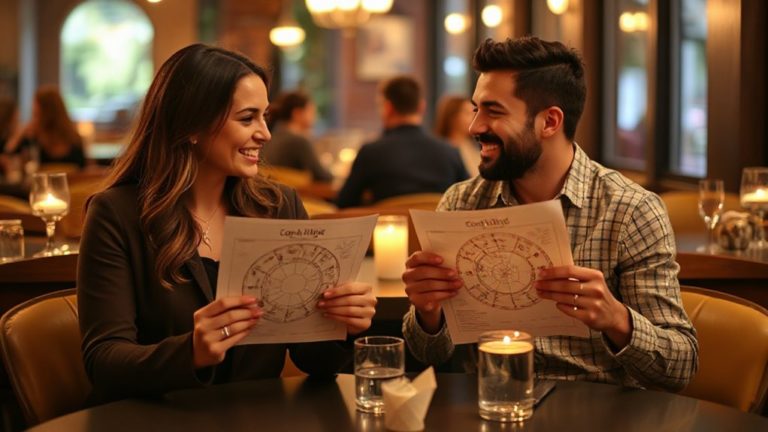



Why do so many people swear they need a pros-and-cons list to pick a date, then completely ignore it the moment someone walks in and makes their heart skip? Because gut instincts override logic in snap decisions, and research shows those initial reactions reflect something truer about who we are than any spreadsheet ever could.
Your heart knows before your head can catch up—that spreadsheet never stood a chance anyway.
When people choose dates based on feelings rather than deliberate analysis, they report higher certainty about their choice. They’re more willing to tell friends, defend their decision publicly, and commit without second-guessing. That’s not recklessness. Intuitive choices feel consistent with essential self traits, creating unwavering convictions that logical evaluations simply can’t match. The person who analyzes compatibility scores ends up less confident than the one who just knows.
Logic has its place. It provides structure, helps compare options, and forces consideration of red flags. Analytical thinking works beautifully when planning concrete steps or evaluating measurable criteria.
But dating lives in grey areas where strict rules fail. How do you quantify chemistry? What algorithm measures whether someone makes you laugh at exactly the right moments?
The behavioral impact tells the story. People who trust their gut in partner selection share those choices more widely and advocate more strongly for them. They act on their decisions instead of endlessly deliberating. Meanwhile, overriding instinct with logic often delays choices or produces worse outcomes, leaving people stuck analyzing instead of experiencing.
This doesn’t mean logic is useless. The smartest approach balances both. Let intuition guide initial attraction and connection, then use analytical thinking to examine whether that person demonstrates reliability, shared values, and compatible life goals. Check your gut feeling against tangible evidence. Does their behavior match their words? Do concrete patterns support your instinct?
Executives with honed intuition make big decisions based on experience-driven gut feelings. The same applies to dating. Your instincts have absorbed countless social cues and past experiences. They’re processing information faster than conscious thought can track.
Folk wisdom says deliberate carefully, but that advice misses something pivotal: those inescapable gut feelings will shape your choice regardless. The question isn’t whether to trust them, but how to integrate them intelligently with reality checks.
Familiarity and repeated positive experiences also deepen attraction, reinforcing those initial instincts through the mere exposure effect.