


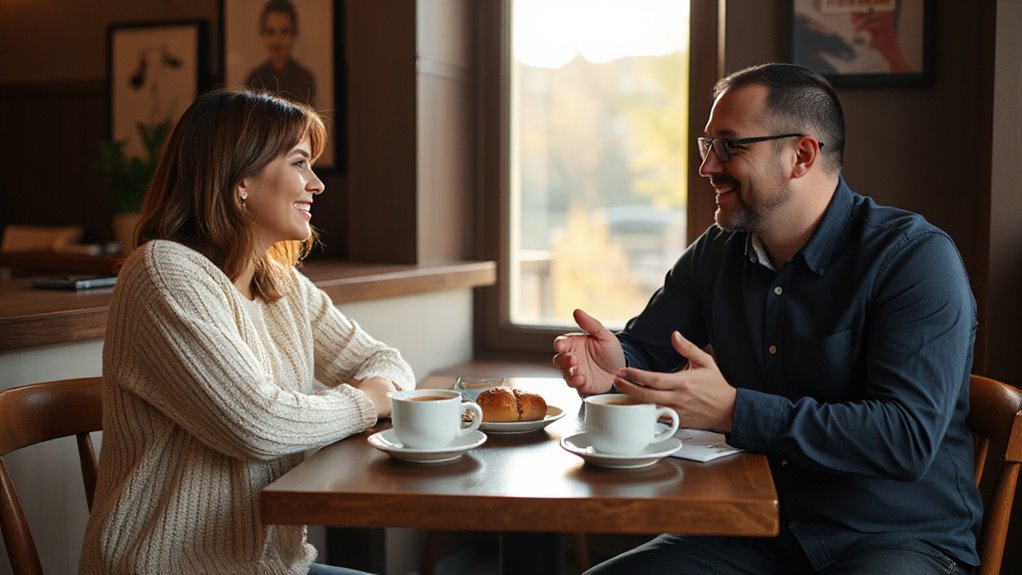






Why does walking up to a woman and telling her she’s attractive feel like stepping in front of a bus for some guys, while others do it like they’re ordering coffee? The direct approach—stating your interest upfront—mimics how naturally skilled men operate. They don’t memorize scripts or run mental flowcharts. They see someone attractive, walk over, and say so. It’s efficient, honest, and cuts through the noise. But it’s also terrifying for beginners, especially in quiet public spaces where rejection lands like a slap everyone can hear.
The direct approach is efficient and honest, but for beginners, rejection in quiet spaces feels like everyone’s watching you fail.
The indirect approach offers a safer entry point. Start with a neutral question or comment, ease into conversation, then reveal intent later. For guys drowning in approach anxiety, this structured path feels manageable. It also builds conversational chops through longer interactions, forcing practice beyond a three-second compliment. The downside? It demands more brainpower, invites overthinking, and risks the friend zone if intent never surfaces. Some guys get so caught up performing the script that they forget why they walked over in the first place.
Here’s the truth both camps miss: neither method guarantees success without the fundamentals. Body language, eye contact, and vibe matter more than your opening line. A direct approach delivered with slouched shoulders and downcast eyes bombs harder than an indirect opener from a guy who stands tall and smiles. Attraction switches flip based on the whole package, not just words.
Context should dictate strategy. Chasing a woman walking down the street? Go direct—she’s moving, and anything else looks weird. Noisy bar or crowded event? Indirect keeps things smooth without disrupting the flow. But even indirect openers work better when nonverbal cues telegraph interest from the start.
If rejection rates hover above ninety percent regardless of approach style, the problem isn’t direct versus indirect. It’s broader skill gaps—posture, tonality, presence. Both methods work when executed with confidence and calibrated to the setting. The real risk isn’t choosing one over the other. It’s overthinking the choice instead of taking action, improving iteratively, and learning what fits your natural rhythm. A reliable foundation is mastering eye contact and relaxed body language to make either approach land.