








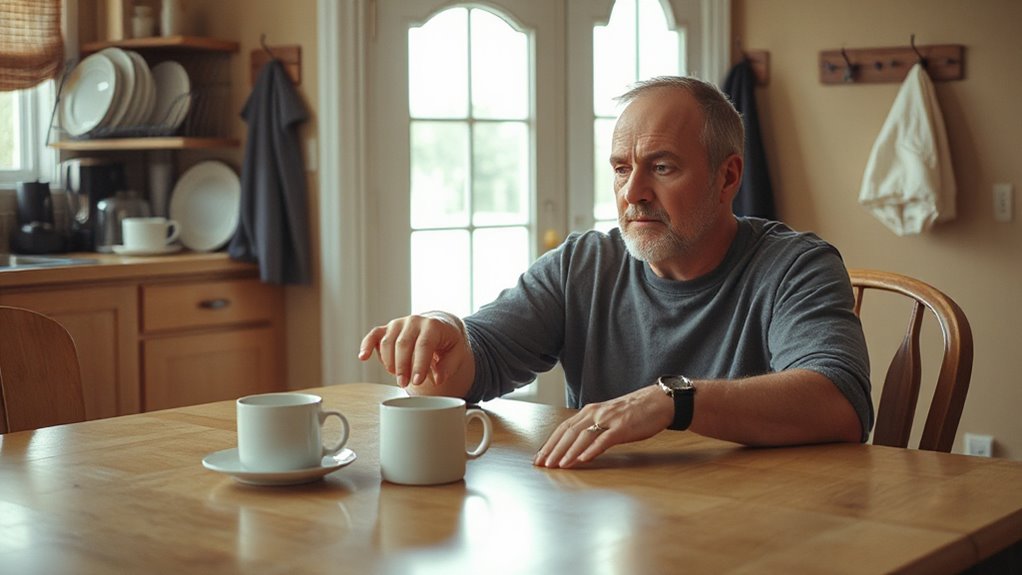
When a marriage ends, loneliness doesn’t wait politely in the wings—it barges in like an unwanted houseguest and makes itself at home. Research shows that loneliness actually spikes in the year before and during a divorce or widowhood, hitting harder than most people expect. For widowed men especially, the pain lingers long after the papers are signed or the funeral ends. They stay vulnerable for years, reporting substantially higher loneliness than widowed women.
Loneliness barges in like an unwanted houseguest when marriage ends, hitting widowed men hardest and lingering for years.
The brain doesn’t distinguish much between social rejection and physical pain. Both fire up the same neural networks, which means the ache of divorce isn’t just metaphorical—it registers as real hurt. That’s why gray divorce, which has doubled among adults 50 and older since 1990, carries such a brutal sting. In 2019, over a third of all U.S. divorces involved people over 50, and they’re not just worried about loneliness—finances top the list too. Women face a 45% drop in living standard post-divorce, while men see a 21% decline.
But here’s where things get interesting: personality traits matter, and timing matters more. In the first two years after divorce, extroversion, agreeableness, and low neuroticism all help reduce loneliness. After that short-term phase, only extroversion keeps pulling its weight. Long-term divorced folks—those two to five years out—benefit from having multiple group memberships and a strong sense of self-continuity, things that don’t help much right after the split.
Gender plays a role too. Divorced men over 50 report more loneliness than divorced women, and they’re even lonelier than widowed men. For women, there’s no real difference between divorce and widowhood when it comes to loneliness levels.
The takeaway? Loneliness after divorce isn’t one-size-fits-all. It shifts depending on how long you’ve been divorced, your personality, and your gender. Having someone to help you through the process reduces loneliness in both short and long-term phases. The pain is real, the timeline is long, and ignoring either fact won’t make the unwanted guest leave any faster. Regular connection with supportive people accelerates healing.