



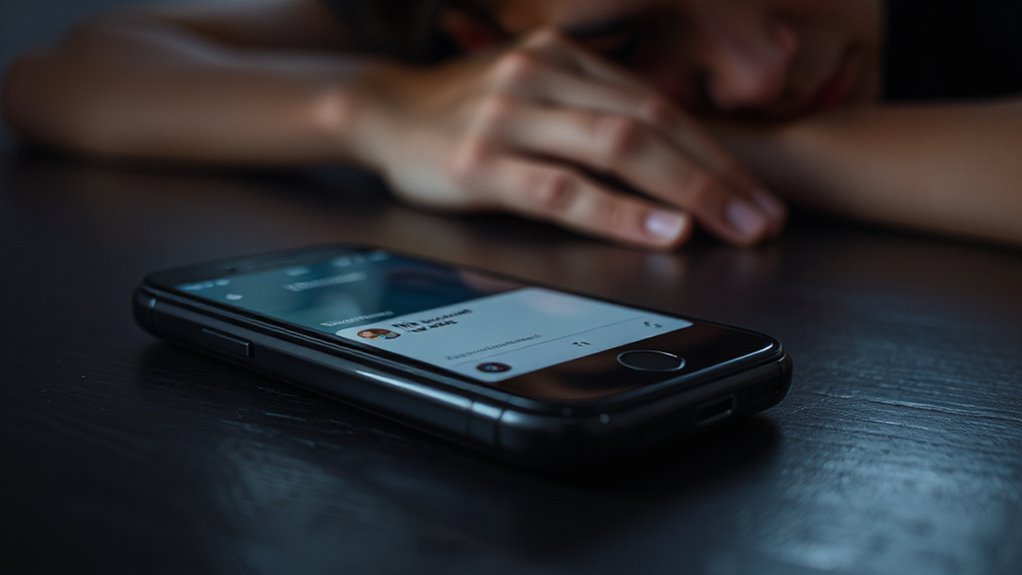
Why does getting blocked and deleted feel like a digital death sentence? Because it is one, at least for your connection to that person. When someone blocks you after a breakup, they’re sending a clear message: they need complete separation. Right now, the most important question isn’t whether you should reconnect—it’s whether reconnection would actually work.
Being blocked after a breakup isn’t about whether you can reconnect—it’s about whether you should.
Statistics show that up to 50% of couples reunite after breaking up, and research indicates approximately 48.25% of individuals want their exes back at some point. A University of Texas study found 65% of college breakups involved attempts to get back together. So wanting to reconnect? Totally normal. But getting blocked complicates everything. Consider whether your motivations for reconnecting are practical or driven by unresolved feelings.
The success of any reconciliation depends entirely on why the relationship ended. “Cooling off” breakups, where couples separate for breathing room during high-stress periods, show a 65% reconciliation success rate when the cooling-off period lasts between 2-6 weeks.
Communication-based splits from misunderstandings show an even higher 72% reconciliation rate when improved communication frameworks develop, typically within 3-8 weeks. Growth-required breakups, where one or both partners need personal development, succeed approximately 45% of the time, usually 4-12 months after the initial split.
Here’s the harsh truth: being blocked suggests your ex needs serious distance. Respect that boundary. Creating fake accounts or finding workarounds to contact them will only confirm they made the right decision cutting you off.
If reconciliation makes sense, give it time. Use the separation period for genuine reflection and personal growth, not stalking their social media or seeking new relationships as distractions. Research shows over 60% of young adults experience relationships that break up and renew at least once, but cyclical relationships correlate with markedly more psychological symptoms including anxiety, depression, and loneliness.
Higher numbers of breakup cycles also associate with increased physical symptoms like headaches and stomach aches. Remarkably, research shows that former romantic partners remain influential in each other’s life courses even after separation, affecting major decisions including whether and when to form new relationships. Many who struggle with reconciliation attempts need both understanding and implementation of strategies to actually succeed, since excelling at only one rarely produces lasting results.
Before reaching out, ask yourself: Has enough time passed? Have you genuinely changed? Can you respect their answer if it’s “no”? Being blocked doesn’t mean forever, but it definitely means not now.