
Weird angles top the list, with 45.67% of women and 39.32% of men calling it the worst offense. Those dramatically tilted shots or strategically positioned cameras aren’t fooling anyone—they’re transparent attempts to hide or exaggerate physical features. When someone’s entire photo collection looks like it was taken by a drunk giraffe, people assume there’s something being concealed. The message is clear: deception detected.
When your entire photo collection looks like it was shot by a drunk giraffe, people know you’re hiding something.
Running a close second is excessive filtering and editing, disapproved by 41.02% of users overall. Here’s the kicker—90% of Americans have swiped left specifically because photos looked too manipulated. Heavy retouching that reshapes faces or bodies crosses the line from enhancement to fraud. In fact, 73% of users think severe image manipulation should be banned entirely from dating platforms. When your face looks like a CGI character, trust evaporates. Yet 62% of men accept light editing like teeth whitening, revealing the fine line between enhancement and deception. Users are encouraged to keep their images authentic and to protect personal information when interacting further.
Vaping and smoking photos come in third at 40.62% disapproval. Beyond the obvious health concerns, these images broadcast poor judgment about self-presentation. Why advertise habits that instantly eliminate compatibility with a massive chunk of potential matches?
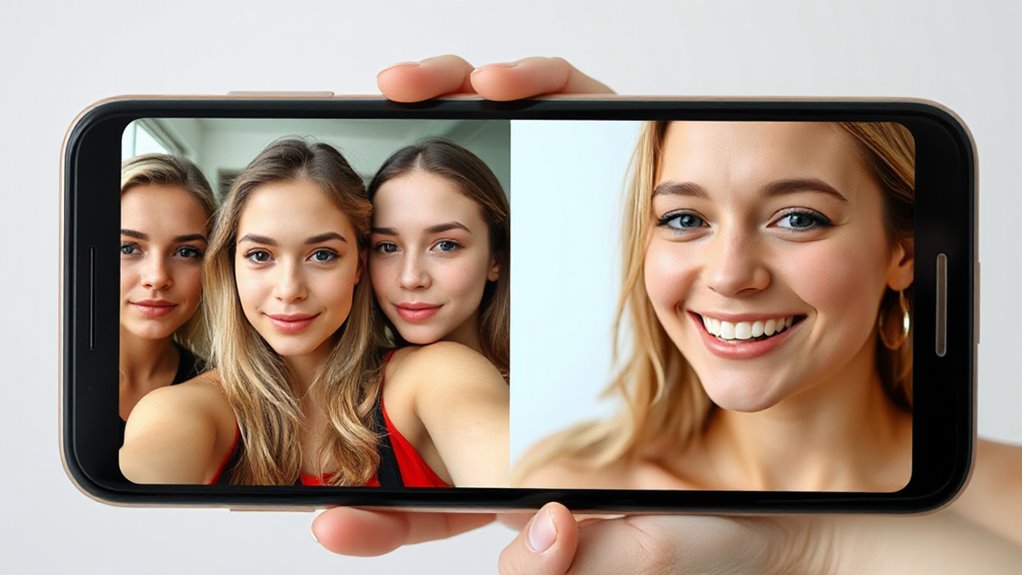
Group photos create their own nightmare, with 38.91% of users rejecting profiles where they can’t identify which person they’re actually matching with. The uncertainty itself becomes the red flag—confidence doesn’t hide in a crowd. Group-only photos can effectively hide someone’s true identity, making verification nearly impossible and raising immediate suspicions about what they’re concealing.
Excessive pouting gets rejected by 39.42% of users, with men particularly turned off at 42.91%. Those exaggerated duck faces scream inauthenticity and desperate image manipulation.
Finally, drunk and silly photos earn 38.72% disapproval. They suggest immaturity and questionable decision-making skills—not exactly selling points when strangers are deciding whether you’re worth meeting.
The pattern? Authenticity wins. Deception loses. Every time.