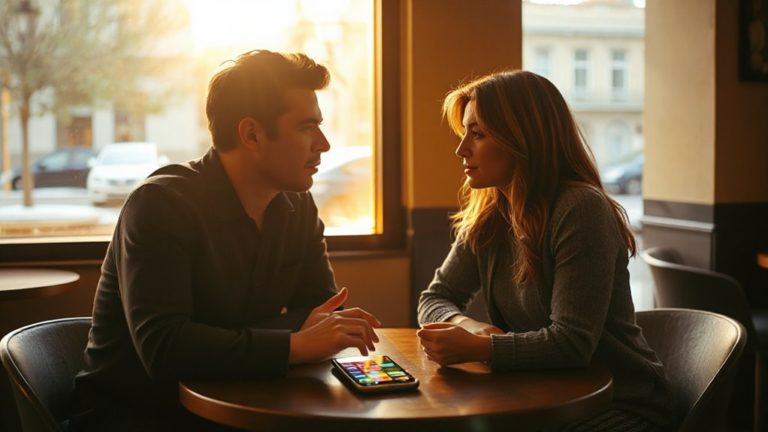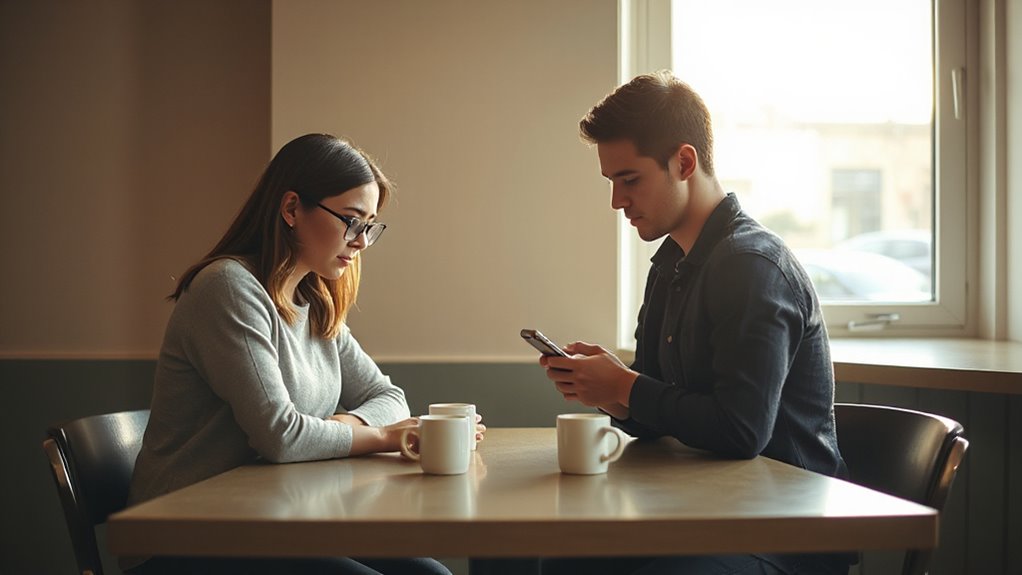


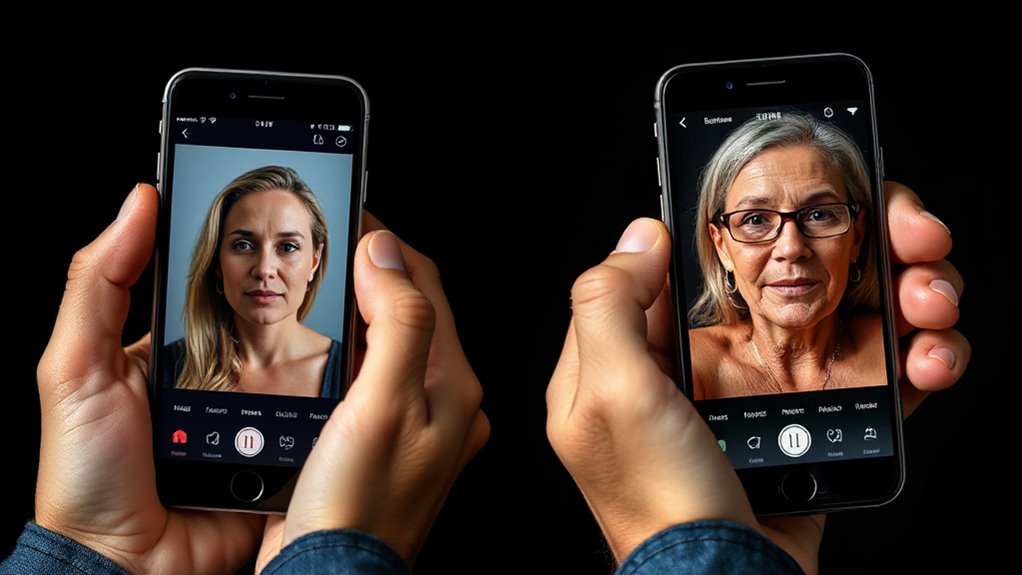
The modern dating landscape has turned into a hall of mirrors, and nowhere is this more evident than with age deception on dating apps. One in five online daters admits to lying about their age, with men slightly more guilty than women at 23% versus 19%. Yet this seemingly harmless fib might be sabotaging romantic prospects more than people realize.
The numbers paint a stark picture of digital dishonesty. Thirty-seven percent of singles confess they’re not fully authentic on dating platforms, while a staggering 71% believe lying to appear more desirable happens constantly. Age manipulation sits alongside other common deceptions—height, income, job status, and relationship history all get the creative treatment from roughly one in eight users.
The digital dating world runs on deception, with nearly three-quarters of users believing constant lies are the new normal.
But why do people keep lying when everyone knows it’s happening? The psychology is painfully simple: desperation mixed with competition. Twenty-three percent of women lie to seem more interesting, while various demographics target specific areas. Millennials fabricate job details to project success, Gen Z tweaks family background, and nearly a quarter of younger users lie specifically to appear more physically attractive. Research shows that mental health concerns represent the main insecurities for both Millennials at 32% and Gen Z at 27%.
Here’s the brutal reality—this strategy backfires spectacularly. Three-quarters of app users report feeling burned out, citing failed connections and constant disappointments as primary reasons. When someone discovers age deception on an actual date, trust evaporates instantly. No relationship survives that foundation of lies.
The detection game has also intensified. Thirty-nine percent of men suspect outdated photos, while 41% of Millennials assume images are edited. People have become digital detectives, scrutinizing profiles for inconsistencies. Gen Z users particularly focus on physical details, paying close attention to skin and height during in-person meetings.
The irony is crushing. In trying to appear more desirable through age manipulation, daters actually decrease their chances of meaningful connections. Authenticity has become the rarest commodity on platforms where 76% of Gen Z singles view others as somewhat or completely fake. Given that users spend an average of 51 minutes daily swiping through profiles, the time investment in potentially deceptive encounters becomes staggering.
Smart daters should embrace honesty as their competitive advantage. While others play games with their birth year, genuine profiles stand out precisely because they’re real. Age is just a number, but trust is everything.