

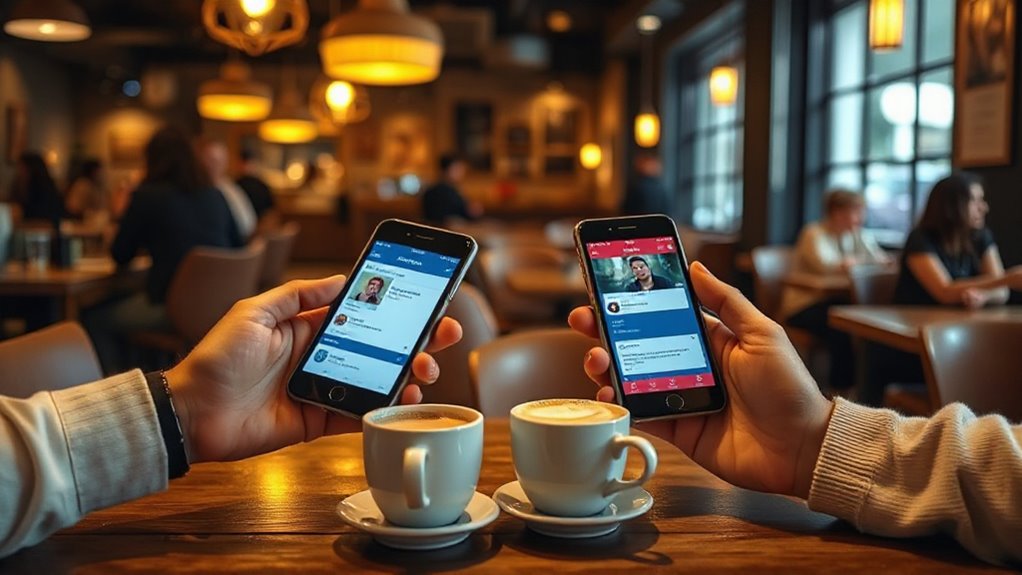






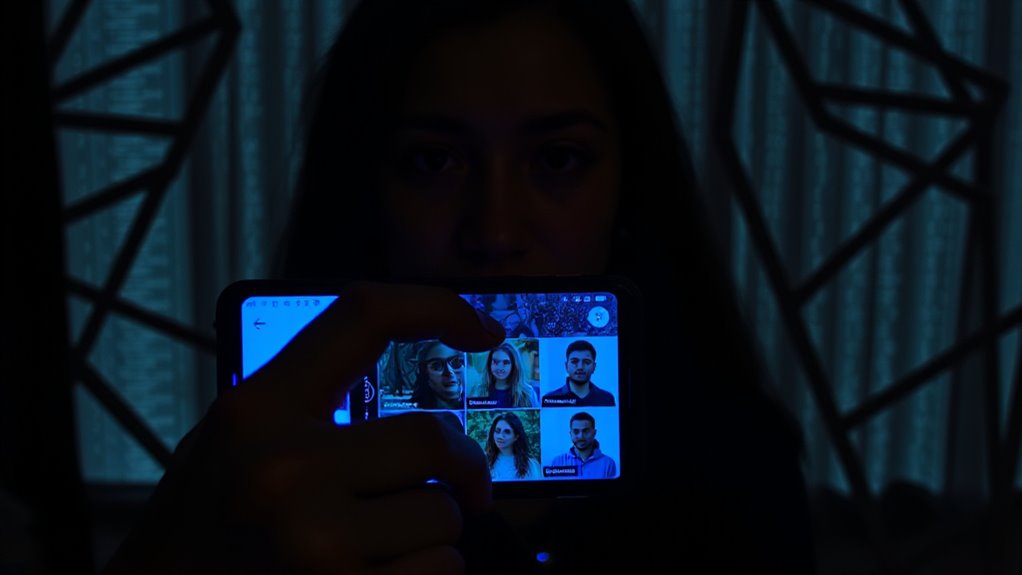
Why are nearly 50 million Americans swiping their way through digital romance, only to abandon their dating apps within a month? The answer reveals something unsettling about who’s really controlling modern love.
Dating apps aren’t matchmaking services—they’re engagement machines designed to keep users scrolling, not settling down. While 65% of people quit after roughly four weeks, the platforms profit from prolonged use, not successful relationships. This creates a fundamental conflict: your goal is finding someone, but their goal is keeping you single and swiping. This business model often overlooks red flags in dating patterns that users might encounter early on.
Dating apps profit from keeping you single—their success depends on your romantic failure.
The algorithms deciding your romantic fate use artificial intelligence to analyze personality, interests, and values. Sounds helpful, right? Except these systems prioritize metrics like daily active users and time spent in-app over actual compatibility. When 53% of singles report frequent dating burnout and 45.7% didn’t manage a single date despite using apps, something’s clearly broken.
Consider the gender imbalance: men comprise 67% of users, creating a marketplace where supply and demand are wildly skewed. Apps exploit this disparity, encouraging endless browsing rather than meaningful connections. Meanwhile, Generation Z and millennials—77% of all users—become trapped in cycles of superficial swiping.
The irony? Online dating actually works when it works. Over 50% of engaged couples in 2025 met through apps, up from 39% in 2017. People who found spouses online report higher satisfaction and lower divorce rates than traditional couples. One in ten committed relationships now begins digitally.
But here’s the catch: success happens despite the apps, not because of them. The 32% who’ve quit entirely aren’t failures—they’re refugees from systems designed to exploit loneliness rather than cure it. Nearly 1,500 dating sites worldwide compete for users’ attention, creating a paradox of choice that overwhelms rather than empowers. Yet approximately 15% of couples still meet through friends, demonstrating that traditional social connections continue to offer meaningful alternatives to algorithmic matchmaking.
Video dating and “intentional dating” features represent attempts to humanize digital romance, but they’re band-aids on a business model that monetizes heartbreak. Nearly half of singles no longer see long-distance relationships as dealbreakers, showing genuine adaptability to technology’s possibilities.
The question isn’t whether apps can help you find love—they can. The real question is whether you’re strong enough to use them strategically, resist their engagement tricks, and delete them the moment you find something real. Your love life depends on it.