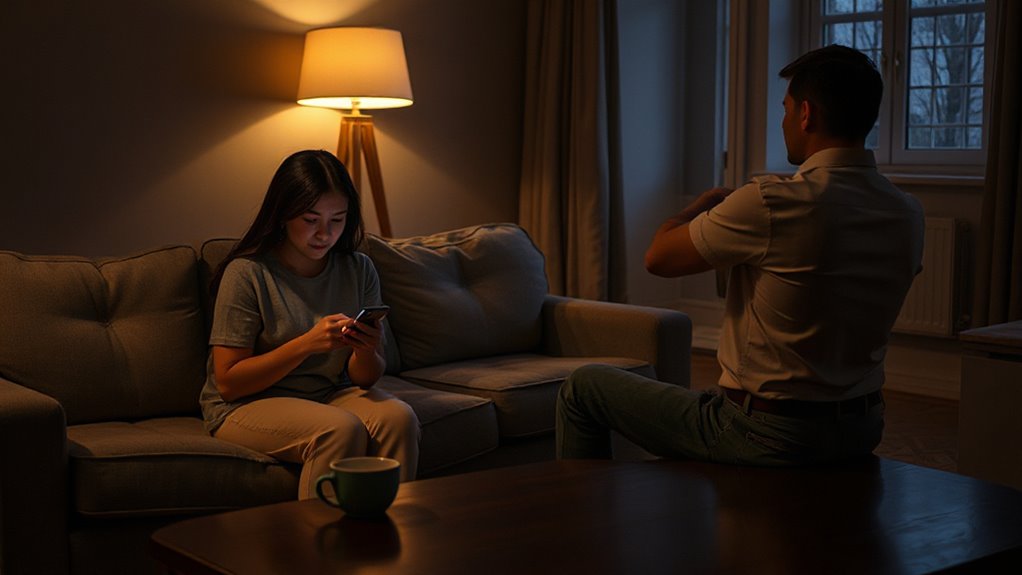



Balance requires ditching the either-or mindset that trips up most couples. Independence and togetherness aren’t enemies—they’re teammates. Talk openly about needing alone time without dropping passive-aggressive hints. Set clear boundaries that create safety, not walls. Share activities that bring you closer while keeping personal hobbies alive. Flexibility beats perfection every time since life changes constantly. When both needs get met simultaneously, relationships actually get stronger and satisfaction jumps markedly higher.

Why do so many couples swing between feeling suffocated one day and lonely the next? The answer lies in a fundamental relationship challenge: balancing independence and togetherness. Most couples get this wrong because they think it’s an either-or situation. It’s not.
The suffocation-loneliness cycle stems from viewing independence and togetherness as opposing forces rather than complementary needs.
Research shows that healthy relationships require fulfilling two basic psychological needs simultaneously—relatedness and autonomy. You need connection with your partner, but you also need to maintain your sense of self. When both needs are met, couples report markedly higher satisfaction than those who prioritize only one.
The problem with excessive independence is obvious: emotional distance creeps in, and partners start feeling like roommates. But excessive togetherness creates equally damaging issues—codependency, loss of identity, and that suffocating feeling that makes people want to run. Neither extreme works long-term.
Communication becomes your lifeline here. Partners need to express their needs for alone time or together time without tiptoeing around feelings. This means having actual conversations about boundaries, not dropping hints and hoping your partner reads your mind. Using “I” statements effectively helps convey personal needs without triggering defensiveness. Active listening helps too—when someone says they need space, don’t take it personally. Thoughtful communication can foster genuine connection and deepen understanding between partners.
Establishing clear boundaries isn’t about building walls; it’s about creating psychological safety. When partners respect each other’s need for personal space and individual pursuits, relationship satisfaction increases considerably. Supporting your partner’s personal growth actually strengthens your bond rather than threatening it.
Quality togetherness matters just as much. Regular shared experiences—whether it’s date nights, hobbies, or quiet moments together—can increase relationship satisfaction by about 25%. But here’s the key: these activities should enhance intimacy without requiring either person to sacrifice their autonomy.
Individual pursuits aren’t selfish; they’re essential. People who maintain personal hobbies and goals report up to 30% higher relationship satisfaction. Independence reduces mistrust and prevents the resentment that builds when someone loses themselves in a relationship. When autonomy is high, partners show less defensiveness in conflicts and respond more constructively to relationship challenges.
The goal isn’t perfect balance—it’s adaptable balance. Some seasons require more togetherness, others need more independence. Successful couples adapt to changing needs while maintaining respect for both connection and individuality. That’s how you avoid the suffocation-loneliness cycle entirely.
Frequently Asked Questions
How Do I Maintain Friendships When My Partner Wants More Couple Time?
Talk to your partner directly about needing friend time—it’s not negotiable, it’s healthy. Set clear boundaries about when you’ll hang with friends versus couple activities. Schedule both intentionally so nobody feels ignored.
Your partner can’t be your only social outlet; that’s too much pressure on them anyway. Support each other’s friendships instead of competing with them. Balance requires compromise, not sacrifice.
What if My Partner and I Have Different Social Needs and Preferences?
Different social needs create real tension, but they’re workable with honest communication. Talk openly about what each person needs—social time versus quiet couple moments.
Set clear boundaries and schedule both individual activities and shared ones. Compromise regularly, like alternating between social events and cozy nights in.
Check in frequently about whether both people feel satisfied. Ignoring these differences kills relationships.
How Much Alone Time Is Normal to Want in a Relationship?
Wanting 30% of time alone is totally normal—that’s roughly 7-8 hours daily apart, including work and personal activities. Most couples only spend 2-2.5 hours together daily anyway.
Some people need more space, others less. The key isn’t hitting some magic number; it’s communicating your needs without guilt.
If you’re craving alone time, that’s healthy, not selfish. Just tell your partner what you need.
Should Couples Share All Their Hobbies or Keep Some Activities Separate?
Couples shouldn’t share everything—that’s suffocating. Research shows shared activities boost relationship satisfaction, but balance matters.
Keep some hobbies separate to maintain individual identity and bring fresh experiences back to the relationship. Women especially hate one-sided leisure participation.
Find activities you both genuinely enjoy, not forced togetherness. Independence feeds togetherness, not the other way around.
How Do I Communicate My Need for Space Without Hurting Feelings?
Start with reassurance before making the request. Say “I love our time together, and I need some space to recharge so I can be my best self with you.” Be specific about what space means—a few hours weekly, one evening alone, whatever works. Listen to their concerns and find compromise together. Frame it as strengthening the relationship, not escaping it.