




Yes, AI dating advice tools actually work—54% of users get better at conversations and half feel more confident. Apps like Hinge and Tinder use AI to optimize profiles, suggest matches, and help craft messages. The catch? Nearly half of younger users think it feels fake, and 57% worry about “chatfishing.” AI can boost your game, but it can’t manufacture real chemistry or replace authentic connection. There’s more to contemplate before jumping in.
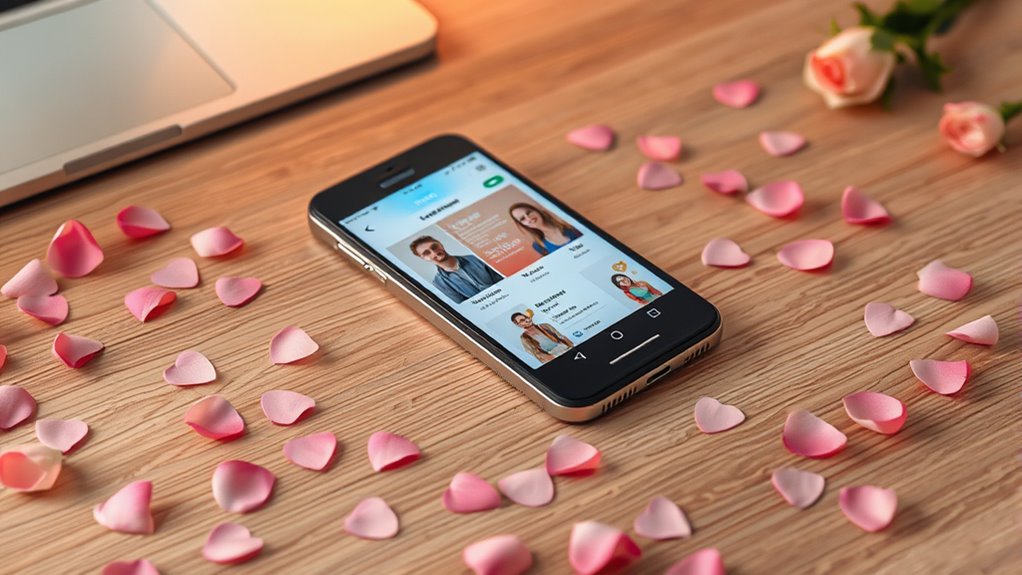
How did dating become so complicated that people now turn to artificial intelligence for romantic advice? Apparently, we’ve reached peak dating dysfunction when 57% of people trust algorithms over their friends and family for relationship guidance.
Here’s the reality: AI dating advice actually works for some people. Users report improved conversations 54% of the time and greater confidence in romantic interactions half the time. About 35% even see an increase in matches. That’s not nothing. AI applications that analyze profiles and provide personalized tips are credited with these improvements.
Over half of users see better conversations and increased confidence when AI guides their dating interactions.
Dating apps like Hinge and Tinder have jumped on this trend, using AI to help users craft better profiles and conversation starters. The technology learns your preferences, suggests compatible matches, and guides you on what to say and when to say it.
For international users, AI translation features break down language barriers. The systems also monitor for scams and fraudulent behavior, which honestly sounds useful.
But hold up. Nearly half of users, especially Gen Z, report that AI doesn’t substantially improve their profiles or conversations. That’s a pretty big chunk of disappointed customers. Younger users feel uncomfortable with AI drafting their messages or altering their photos, which makes sense when you think about it.
The authenticity problem is real. When 57% of people view using AI on dating apps as potentially dishonest, you’ve got a trust issue. This “chatfishing” phenomenon—where AI generates responses that aren’t really you—creates artificial impressions that can backfire spectacularly when you meet in person.
The user base remains split. About 72% are open to AI-powered features, but reactions vary wildly. Some love the enhanced experience, others see no difference, and 13% actually think AI makes dating worse due to artificiality concerns. Meanwhile, people are using AI for surprisingly personal relationship tasks, with 27% turning to algorithms to plan breakups.
Industry experts point out something essential: AI can’t replicate real-life chemistry assessment. In-person events remain critical because algorithms can optimize profiles and suggest conversation topics, but they can’t manufacture genuine connection. The dating app industry faces financial struggles, with companies like Bumble cutting 30% of their workforce amid declining user engagement. Combining technology with genuine human connection remains the key to meaningful relationships.
Frequently Asked Questions
How Much Does AI Dating App Advice Typically Cost?
AI dating app advice features cost between $10,000-$40,000 per module, depending on complexity. Smart matchmaking runs $15,000-$30,000, while emotional intelligence features hit $20,000-$40,000.
Basic AI-enabled apps cost $50,000-$100,000 total, advanced versions reach $200,000+.
Development location matters—Indian developers charge 70% less than North American teams.
Annual maintenance adds 15-20% of initial costs.
Can AI Help Write Better Dating App Bios?
AI absolutely can write better dating bios. It generates multiple options instantly, beats staring at blank screens, and learns from thousands of successful profiles.
The tools analyze your interests and tailor content for specific apps like Tinder or Bumble. Sure, you’ll need to personalize the output, but AI gives solid starting points and helps you sound confident without being generic.
Is Using AI for Dating Advice Considered Cheating or Dishonest?
Using AI for dating advice isn’t cheating—it’s like asking a friend for help.
It’s the dishonesty that becomes an issue if someone implements AI suggestions without authenticity.
Most people consult friends, read books, or watch videos for relationship guidance anyway.
The real issue isn’t the source of advice but whether someone stays true to themselves while using it.
Authenticity matters more than the advisor’s identity.
Which Dating Apps Have Built-In AI Advice Features?
Hinge leads with its “Prompt Feedback” tool that critiques profile answers with suggestions like “Go a Little Deeper.”
Grindr’s testing an “AI Wingman” with 10,000 users for message generation and match suggestions, planning full rollout by 2027.
Tinder has Face Check verification that cut bad actors by 60%.
Most major apps now use AI for matchmaking and safety, but dedicated coaching features remain limited.
How Accurate Is AI at Predicting Dating Compatibility?
AI compatibility predictions are surprisingly decent but not magical. Apps claim 80-90% accuracy for predicting relationship success using communication patterns and shared habits. Studies back up some claims—positive texting patterns do correlate with lasting relationships.
However, experts doubt AI can truly predict attraction or personality from photos alone. The algorithms work better than random chance but can’t replace human intuition and chemistry.